
How to Stop Salt Air from Destroying Your Solana Beach Outdoor Kitchen Plumbing
Your Solana Beach outdoor kitchen looks stunning against the Pacific backdrop but that same ocean breeze carries microscopic salt particles that silently attack your plumbing. Salt air accelerates corrosion at a rate 10 times faster than inland conditions. This guide shows you exactly how to protect your investment using materials and techniques proven to withstand San Diego’s coastal environment.
Why Solana Beach Salt Air Eats Through Outdoor Plumbing
Salt air contains chloride ions that bond to metal surfaces and trigger galvanic corrosion. When moisture from morning fog or coastal mist hits these surfaces the chemical reaction speeds up dramatically. Copper pipes develop green patina while galvanized steel develops orange rust. The closer you are to the shoreline the worse the damage gets with properties within 1 mile seeing corrosion rates 40% higher than those 3 miles inland.
San Diego’s Mediterranean climate creates the perfect storm for outdoor plumbing failure. Cool ocean temperatures meet warm inland air creating constant moisture that never fully evaporates. This perpetual dampness keeps metal surfaces wet allowing salt crystals to penetrate microscopic imperfections in protective coatings.
Signs Your Outdoor Kitchen Plumbing is Under Attack
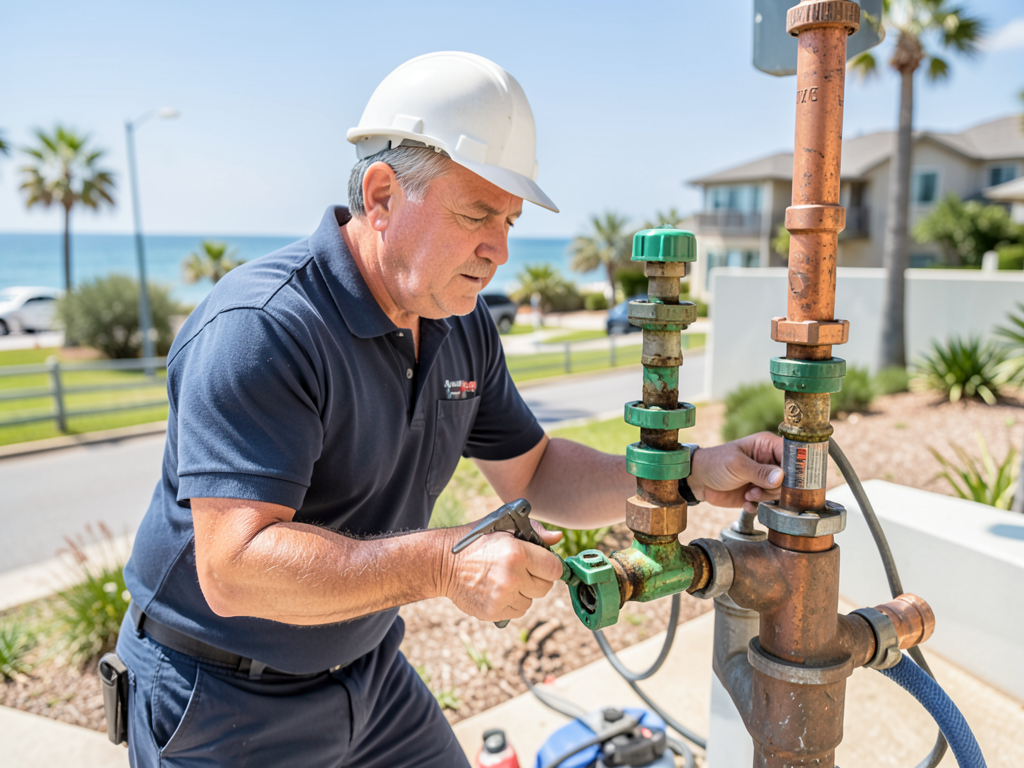
Green discoloration on copper fittings signals the beginning of oxidation. You will notice this first around compression nuts and valve stems where protective coatings wear thin. White powdery deposits on stainless steel indicate chloride stress corrosion cracking. These deposits look like salt but actually form when chloride ions break down the chromium oxide layer that protects stainless steel.
Pinhole leaks in copper pipes often appear suddenly after years of slow corrosion. One day everything works fine then you find water pooling under your outdoor sink. These leaks typically occur within 6 inches of joints where different metals meet creating galvanic cells that accelerate corrosion. Dealing with Hard Water in Oceanside with a Professional Softener System.
Stiff or stuck valves indicate internal corrosion. If you struggle to turn your outdoor faucet or gas shutoff valve the threads inside are likely binding from salt buildup. This becomes dangerous when you need to shut off water quickly during an emergency. Finding an Emergency Plumber in North Park Who Actually Picks Up the Phone.
Best Pipe Materials for Solana Beach Coastal Conditions
PEX-a tubing resists salt air corrosion better than any metal option. The cross-linked polyethylene structure prevents chloride ions from penetrating the material. PEX also handles temperature swings from cool coastal nights to hot afternoon sun without cracking. Installation costs run $3 to $5 per foot compared to $8 to $12 for copper in coastal zones. How to Deal with a Slab Leak in Your Point Loma Home Without Destroying Your Floors.
Type L copper offers moderate corrosion resistance for exposed applications. The thicker walls provide more material before pinhole leaks develop. However even Type L copper fails within 7 to 10 years in direct salt spray zones while lasting 20 to 30 years inland.
CPVC works well for cold water lines but cannot handle hot water temperatures in outdoor kitchens. The material becomes brittle when exposed to UV radiation and salt air simultaneously. Use CPVC only for protected underground cold water lines.
| Material | Cost per Foot | Coastal Lifespan | Best Use |
|---|---|---|---|
| PEX-a | $3-5 | 25+ years | All applications |
| Type L Copper | $8-12 | 7-10 years | Exposed hot water |
| CPVC | $2-3 | 15-20 years | Protected cold water |
Protective Coatings and Treatments That Actually Work
Dielectric unions prevent galvanic corrosion where different metals connect. These fittings contain a plastic barrier that stops electrical current flow between dissimilar metals. Install them between copper and galvanized steel or between copper and brass valves.
Marine grade silicone coatings create barriers against salt penetration. Apply two coats of silicone spray to all exposed metal surfaces every six months. Focus on valve stems, pipe hangers, and fitting nuts. The coating needs reapplication after heavy rain or intense sun exposure.
Anodized aluminum fixtures resist corrosion better than raw aluminum. The anodizing process creates a protective oxide layer that prevents chloride ions from reaching the base metal. Look for fixtures rated for marine environments when selecting outdoor kitchen components.
Maintenance Schedule for Coastal Outdoor Kitchens
Monthly inspection catches problems before they become emergencies. Check all visible pipes for discoloration, white deposits, or green patina. Test valve operation by opening and closing each fixture completely. Listen for squeaking or grinding sounds that indicate internal corrosion.
Quarterly deep cleaning removes salt buildup before it penetrates protective coatings. Mix one cup white vinegar with one gallon warm water. Apply with a soft cloth to all metal surfaces. Rinse thoroughly with fresh water and dry completely. This acidic solution dissolves salt deposits without damaging most plumbing materials.
Annual professional inspection identifies hidden corrosion. A licensed plumber uses moisture meters and borescopes to check inside walls and under counters where salt damage often goes unnoticed. They also test water pressure and check for pinhole leaks using acoustic detection equipment.. Read more about Protecting Your Hidden Meadows Outdoor Kitchen Plumbing from the Occasional Inland Frost.
- Choose Corrosion Resistant Materials
Select PEX-a tubing for all new installations. This material resists salt air damage better than copper or steel options.
- Install Protective Barriers
Apply dielectric unions where different metals connect. These prevent galvanic corrosion that accelerates pipe failure.
- Apply Protective Coatings
Spray marine grade silicone on all exposed metal surfaces every six months. Focus on moving parts like valve stems.
- Maintain Regular Cleaning Schedule
Clean all fixtures quarterly with vinegar solution to remove salt deposits before they penetrate protective layers.
- Schedule Professional Inspections
Have a licensed plumber inspect your system annually using specialized detection equipment for early problem identification.
Water Heater Protection in Coastal Environments
Tankless water heaters need special protection in Solana Beach. The heat exchangers contain copper components that corrode quickly in salt air. Install units indoors whenever possible or use units specifically designed for marine environments with titanium heat exchangers.
Traditional tank water heaters require sacrificial anode rod replacement every 2 to 3 years in coastal areas. These rods attract corrosive elements preventing tank damage. Check the rod annually by turning off power and water then removing the hex head. Replace when the rod is less than half its original thickness.
Outdoor water heater vents need stainless steel construction with corrosion resistant coatings. Standard galvanized vent pipes fail within 3 to 5 years in coastal conditions. Look for vents rated for outdoor use with powder coated finishes.
Gas Line Protection for Outdoor Kitchens
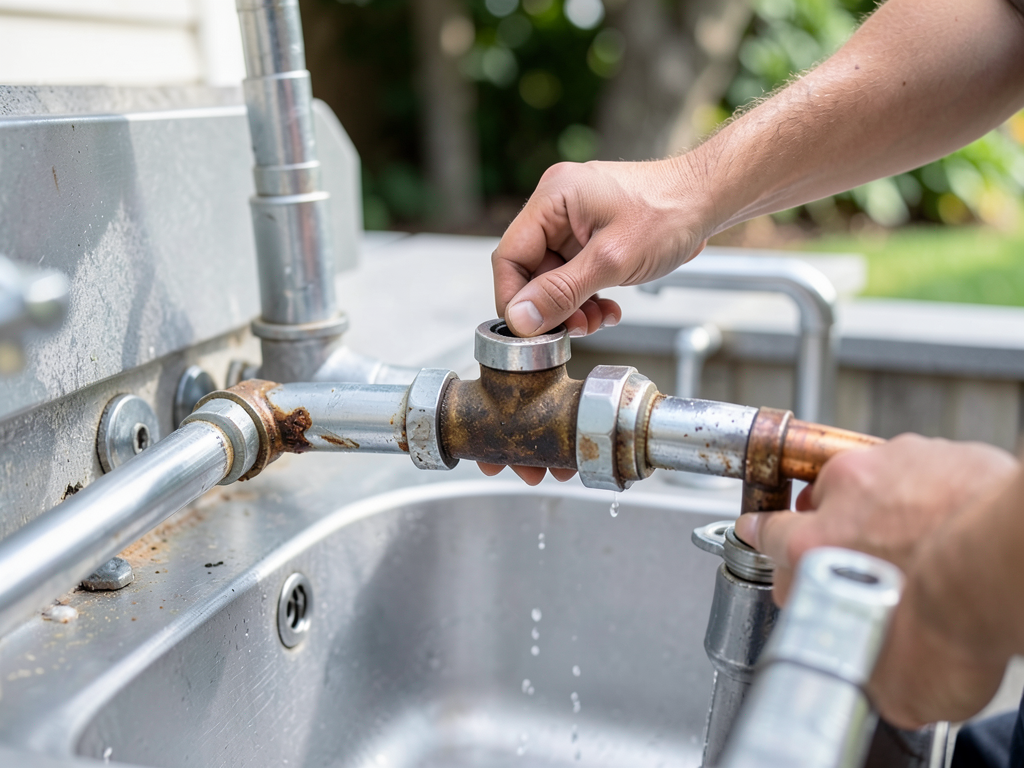
Natural gas lines require black iron pipe with protective coatings for outdoor use. Standard black iron corrodes quickly in salt air creating dangerous leak potential. Apply two coats of rust inhibiting primer followed by two coats of exterior grade paint to all exposed gas piping.
Flexible gas connectors need marine grade stainless steel construction. Standard brass connectors fail within 5 years in coastal conditions. Look for connectors rated for outdoor use with UV resistant coatings.
Gas shutoff valves should be stainless steel or brass with protective coatings. Test valve operation monthly by turning the valve completely off and on. Stuck valves indicate internal corrosion requiring immediate replacement.
When to Call a Professional Plumber
Call immediately if you notice water stains on exterior walls or ceilings below your outdoor kitchen. These indicate active leaks that can cause structural damage within days. Water traveling through walls often travels several feet from the actual leak source making DIY repair impossible. EPA WaterSense Plumbing Standards.
Schedule professional help if you detect gas odors near your outdoor kitchen. Gas leaks create explosion hazards that require immediate professional attention. Never attempt gas line repairs yourself.
Professional inspection becomes necessary when you notice multiple small problems. One corroded valve or minor leak often indicates widespread system deterioration requiring comprehensive evaluation.
Cost Considerations for Coastal Plumbing Repairs
Emergency leak repairs in coastal areas cost 30% to 50% more than inland locations. The premium covers specialized materials and the urgency of preventing water damage to expensive outdoor kitchens and surrounding structures.
Preventive upgrades pay for themselves within 3 to 5 years through avoided emergency repairs. Replacing standard copper with PEX-a costs more upfront but eliminates the $800 to $1500 emergency repair bills that occur every 7 to 10 years with copper in coastal zones.
Annual maintenance contracts for coastal properties typically cost $200 to $400 per year. This includes quarterly inspections and priority service for any problems discovered during routine checks.
Building Code Requirements for Coastal Plumbing
California Plumbing Code Section 609.5 requires corrosion resistant materials within 1000 feet of the coastline. This code specifically addresses the accelerated deterioration rates in coastal zones and mandates material upgrades for new construction and major renovations.
San Diego County amendments to the state code require stainless steel gas connectors for all outdoor installations. The amendments recognize the failure rates of standard connectors in coastal humidity and mandate upgrades to prevent gas leaks.
Permit requirements for outdoor kitchen plumbing in Solana Beach include corrosion resistance documentation. Contractors must specify materials and protective treatments to ensure compliance with coastal zone regulations.
DIY Protection Steps You Can Take Today
Apply silicone spray to all visible metal surfaces this weekend. Focus on valve stems, pipe hangers, and fitting nuts. The $8 can of marine grade silicone provides protection worth hundreds in avoided repairs.
Clean all fixtures with vinegar solution this month. Mix one cup white vinegar with one gallon warm water and apply with a soft cloth. This removes salt deposits before they penetrate protective coatings.
Check valve operation by opening and closing each fixture completely. Stuck or stiff valves indicate internal corrosion requiring professional attention before complete failure occurs.
Long Term Solutions for Peace of Mind
Complete system replacement with PEX-a piping eliminates ongoing corrosion concerns. While expensive upfront this solution prevents all future salt air damage to your plumbing system. Most homeowners recover costs through avoided repairs within 7 to 10 years. Why La Jolla Homeowners are Switching to Tankless Water Heaters This Year.
Enclosed plumbing chases protect pipes from salt spray exposure. Building walls around exposed plumbing creates a barrier against corrosive elements. This approach costs less than complete system replacement while providing significant protection improvement.
Smart water monitors detect leaks immediately through your smartphone. These devices cost $150 to $300 but can prevent thousands in water damage by alerting you to problems before they escalate.
Frequently Asked Questions
How long does copper plumbing last in Solana Beach salt air?
Standard copper plumbing typically fails within 7 to 10 years in direct salt spray zones. Type L copper with protective coatings may last 12 to 15 years but still requires replacement much sooner than inland locations where copper lasts 20 to 30 years.
Can I use regular PVC pipes for my outdoor kitchen water lines?
No. Standard PVC becomes brittle when exposed to UV radiation and salt air simultaneously. Use PEX-a for exposed applications or CPVC for protected underground cold water lines. Both materials resist coastal corrosion better than PVC.
How often should I inspect my outdoor kitchen plumbing?
Monthly visual inspections catch problems early. Check for discoloration, white deposits, or green patina on all visible pipes and fixtures. Test valve operation by opening and closing each completely. Professional inspection annually provides comprehensive evaluation using specialized detection equipment.
What’s the best way to clean salt buildup from outdoor fixtures?
Mix one cup white vinegar with one gallon warm water. Apply with a soft cloth to all metal surfaces. Rinse thoroughly with fresh water and dry completely. This acidic solution dissolves salt deposits without damaging most plumbing materials. Repeat quarterly for best protection.
Should I replace my existing copper pipes with PEX?
Yes if your copper pipes are over 5 years old or show any signs of corrosion. The replacement cost is offset by eliminating emergency repairs that typically cost $800 to $1500 every 7 to 10 years. PEX-a also provides better freeze protection and easier installation in tight spaces.
Don’t wait for a leak to destroy your outdoor kitchen. The salt air is already attacking your plumbing. Call (619) 304-5400 today to schedule a coastal corrosion inspection. Our licensed plumbers will identify problems before they become emergencies and recommend the best protection for your specific setup. Pick up the phone now before the next coastal storm hits and causes thousands in water damage. For more information, visit International Association of Plumbing and Mechanical Officials.
You may also find this helpful. Managing Groundwater Seepage in Marina District Underground Parking and Basements.
You may also find this helpful. How to Get Rid of Stubborn Sand Clogs in Your Mission Beach Rental.
{
“@context”: “https://schema.org”,
“@type”: “BlogPosting”,
“headline”: “How to Stop Salt Air from Destroying Your Solana Beach Outdoor Kitchen Plumbing”,
“description”: “Protect your Solana Beach outdoor kitchen from salt air corrosion with expert tips on materials, maintenance, and professional inspections. Call (619) 304-5400.”,
“wordCount”: 2046,
“datePublished”: “2026-05-14T07:21:00.000Z”,
“dateModified”: “2026-05-14T07:21:00.000Z”,
“inLanguage”: “en-US”,
“mainEntityOfPage”: {
“@type”: “WebPage”,
“@id”: “https://aceplumbingsandiego.com”
},
“publisher”: {
“@type”: “LocalBusiness”,
“name”: “Ace Plumbing San Diego”,
“url”: “https://aceplumbingsandiego.com”
},
“author”: {
“@type”: “Organization”,
“name”: “Ace Plumbing San Diego”,
“url”: “https://aceplumbingsandiego.com”
},
“image”: {
“@type”: “ImageObject”,
“url”: “https://aceplumbingsandiego.com/wp-content/uploads/2026/03/how-to-stop-salt-air-from-destroying-your-solana-b-1.png”
}
}
{
“@context”: “https://schema.org”,
“@type”: “Plumber”,
“name”: “Ace Plumbing San Diego”,
“url”: “https://aceplumbingsandiego.com”,
“address”: {
“@type”: “PostalAddress”,
“addressLocality”: “San Diego”
},
“areaServed”: {
“@type”: “City”,
“name”: “San Diego”
}
}
{
“@context”: “https://schema.org”,
“@type”: “FAQPage”,
“mainEntity”: [
{
“@type”: “Question”,
“name”: “How long does copper plumbing last in Solana Beach salt air?”,
“acceptedAnswer”: {
“@type”: “Answer”,
“text”: “Standard copper plumbing typically fails within 7 to 10 years in direct salt spray zones. Type L copper with protective coatings may last 12 to 15 years but still requires replacement much sooner than inland locations where copper lasts 20 to 30 years.”
}
},
{
“@type”: “Question”,
“name”: “Can I use regular PVC pipes for my outdoor kitchen water lines?”,
“acceptedAnswer”: {
“@type”: “Answer”,
“text”: “No. Standard PVC becomes brittle when exposed to UV radiation and salt air simultaneously. Use PEX-a for exposed applications or CPVC for protected underground cold water lines. Both materials resist coastal corrosion better than PVC.”
}
},
{
“@type”: “Question”,
“name”: “How often should I inspect my outdoor kitchen plumbing?”,
“acceptedAnswer”: {
“@type”: “Answer”,
“text”: “Monthly visual inspections catch problems early. Check for discoloration, white deposits, or green patina on all visible pipes and fixtures. Test valve operation by opening and closing each completely. Professional inspection annually provides comprehensive evaluation using specialized detection equipment.”
}
},
{
“@type”: “Question”,
“name”: “What’s the best way to clean salt buildup from outdoor fixtures?”,
“acceptedAnswer”: {
“@type”: “Answer”,
“text”: “Mix one cup white vinegar with one gallon warm water. Apply with a soft cloth to all metal surfaces. Rinse thoroughly with fresh water and dry completely. This acidic solution dissolves salt deposits without damaging most plumbing materials. Repeat quarterly for best protection.”
}
},
{
“@type”: “Question”,
“name”: “Should I replace my existing copper pipes with PEX?”,
“acceptedAnswer”: {
“@type”: “Answer”,
“text”: “Yes if your copper pipes are over 5 years old or show any signs of corrosion. The replacement cost is offset by eliminating emergency repairs that typically cost $800 to $1500 every 7 to 10 years. PEX-a also provides better freeze protection and easier installation in tight spaces.”
}
}
]
}
{
“@context”: “https://schema.org”,
“@type”: “HowTo”,
“name”: “How to Protect Outdoor Plumbing”,
“step”: [
{
“@type”: “HowToStep”,
“position”: 1,
“name”: “Choose Corrosion Resistant Materials”,
“text”: “Select PEX-a tubing for all new installations. This material resists salt air damage better than copper or steel options.”
},
{
“@type”: “HowToStep”,
“position”: 2,
“name”: “Install Protective Barriers”,
“text”: “Apply dielectric unions where different metals connect. These prevent galvanic corrosion that accelerates pipe failure.”
},
{
“@type”: “HowToStep”,
“position”: 3,
“name”: “Apply Protective Coatings”,
“text”: “Spray marine grade silicone on all exposed metal surfaces every six months. Focus on moving parts like valve stems.”
},
{
“@type”: “HowToStep”,
“position”: 4,
“name”: “Maintain Regular Cleaning Schedule”,
“text”: “Clean all fixtures quarterly with vinegar solution to remove salt deposits before they penetrate protective layers.”
},
{
“@type”: “HowToStep”,
“position”: 5,
“name”: “Schedule Professional Inspections”,
“text”: “Have a licensed plumber inspect your system annually using specialized detection equipment for early problem identification.”
}
],
“image”: “https://aceplumbingsandiego.com/wp-content/uploads/2026/03/how-to-stop-salt-air-from-destroying-your-solana-b-1.png”
}
{
“@context”: “https://schema.org”,
“@type”: “BreadcrumbList”,
“itemListElement”: [
{
“@type”: “ListItem”,
“position”: 1,
“name”: “Home”,
“item”: “https://aceplumbingsandiego.com”
},
{
“@type”: “ListItem”,
“position”: 2,
“name”: “Blog”,
“item”: “https://aceplumbingsandiego.com/blog”
},
{
“@type”: “ListItem”,
“position”: 3,
“name”: “How to Stop Salt Air from Destroying Your Solana Beach Outdoor Kitchen Plumbing”
}
]
}
{
“@context”: “https://schema.org”,
“@type”: “Service”,
“serviceType”: “Plumbing”,
“provider”: {
“@type”: “LocalBusiness”,
“name”: “Ace Plumbing San Diego”,
“url”: “https://aceplumbingsandiego.com”
},
“areaServed”: {
“@type”: “City”,
“name”: “San Diego”
},
“description”: “Protect your Solana Beach outdoor kitchen from salt air corrosion with expert tips on materials, maintenance, and professional inspections. Call (619) 304-5400.”
}