
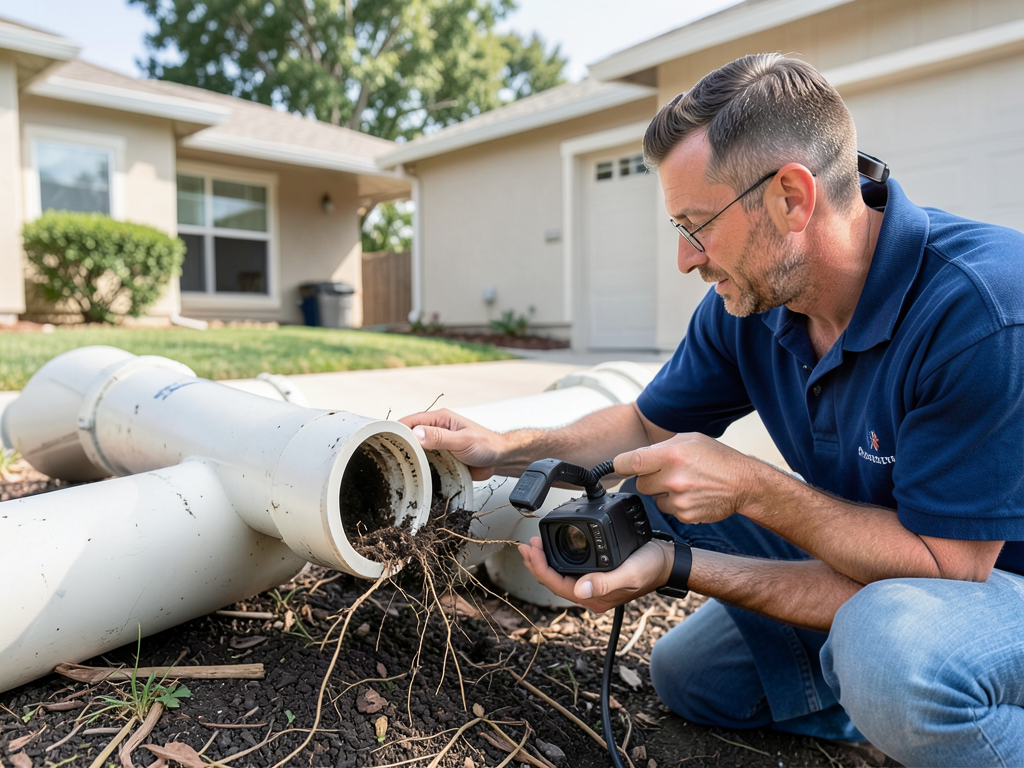
Dealing with recurring root intrusions in the PVC pipes of your newer Scripps Ranch home
Your Scripps Ranch home built in the 2000s or later likely has PVC sewer lines rather than the old clay pipes found in older San Diego neighborhoods. You might think PVC is immune to root problems but that’s not entirely true. While PVC is more resistant than clay PVC joints can still fail and roots can still find their way in. This creates a frustrating situation where your newer home experiences the same backups as much older properties.
Root intrusions in PVC pipes happen when tiny cracks form at the joints or when the soil shifts enough to create small gaps. Once a root tip finds that moisture source it grows rapidly and can completely block your sewer line. The problem becomes worse during San Diego’s dry months when trees send roots deeper in search of water. Dealing with Hard Water in Oceanside with a Professional Softener System.
The good news is that PVC root intrusions are usually fixable without replacing the entire line. Modern trenchless technology can repair the damaged sections while keeping your yard intact. Understanding why this happens to your newer home and what solutions exist will help you make the right decision before the next backup occurs. EPA guide on septic and sewer system maintenance.
Why newer PVC pipes in Scripps Ranch still get root intrusions
Many Scripps Ranch homeowners assume their 2000s-era PVC pipes are safe from root problems. The truth is more complicated. PVC became the standard for sewer lines in the 1980s and 1990s because it resists root penetration better than clay. However PVC is not invincible. Why La Jolla Homeowners are Switching to Tankless Water Heaters This Year.
The main vulnerability in PVC systems is the joints between pipe sections. These joints rely on solvent welding or rubber gaskets to create a watertight seal. If the solvent weld was not done properly or if the ground shifts enough to break the seal roots can enter through these tiny openings. Once inside the pipe roots grow quickly because they have found a reliable water source.. Read more about Deciding between a traditional trench and pipe bursting for your Southcrest sewer line.
Scripps Ranch’s soil conditions make this problem worse. The area sits on expansive clay soil that swells when wet and shrinks when dry. This constant movement puts stress on underground pipes and can cause joints to separate slightly. During San Diego’s frequent drought cycles trees send roots deeper searching for moisture making your sewer line an attractive target.
Common entry points for roots in PVC include:
- Improperly solvent welded joints
- Gasket failures in SDR 35 pipe
- Cracks from soil movement or settling
- Damage from nearby construction or landscaping
Understanding these vulnerabilities helps explain why your newer home might still face root intrusion problems despite having modern plumbing.
Common signs of root intrusion in your Scripps Ranch home
Root intrusions often start small and get worse over time. Early detection can save you from major plumbing emergencies and expensive repairs. Here are the warning signs that roots might be growing in your PVC sewer lines.
Gurgling sounds from drains are often the first noticeable symptom. When roots partially block a pipe water struggles to flow past creating air bubbles and unusual noises. You might hear this when flushing toilets or draining sinks especially on the lower floors of your home.
Slow drains throughout the house indicate a developing problem in the main sewer line rather than isolated clogs. If plunging and drain cleaners do not help the issue is likely deeper in the system. Multiple fixtures backing up at once is another red flag pointing to a main line blockage. How to Deal with a Slab Leak in Your Point Loma Home Without Destroying Your Floors.
Sewer odors inside your home or near cleanout pipes suggest that roots have created gaps allowing sewer gases to escape. You might notice this smell in your yard near where the sewer line runs underground. In severe cases you may see actual sewage backing up into tubs showers or floor drains.
The most definitive sign is when a professional plumber runs a camera through your sewer line and shows you roots growing inside the pipe. This video inspection reveals exactly where roots entered and how extensive the damage is. Many Scripps Ranch homeowners are surprised to see how quickly roots can grow once they find a way into PVC joints.
How San Diego’s soil and climate worsen pipe damage
San Diego’s unique soil composition creates challenges for underground plumbing that many homeowners do not realize. The expansive clay soil found throughout Scripps Ranch and much of San Diego County expands when wet and contracts when dry. This constant swelling and shrinking puts tremendous pressure on buried pipes.
During wet winter months clay soil absorbs water and expands pushing against pipes from all sides. When dry conditions return the soil shrinks creating gaps around the pipes. This cycle of expansion and contraction can cause PVC joints to separate slightly even when they were properly installed. The movement is often too small to see but large enough for tiny root hairs to find their way in.
Drought conditions in Southern California make the problem worse. Trees and shrubs send roots deeper searching for water during dry spells. Your sewer line provides both moisture and nutrients making it an attractive target. Eucalyptus trees common in Scripps Ranch are particularly aggressive with roots that can travel long distances to find water sources.. Read more about Tracking down the source of mysterious sewer smells in your Mission Highlands home.
Soil pH also affects pipe longevity. San Diego’s soil tends toward alkalinity which can affect the chemical composition of PVC over decades. While this does not cause immediate failures it can make pipes more brittle and susceptible to cracking from soil movement.
Understanding these local soil and climate factors explains why even newer homes with modern plumbing can experience root intrusion problems. The ground movement is simply more aggressive than many people realize.
Modern solutions for PVC root intrusions
Today’s plumbing technology offers several effective solutions for root intrusions in PVC pipes without requiring full line replacement. The right approach depends on how severe the problem is and where the roots entered the system.
Hydro jetting is often the first step for clearing existing root growth. This process uses high-pressure water streams up to 4000 PSI to cut through roots and flush them out of the pipe. The rotating nozzle reaches all sides of the pipe and can clear even tough root masses. However hydro jetting only removes existing growth and does not prevent roots from growing back through the same entry points. Why Hydro Jetting is the Only Real Solution for Carlsbad Sewer Line Issues.
Trenchless pipe lining creates a new pipe within your existing PVC line. A flexible liner coated with epoxy resin is inserted into the damaged pipe then inflated. The resin hardens creating a seamless new pipe that is root-proof and can last 50 years or more. This method works well when roots entered through joints or small cracks but the pipe structure is still sound.
Pipe bursting replaces the entire line by pulling a new pipe through the old one while breaking apart the damaged section. This method is best when the existing pipe has multiple failures or when you need to increase pipe diameter. While it requires some excavation at the access points it avoids the extensive digging needed for traditional replacement.
Chemical root treatments can help prevent regrowth after mechanical removal. Foaming root killers containing dichlobenil expand inside the pipe coating all surfaces. Copper sulfate treatments are another option but they work more slowly. These chemicals kill existing roots and create a barrier that discourages new growth for several months.
The most effective approach often combines immediate clearing with long-term prevention through lining or chemical barriers. A professional inspection will determine which solution fits your specific situation.
Preventing future growth in your Scripps Ranch pipes
Once you have cleared root intrusions taking steps to prevent regrowth will save you from repeated plumbing emergencies. Prevention is always less expensive than emergency repairs and can extend the life of your sewer system significantly. Finding an Emergency Plumber in North Park Who Actually Picks Up the Phone.
Regular video inspections every 18 to 24 months allow you to catch root problems when they are small. A plumber can run a camera through your sewer line and identify early signs of root intrusion before you experience backups. This proactive approach costs much less than emergency service calls and major repairs.
Strategic landscaping choices make a big difference. Avoid planting trees with aggressive root systems like eucalyptus ficus or certain palm species near your sewer line. If you already have these trees consider installing a root barrier between them and your pipes. These barriers are typically plastic sheets installed vertically in the ground that direct roots downward rather than toward your plumbing.. Read more about A guide to installing a gas fire pit line for your backyard in Rancho Del Rey.
Proper watering practices help keep tree roots from seeking moisture in your sewer line. Deep watering encourages roots to grow downward rather than spreading outward searching for water. This is especially important during San Diego’s dry months when trees are most likely to send roots toward underground water sources.
Annual maintenance treatments with foaming root killers can prevent small root intrusions from becoming major problems. These treatments are most effective when applied in early spring before the main growing season. They work by killing tiny root hairs before they can establish themselves in your pipes.
Upgrading vulnerable sections of pipe can also help. If video inspection shows that certain joints are failing those sections can be replaced with newer PVC or lined before roots cause a complete blockage. This targeted approach is often more cost-effective than waiting for an emergency.
Prevention requires consistent attention but it is far less disruptive than dealing with sewage backups in your home.
Understanding your responsibilities as a Scripps Ranch homeowner
Many Scripps Ranch homeowners do not realize that they are responsible for maintaining the sewer line from their house to the main city connection. This section called the sewer lateral is your responsibility even though it is underground and extends beyond your property line in some cases.
The sewer lateral typically runs from your home’s main drain to the point where it connects to the city sewer main often in the street or alley. In Scripps Ranch many homes have laterals that cross neighboring properties or run under sidewalks. You are responsible for the entire length regardless of where it is located.
San Diego Municipal Code Section 56.2208 requires homeowners to maintain their sewer laterals in good working condition. This means addressing root intrusions promptly and keeping the line clear of blockages. Failure to maintain your sewer lateral can result in fines from the city and liability for damage to neighboring properties if your line backs up.
Homeowner’s insurance policies often exclude damage from sewer backups unless you have specific sewer line coverage. Standard policies typically cover sudden pipe failures but not gradual problems like root intrusions that develop over years. This makes preventive maintenance even more important since you could be paying for repairs out of pocket.
City sewer inspections may be required when selling your home. Many Scripps Ranch buyers now request sewer camera inspections as part of their due diligence. Finding and fixing root problems before listing your home can prevent sale delays and costly concessions to buyers.
Understanding these responsibilities helps you make informed decisions about maintenance and repairs. The cost of regular inspections and preventive treatments is usually much less than emergency repairs and potential liability.
Comparing repair options for PVC root intrusions
Choosing the right repair method depends on several factors including the extent of root damage your budget and how long you plan to stay in your home. Here is a comparison of the main options available for Scripps Ranch homeowners.
| Repair Method | Best For | Cost Range | Duration | Invasion Level |
|---|---|---|---|---|
| Hydro Jetting | Minor to moderate root growth | $300 – $600 | 1-2 hours | Minimal |
| Trenchless Lining | Joint failures cracked pipes | $2000 – $4000 | 4-6 hours | Minimal |
| Pipe Bursting | Severe damage old pipes | $3000 – $6000 | 1-2 days | Moderate |
| Traditional Replacement | Multiple failures collapsed pipes | $5000 – $10000+ | 3-5 days | High |
Hydro jetting provides the quickest and least expensive solution but it is only temporary. Roots will grow back through the same entry points within 12 to 18 months. This option works well for recent home buyers who need to clear a blockage before selling or for homeowners who want to delay more expensive repairs.
Trenchless lining offers the best long-term value for most Scripps Ranch homes. The epoxy liner creates a seamless pipe within your existing line that roots cannot penetrate. While the upfront cost is higher than hydro jetting the repair can last 50 years or more. This option is ideal for homeowners planning to stay in their homes long-term.
Pipe bursting works well when the existing pipe is too damaged for lining or when you need to increase pipe capacity. This method can navigate around obstacles like tree roots and utility lines. The higher cost reflects the more complex equipment and labor required.
Traditional replacement is usually the last resort due to the extensive excavation required. This method may be necessary when pipes have collapsed or when multiple utility lines make trenchless methods impossible. The high cost and yard damage make this option less attractive for most situations.
A professional inspection with video camera can help determine which option makes the most sense for your specific situation.
Frequently Asked Questions
How do I know if I have roots in my PVC pipes?
Signs include gurgling drains slow drainage throughout the house sewer odors and sewage backups. The most definitive way is a video camera inspection which shows exactly where roots have entered the pipe.
Can roots really grow through PVC pipe?
Yes roots cannot grow directly through solid PVC but they can enter through joints that have separated slightly due to soil movement or improper installation. Once inside the pipe roots find moisture and grow rapidly.
How long does trenchless pipe lining last?
Quality epoxy lining typically lasts 50 years or more. The seamless new pipe resists root intrusion corrosion and soil movement making it a permanent solution for most homes.
Will chemical root killers damage my pipes?
Modern foaming root killers are safe for PVC pipes when used as directed. They work by killing roots on contact and creating a barrier that prevents regrowth. Avoid copper sulfate if you have a septic system.
How often should I have my sewer line inspected?
Every 18 to 24 months is recommended for homes with mature trees nearby. Annual inspections may be needed if you have experienced previous root problems or have particularly aggressive tree species on your property.
Take action before the next backup occurs
Root intrusions in PVC pipes are a progressive problem that gets worse over time. What starts as a small blockage can quickly become a complete sewer line failure causing sewage to back up into your home. The damage from these backups often costs thousands of dollars to repair and creates serious health hazards.. Read more about How to tell if your Bay Park vent stacks are clogged and causing slow drains.
If you are experiencing slow drains gurgling sounds or sewer odors in your Scripps Ranch home do not wait for a complete blockage to occur. A video inspection can show you exactly what is happening inside your pipes and help you choose the right solution before emergency repairs become necessary.
Call (619) 304-5400 today to schedule your sewer line inspection. Our Scripps Ranch plumbing experts use state-of-the-art camera equipment to diagnose root problems and recommend the most cost-effective solutions. We offer same-day service for emergency situations and can often complete trenchless repairs in just one day with minimal disruption to your yard.
Pick up the phone and call (619) 304-5400 before the next heavy rain or drought cycle sends roots deeper into your pipes. Early intervention can save you thousands of dollars and prevent the stress of sewage backing up into your home. Our team understands the unique soil and climate conditions in Scripps Ranch and can provide solutions that last.
Don’t let root intrusions ruin your newer home’s plumbing system. Contact us now for a professional assessment and take the first step toward a permanent solution. For more information, visit IICRC standards for water damage restoration.
{
“@context”: “https://schema.org”,
“@type”: “BlogPosting”,
“headline”: “Dealing with recurring root intrusions in the PVC pipes of your newer Scripps Ranch home”,
“description”: “PVC pipes in Scripps Ranch homes can still suffer root intrusions due to shifting clay soil and poor joint installation. Learn how to identify, prevent, and fix root problems before they cause backups.”,
“wordCount”: 2719,
“datePublished”: “2026-05-02T06:59:00.000Z”,
“dateModified”: “2026-05-02T06:59:00.000Z”,
“inLanguage”: “en-US”,
“mainEntityOfPage”: {
“@type”: “WebPage”,
“@id”: “https://aceplumbingsandiego.com”
},
“publisher”: {
“@type”: “LocalBusiness”,
“name”: “Ace Plumbing San Diego”,
“url”: “https://aceplumbingsandiego.com”
},
“author”: {
“@type”: “Organization”,
“name”: “Ace Plumbing San Diego”,
“url”: “https://aceplumbingsandiego.com”
},
“image”: {
“@type”: “ImageObject”,
“url”: “https://aceplumbingsandiego.com/wp-content/uploads/2026/03/dealing-with-recurring-root-intrusions-in-the-pvc-1.png”
}
}
{
“@context”: “https://schema.org”,
“@type”: “Plumber”,
“name”: “Ace Plumbing San Diego”,
“url”: “https://aceplumbingsandiego.com”,
“address”: {
“@type”: “PostalAddress”,
“addressLocality”: “San Diego”
},
“areaServed”: {
“@type”: “City”,
“name”: “San Diego”
}
}
{
“@context”: “https://schema.org”,
“@type”: “FAQPage”,
“mainEntity”: [
{
“@type”: “Question”,
“name”: “How do I know if I have roots in my PVC pipes?”,
“acceptedAnswer”: {
“@type”: “Answer”,
“text”: “Signs include gurgling drains slow drainage throughout the house sewer odors and sewage backups. The most definitive way is a video camera inspection which shows exactly where roots have entered the pipe.”
}
},
{
“@type”: “Question”,
“name”: “Can roots really grow through PVC pipe?”,
“acceptedAnswer”: {
“@type”: “Answer”,
“text”: “Yes roots cannot grow directly through solid PVC but they can enter through joints that have separated slightly due to soil movement or improper installation. Once inside the pipe roots find moisture and grow rapidly.”
}
},
{
“@type”: “Question”,
“name”: “How long does trenchless pipe lining last?”,
“acceptedAnswer”: {
“@type”: “Answer”,
“text”: “Quality epoxy lining typically lasts 50 years or more. The seamless new pipe resists root intrusion corrosion and soil movement making it a permanent solution for most homes.”
}
},
{
“@type”: “Question”,
“name”: “Will chemical root killers damage my pipes?”,
“acceptedAnswer”: {
“@type”: “Answer”,
“text”: “Modern foaming root killers are safe for PVC pipes when used as directed. They work by killing roots on contact and creating a barrier that prevents regrowth. Avoid copper sulfate if you have a septic system.”
}
}
]
}
{
“@context”: “https://schema.org”,
“@type”: “BreadcrumbList”,
“itemListElement”: [
{
“@type”: “ListItem”,
“position”: 1,
“name”: “Home”,
“item”: “https://aceplumbingsandiego.com”
},
{
“@type”: “ListItem”,
“position”: 2,
“name”: “Blog”,
“item”: “https://aceplumbingsandiego.com/blog”
},
{
“@type”: “ListItem”,
“position”: 3,
“name”: “Dealing with recurring root intrusions in the PVC pipes of your newer Scripps Ranch home”
}
]
}
{
“@context”: “https://schema.org”,
“@type”: “Service”,
“serviceType”: “Plumbing”,
“provider”: {
“@type”: “LocalBusiness”,
“name”: “Ace Plumbing San Diego”,
“url”: “https://aceplumbingsandiego.com”
},
“areaServed”: {
“@type”: “City”,
“name”: “San Diego”
},
“description”: “PVC pipes in Scripps Ranch homes can still suffer root intrusions due to shifting clay soil and poor joint installation. Learn how to identify, prevent, and fix root problems before they cause backups.”
}