
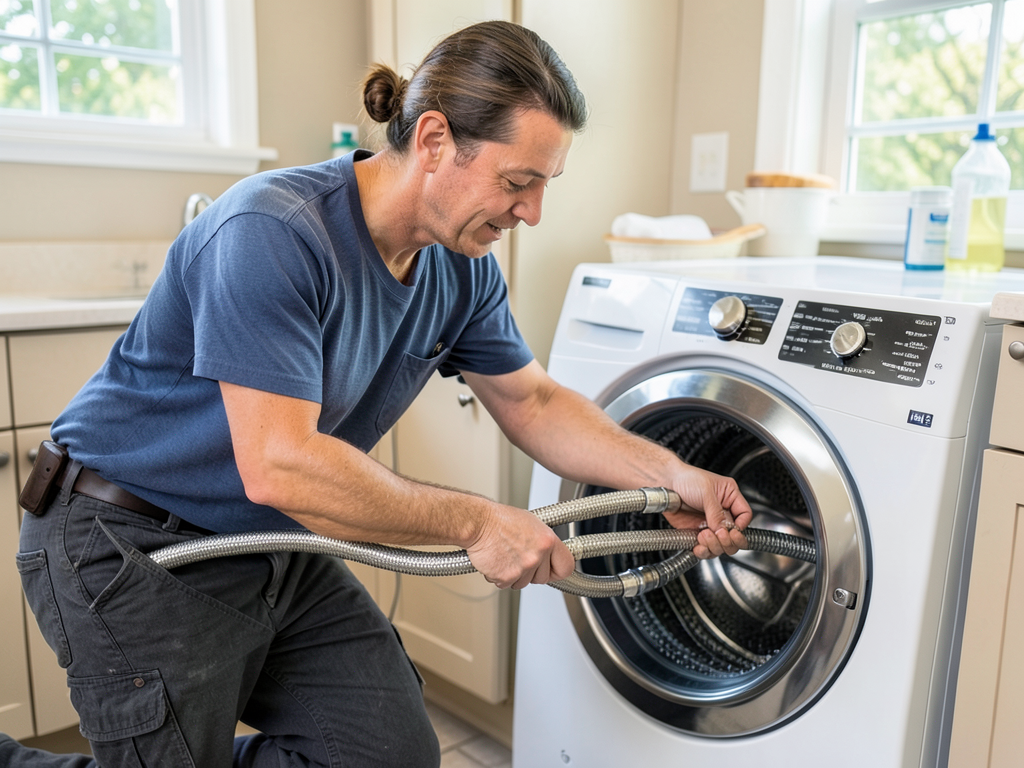
Why You Should Swap Your Rubber Laundry Hoses for Braided Steel in Valencia Park
Your washing machine hoses sit behind a machine that’s rarely moved, quietly holding back 40 to 60 pounds of water pressure every single day. In Valencia Park homes, where many properties were built in the 1950s and 1960s, those rubber hoses have been quietly degrading for decades. The combination of San Diego’s hard water mineral buildup and the constant pressure cycling causes rubber to crack, bulge, and eventually burst without warning. How to Deal with a Slab Leak in Your Point Loma Home Without Destroying Your Floors.
A burst washing machine hose releases water at full pressure until someone notices or the main valve is shut off. That means thousands of gallons can flood your laundry room, hallway, and adjacent rooms before you even realize there’s a problem. The average water damage claim from a washing machine hose failure runs between $5,000 and $10,000, not including the cost of replacing flooring, drywall, and personal belongings. Dealing with Hard Water in Oceanside with a Professional Softener System.
Swapping those aging rubber hoses for braided stainless steel hoses takes about 15 minutes and costs under $50. It’s one of the most cost-effective preventative measures a homeowner can take. The steel braiding resists cracking, kinking, and bursting while maintaining flexibility for installation. Most braided hoses come with a five-year warranty and can last 10 years or more with proper installation.
The Valencia Park area presents unique challenges because many homes still have original plumbing from the post-war building boom. Galvanized supply lines, aging shut-off valves, and cramped laundry closet spaces make rubber hoses even more vulnerable to failure. The hard water in this part of San Diego accelerates rubber degradation, causing hoses to fail years before their expected lifespan.. Read more about The Safest Way to Run a New Water Line for Your Teralta Refrigerator Ice Maker.
Installing braided steel hoses isn’t just about preventing floods. It’s about protecting your home’s value, avoiding insurance headaches, and gaining peace of mind. The steel braiding provides visual confirmation that your laundry room plumbing is up to modern safety standards. When you can see the steel mesh protecting those water lines, you know you’ve eliminated one of the most common sources of home water damage.. Read more about Finding and Testing Your Main Water Shut-Off Valve in Rural Rainbow Before an Emergency Hits.
Beyond the hoses themselves, consider installing an automatic shut-off valve that detects leaks and cuts water supply immediately. These devices can prevent catastrophic damage even if a hose does fail. Combined with braided steel hoses, you create multiple layers of protection that work together to keep your Valencia Park home dry and safe.
The process is simple: turn off the water supply, disconnect the old hoses, inspect the valve connections, install the new braided hoses, and test for leaks. If you’re not comfortable doing this yourself, a professional plumber can complete the job in under 30 minutes. The small investment now prevents the massive expense and disruption of a flood later.
Don’t wait for that telltale bulge or drip to appear behind your washing machine. Those are signs of imminent failure, not warnings you can afford to ignore. Valencia Park homes deserve the same level of protection as newer construction, and braided steel hoses deliver that protection at a fraction of the cost of water damage restoration.
Understanding the Risks of Rubber Washing Machine Hoses
Rubber washing machine hoses fail in predictable ways that every Valencia Park homeowner should understand. The rubber material breaks down from constant water pressure, temperature fluctuations, and chemical exposure from detergents and hard water minerals. Over time, the inner rubber wall separates from the outer reinforcement, creating weak spots that eventually burst under pressure. EPA WaterSense Program.
The failure often happens without warning. One minute your washing machine is running normally, and the next minute you have a geyser spraying water across your laundry room. The sound is unmistakable – a loud pop followed by rushing water that continues until the main supply is shut off. By then, damage is already done to floors, walls, and anything stored nearby.
Rubber hoses typically last 3 to 5 years under normal conditions, but in Valencia Park’s hard water environment, that lifespan drops significantly. The mineral deposits inside the hoses create rough surfaces that accelerate rubber degradation. You might notice the hoses feel sticky or have a white, chalky residue – both signs that failure is approaching.
Another risk factor is the installation angle. Rubber hoses installed at sharp bends or with excessive tension are more likely to fail prematurely. The constant pressure at these stress points causes the rubber to thin and eventually rupture. Braided steel hoses flex more easily and maintain their integrity even when installed in tight spaces.
Temperature cycling also affects rubber hoses. When your washing machine fills with cold water, then heats during the wash cycle, then drains with hot water, the rubber expands and contracts repeatedly. This thermal stress weakens the material over time, making it more susceptible to cracking and bursting. Steel braided hoses handle these temperature changes without degradation.. Read more about Why a Clogged Secondary Drain Line is Making Your Azalea Park Ceiling Leak.
Age is perhaps the biggest risk factor. If your rubber hoses are more than five years old, they’re living on borrowed time regardless of their appearance. The rubber degradation process continues even when the hoses aren’t in use, so time alone is enough to create failure risk. Braided steel hoses don’t have this age-related degradation problem.
The location of your laundry room matters too. If your washing machine is on an upper floor, a hose failure becomes even more catastrophic. Water will flow down through ceilings and walls, damaging multiple levels of your home before you can respond. This makes the investment in braided steel hoses even more critical for Valencia Park homes with second-floor laundry rooms.
Insurance companies are increasingly aware of this risk. Some providers offer discounts for homes with upgraded plumbing components, while others may raise premiums or deny claims for properties with known hazards like aging rubber hoses. The small cost of replacement could save you money on insurance while preventing a disaster.
Braided Steel Hoses vs. Rubber Hoses: The Clear Winner
Braided stainless steel washing machine hoses offer superior protection compared to rubber hoses in every measurable way. The steel braiding provides a durable outer layer that resists abrasion, cutting, and bursting while the inner rubber or polymer tube maintains flexibility for installation. This combination creates a hose that’s virtually indestructible under normal household conditions.
The burst strength of braided steel hoses typically exceeds 1,500 PSI, while rubber hoses fail around 400 to 600 PSI. Your home’s water pressure rarely exceeds 80 PSI, so braided steel hoses have a massive safety margin. This means even if water pressure spikes due to municipal supply issues or valve problems, your hoses won’t fail.
Flexibility is another advantage. Steel braided hoses can be bent to fit tight spaces without kinking or weakening. The braiding allows the hose to maintain its shape while still providing the give needed for installation behind appliances. Rubber hoses often develop permanent kinks that create failure points, but steel braiding prevents this problem entirely.
Temperature resistance is superior with steel braided hoses. They can handle water temperatures from near freezing to over 200 degrees Fahrenheit without degradation. This makes them ideal for both cold and hot water supply lines. Rubber hoses become brittle in cold conditions and can soften or deform in extreme heat, reducing their reliability.. Read more about Checking Your Bonsall Home for Brittle Polybutylene Pipes Before They Burst.
The lifespan difference is dramatic. While rubber hoses fail after 3 to 5 years, quality braided steel hoses can last 10 to 15 years or more. The initial cost is higher – typically $20 to $40 per hose compared to $5 to $10 for rubber – but the extended lifespan and damage prevention make steel hoses the better investment.
Visual inspection is easier with braided steel hoses. You can see the steel mesh and check for any signs of damage or wear. With rubber hoses, degradation happens internally where you can’t see it until failure occurs. The transparent nature of steel braiding provides peace of mind that your plumbing is protected.
Installation is straightforward with both types, but steel braided hoses often include better quality fittings and connectors. The brass or stainless steel fittings on steel hoses resist corrosion and provide tighter seals than the cheaper fittings on rubber hoses. This reduces the risk of leaks at connection points, which are another common failure mode.
Weight is the only potential drawback of steel braided hoses. They’re heavier than rubber hoses, which can make installation slightly more challenging in extremely tight spaces. However, this extra weight also means they’re less likely to move or shift once installed, maintaining proper positioning behind your washing machine.
Environmental factors in Valencia Park make steel braided hoses even more attractive. The hard water that accelerates rubber degradation has minimal effect on the steel braiding. The coastal humidity that can cause rubber to become sticky or moldy doesn’t affect stainless steel. These local conditions make the upgrade to steel hoses particularly beneficial.
Installation Process: DIY or Professional?
Replacing washing machine hoses is one of the simplest plumbing tasks a homeowner can tackle, but it requires attention to detail to ensure proper installation. The process starts with shutting off the water supply to the washing machine. This valve is typically located on the wall behind or near the machine, and it’s crucial to turn it completely clockwise until it stops.
Once the water is off, unplug the washing machine and pull it away from the wall far enough to access the hoses. Place towels or a shallow pan underneath to catch any residual water. Use an adjustable wrench to loosen the fittings on both ends of each hose – the machine end and the supply valve end. Turn counterclockwise to remove them.
Before installing the new braided steel hoses, inspect the valve connections and the washing machine inlet ports. Look for signs of corrosion, mineral buildup, or damage. Clean any debris with a soft brush or cloth. If you notice significant corrosion or damage, this might be a good time to call a professional, as the valves may need replacement.
When connecting the new hoses, hand-tighten the fittings first, then use a wrench to snug them up. Don’t overtighten – about a quarter turn past hand-tight is usually sufficient. Overtightening can damage the fittings or strip the threads, creating new leak points. The goal is a secure connection without excessive force.
After both hoses are connected, slowly turn the water supply back on and check for leaks at both ends. Look carefully at the connection points for any signs of dripping or moisture. If you see leaks, try tightening the fittings slightly more. If leaks persist, turn off the water and check that the washers are properly seated in the fittings.
Once you’ve confirmed there are no leaks, plug the washing machine back in and run a short cycle with no clothes to test the system under pressure. Watch the hose connections during this test to ensure they remain leak-free when the machine is actively using water. This final test gives you confidence that the installation is complete and reliable.
For homeowners who aren’t comfortable with even basic plumbing tasks, or if you discover corroded valves or damaged connections during the process, calling a professional plumber is the safer choice. A licensed plumber can complete the hose replacement in about 20 minutes and will inspect the entire water supply system for other potential issues. Why La Jolla Homeowners are Switching to Tankless Water Heaters This Year.
Professional installation costs typically range from $75 to $150, which includes the service call and labor. This is a small price to pay for the assurance that the job is done correctly and that your home is protected from water damage. Many plumbers also offer package deals that include hose replacement as part of routine maintenance visits.
Regardless of who installs the hoses, document the installation date and set a reminder to inspect them annually. Even braided steel hoses can develop issues over time, though they’re much less likely to fail catastrophically than rubber hoses. Regular inspection helps you catch any developing problems before they become emergencies.
Smart Technology for Laundry Room Protection
Beyond upgrading to braided steel hoses, modern smart technology offers additional layers of protection for your laundry room. Automatic water shut-off valves detect leaks and immediately cut off the water supply, preventing extensive damage even if a hose does fail. These devices use sensors to monitor water flow and pressure, distinguishing between normal washing machine operation and abnormal leak conditions.
Smart leak detectors provide early warning of water problems throughout your home. These battery-powered devices can be placed near your washing machine, water heater, and other potential leak sources. When they detect moisture, they send alerts to your smartphone via WiFi, allowing you to respond quickly even when you’re away from home.
Integrated systems combine multiple protection features into a single unit. Some smart washing machine valves include both automatic shut-off capability and leak detection sensors. These all-in-one solutions provide comprehensive protection without requiring multiple devices or complex installation. They typically connect to your home’s WiFi network and can be monitored through smartphone apps.
Water pressure monitoring devices add another layer of protection by detecting abnormal pressure conditions that could stress your plumbing system. These devices can alert you to municipal water supply issues, valve problems, or other conditions that might cause pressure spikes capable of damaging hoses or fixtures. Some advanced models can automatically adjust pressure to safe levels.
Smart home integration allows these protection devices to work together and with other home systems. For example, a leak detection system might trigger your smart home hub to shut off lights, unlock doors for emergency access, and send notifications to multiple family members. This integration creates a coordinated response to water emergencies. Finding an Emergency Plumber in North Park Who Actually Picks Up the Phone.
Installation of smart devices varies in complexity. Simple leak detectors typically require only battery installation and WiFi setup. Automatic shut-off valves may require basic plumbing skills to install on your water supply line. More advanced integrated systems might need professional installation to ensure proper operation and integration with your home’s plumbing.
The cost of smart protection technology ranges from under $50 for basic leak detectors to $200 to $500 for comprehensive automatic shut-off systems. When compared to potential water damage costs, these devices often pay for themselves with a single prevented incident. Many insurance companies also offer premium discounts for homes with certified leak detection systems.
Maintenance of smart devices is minimal but important. Replace batteries in leak detectors annually, check WiFi connections periodically, and test the automatic shut-off function according to manufacturer recommendations. Most devices include self-test features that verify proper operation and alert you to any problems that need attention.
For Valencia Park homes, where many properties have aging plumbing infrastructure, smart technology provides particularly valuable protection. The combination of hard water, older pipes, and original fixtures creates multiple potential failure points. Smart devices monitor these systems continuously, providing protection that passive upgrades like braided hoses alone cannot offer.
The peace of mind from smart technology extends beyond flood prevention. Many systems include temperature monitoring to prevent frozen pipe damage in rare cold snaps, humidity monitoring to detect developing moisture problems, and water usage tracking to identify potential leaks or inefficiencies in your plumbing system.
Local Building Codes and Requirements
San Diego County plumbing codes include specific requirements for washing machine installations that Valencia Park homeowners should understand. The California Plumbing Code, which adopts the Uniform Plumbing Code with state modifications, requires that washing machine connections include accessible shut-off valves and that drain systems be properly trapped and vented to prevent sewer gas entry.
Local amendments to the state code address San Diego’s unique conditions, including requirements for earthquake bracing of water heaters and other fixtures. While washing machines aren’t specifically required to have earthquake bracing, the code encourages secure installation of all plumbing fixtures to prevent damage during seismic events. This becomes particularly relevant in older Valencia Park homes where original installations may not meet current standards.
Water conservation requirements affect washing machine installations in San Diego. The state mandates that all new fixtures meet specific flow rate standards, and while washing machines aren’t directly regulated, the supply valves and connections must support efficient water use. This indirectly supports the use of quality components like braided steel hoses that maintain proper flow without waste.
Permitting requirements for washing machine installations depend on the scope of work. Simple hose replacement typically doesn’t require a permit, but any work involving supply valve replacement, drain line modification, or structural changes to accommodate the laundry area would require permits and inspections. This ensures work meets current safety standards and code requirements.
The San Diego County Department of Environmental Health has specific requirements for gray water systems, which some homeowners consider for laundry water reuse. While separate from standard washing machine installation, these systems must meet strict code requirements for filtration, storage, and distribution to prevent health hazards and environmental contamination.
Insurance considerations often go beyond code requirements. Many insurance providers have their own standards for plumbing components and may require upgrades like braided steel hoses as a condition of coverage or to maintain favorable rates. These private requirements can be more stringent than local building codes, especially for older properties in areas like Valencia Park.
Accessibility requirements affect washing machine installations in multi-family properties and rental units. The Fair Housing Act and California building codes require that a certain percentage of units be accessible to people with disabilities, which can affect the height, location, and control accessibility of washing machine installations in these properties.
Energy efficiency considerations influence modern washing machine installations. While not directly related to the hoses themselves, proper installation supports the efficient operation of high-efficiency washing machines that use less water and energy. This includes ensuring adequate water pressure and flow rates while preventing leaks that waste resources.
Commercial properties in Valencia Park that include laundry facilities must meet additional requirements for commercial plumbing installations. These include more stringent backflow prevention, higher capacity drain systems, and specific requirements for water heater connections and temperature controls. Residential installations have different, typically less rigorous, requirements.
Understanding these codes and requirements helps Valencia Park homeowners make informed decisions about their laundry room plumbing. While braided steel hoses exceed basic code requirements for residential installations, they align with the code’s emphasis on safety, reliability, and damage prevention that benefits all property owners.
Maintenance and Inspection Guidelines
Regular inspection of your washing machine plumbing system helps catch potential problems before they cause damage. A simple visual inspection every three months can identify early warning signs of hose degradation, valve problems, or developing leaks. Look for signs like bulging hoses, corrosion on fittings, water stains on nearby surfaces, or mineral deposits around connections.
Check the shut-off valves during your inspection by slowly turning them off and on. Valves that are difficult to turn or that leak when operated may need replacement. Hard water in Valencia Park can cause valves to seize over time, making them ineffective when you need to shut off water quickly during an emergency.
Clean behind and underneath your washing machine at least twice a year. Lint, dust, and debris accumulation can hide developing leaks or create moisture problems that damage flooring. Use a vacuum with a hose attachment to remove dust from the floor and wall areas around the machine, paying special attention to hose connection points.
Test your water pressure annually using a simple pressure gauge that attaches to an outdoor hose bib or laundry room faucet. Ideal household water pressure ranges from 40 to 80 PSI. Pressure consistently above 80 PSI stresses all your plumbing components, including braided steel hoses, and may indicate a need for a pressure reducing valve.
Inspect the washing machine’s water inlet screens every six months. These small filters trap debris and mineral particles that could damage the machine’s internal valves. Remove them carefully, clean with a soft brush and vinegar solution to dissolve mineral deposits, and reinstall. This simple maintenance task extends the life of both your machine and supply hoses.
Check the washing machine’s drain hose for secure connection to the standpipe and for any signs of wear or damage. The drain hose should fit loosely in the standpipe to allow proper air circulation and prevent siphoning. Ensure the standpipe height meets code requirements – typically 36 to 40 inches from the floor – to prevent overflow and ensure proper drainage.
Listen for unusual sounds during washing machine operation. Hissing, whistling, or banging noises can indicate water hammer, pressure problems, or loose connections. Water hammer, caused by sudden valve closure, can stress your entire plumbing system and may require the installation of water hammer arrestors to protect your pipes and hoses.
Document your maintenance activities and any repairs or upgrades. Keep records of when hoses were replaced, what type was installed, and any issues discovered during inspections. This information helps track the performance of your plumbing system and provides valuable data if you need to file insurance claims or discuss issues with professionals.
Consider scheduling professional plumbing inspections every two to three years, especially for older Valencia Park homes. A licensed plumber can identify issues that might not be apparent during routine homeowner inspections, such as hidden corrosion, improper venting, or code compliance problems. Professional inspections often catch problems before they cause significant damage.
Replace braided steel hoses every 8 to 10 years even if they appear to be in good condition. While these hoses are much more durable than rubber, the internal components can still degrade over time. Setting a replacement schedule ensures you maintain optimal protection without waiting for visible signs of wear that might indicate imminent failure.
Educate all household members about the location of water shut-off valves and proper emergency procedures. In the event of a hose failure or other plumbing emergency, quick action can prevent extensive damage. Make sure everyone knows how to shut off the main water supply and who to call for emergency plumbing services.
Cost-Benefit Analysis of Upgrading
The financial decision to upgrade from rubber to braided steel washing machine hoses involves comparing the upfront costs against the potential savings from prevented damage. Standard rubber hoses cost $10 to $20 for a pair, while quality braided steel hoses cost $40 to $80 for a pair. The initial price difference of $30 to $60 represents the premium for enhanced protection.
However, the cost of water damage from a failed rubber hose typically ranges from $5,000 to $10,000, with severe cases exceeding $20,000 when multiple floors or extensive finishes are involved. Even a 1% chance of hose failure over five years makes the $60 investment in steel hoses financially justified when compared to potential damage costs.
The extended lifespan of braided steel hoses also contributes to their cost-effectiveness. While rubber hoses need replacement every 3 to 5 years, steel hoses can last 10 to 15 years with proper installation. Over a 15-year period, you might replace rubber hoses three times at a total cost of $30 to $60, while steel hoses would need only one replacement or possibly none.
Insurance considerations add another dimension to the cost-benefit analysis. Many insurance companies offer premium discounts for homes with upgraded plumbing components, including braided steel hoses. These discounts typically range from 2% to 5% of your annual premium, which can offset the higher initial cost of steel hoses within the first year or two.
The convenience factor also has value. Rubber hose failures often occur at inconvenient times – late at night, on weekends, or when you’re away from home. Steel hoses provide peace of mind that reduces stress and eliminates the need for emergency plumbing services, which typically charge premium rates for after-hours calls.
Property value considerations may influence your decision. Homes with updated, code-compliant plumbing systems often appraise higher and sell more quickly than properties with known maintenance issues. While braided steel hoses alone won’t dramatically increase your home’s value, they contribute to the overall impression of a well-maintained property.
For rental properties, the cost-benefit analysis includes tenant considerations. Water damage from plumbing failures can lead to tenant displacement, legal liability, and damaged landlord-tenant relationships. The relatively small investment in steel hoses protects your investment property and helps maintain positive rental experiences that support long-term occupancy.
Environmental factors in Valencia Park make the upgrade even more compelling. The hard water that accelerates rubber degradation means steel hoses actually last closer to their maximum lifespan in this area, while rubber hoses fail closer to their minimum. This local condition improves the cost-effectiveness of steel hoses specifically for Valencia Park homes.
When considering smart technology additions like automatic shut-off valves, the cost-benefit analysis expands to include the value of prevented damage from other sources beyond hose failure. These systems protect against supply line breaks, valve failures, and other plumbing issues that could cause flooding. The comprehensive protection often justifies the higher initial investment.
The bottom line is that braided steel hoses represent one of the highest return-on-investment home maintenance upgrades available. For under $100, you can eliminate one of the most common sources of home water damage while gaining years of reliable service. This small investment provides financial protection, convenience, and peace of mind that far exceeds its cost.
Frequently Asked Questions
How often should I replace washing machine hoses?
Rubber washing machine hoses should be replaced every 3 to 5 years, while braided steel hoses should be replaced every 8 to 10 years even if they appear to be in good condition. The rubber components inside steel hoses can still degrade over time, and regular replacement ensures continued protection against unexpected failure.
Can I install braided steel hoses myself?
Yes, installing braided steel washing machine hoses is a simple DIY project that most homeowners can complete in under 30 minutes. The process involves turning off the water supply, disconnecting the old hoses, and installing the new ones with basic hand tools. However, if you discover corroded valves or damaged connections during the process, you should call a professional plumber.
Are braided steel hoses worth the extra cost?
Absolutely. While braided steel hoses cost more upfront than rubber hoses, they provide superior protection against flooding and can last up to three times longer. The average water damage claim from a failed washing machine hose ranges from $5,000 to $10,000, making the $40 to $80 investment in steel hoses a bargain by comparison.
What are the signs that my washing machine hoses need replacement?
Look for bulging hoses, cracks in the rubber, corrosion on the fittings, water stains on nearby walls or floors, and white mineral deposits around connections. If your hoses are more than five years old, they should be replaced regardless of appearance, as rubber degradation continues even when hoses aren’t in use.
Should I turn off the water supply when going on vacation?
Yes, turning off the washing machine water supply when you’ll be away for more than a few days is an excellent safety practice. This simple step can prevent thousands of dollars in damage if a hose fails while you’re away. The shut-off valves are typically located on the wall behind the washing machine and should be turned clockwise until they stop.
Do braided steel hoses affect water pressure or washing machine performance?
No, quality braided steel hoses are designed to maintain proper water flow and pressure. They have larger interior diameters than many rubber hoses and use high-quality fittings that don’t restrict water flow. Your washing machine will operate exactly as designed, but with the added protection of durable, burst-resistant supply lines.
Are there different types of braided steel hoses for hot and cold water?
Yes, washing machine supply lines typically come in pairs – one for hot water and one for cold water. While both are usually made with similar braided steel construction, the hot water hose may have additional insulation or heat-resistant components. Always install the hoses according to the markings indicating hot and cold connections.
Will braided steel hoses work with all washing machine models?
Standard braided steel washing machine hoses fit most residential washing machines and comply with standard plumbing connection sizes. The typical connection uses 3/4-inch female threads for both the machine inlet and the supply valve. If you have an unusual or commercial washing machine, verify the connection sizes before purchasing replacement hoses.
Take Action to Protect Your Home Today
Don’t wait for a washing machine hose to fail and flood your Valencia Park home. The peace of mind that comes from knowing your laundry room plumbing is protected is worth the small investment in braided steel hoses. Whether you choose to install them yourself or have a professional handle the job, taking action now prevents the stress and expense of water damage later.
Remember that Valencia Park’s hard water and aging housing stock make rubber hose failure even more likely than in newer construction or areas with softer water. The original plumbing in many local homes has been working for decades, and rubber hoses are often the weakest link in these systems. Upgrading to braided steel hoses brings your home up to modern safety standards.
If you’re not comfortable doing the installation yourself, or if you discover any issues during the process, professional help is just a phone call away. A licensed plumber can complete the upgrade quickly and inspect your entire laundry room plumbing system for other potential problems. This comprehensive approach ensures your home is protected from all angles.
The cost of prevention is always lower than the cost of repair. For under $100 and less than an hour of your time, you can eliminate one of the most common sources of home water damage. Add smart leak detection technology for even greater protection, and you’ll have a laundry room plumbing system that’s virtually immune to the failures that plague so many homes.
Your Valencia Park home deserves the best protection available. Braided steel washing machine hoses provide that protection while requiring minimal maintenance and offering years of reliable service. Make the upgrade today and join the thousands of homeowners who have eliminated this unnecessary risk from their lives.
Call (619) 304-5400 today to schedule your inspection or hose replacement service. Our experienced technicians understand the unique challenges of Valencia Park homes and can ensure your laundry room plumbing meets the highest standards of safety and reliability. Don’t wait for disaster to strike – take action now and protect your home, your belongings, and your peace of mind.
Pick up the phone and call (619) 304-5400 before the next load of laundry. Your future self will thank you for making this simple but crucial upgrade to your home’s plumbing system. We’re here to help Valencia Park homeowners protect their most valuable investment with professional, reliable plumbing services you can trust. For more information, visit IICRC Water Damage Restoration Standards.
{
“@context”: “https://schema.org”,
“@type”: “BlogPosting”,
“headline”: “Why You Should Swap Your Rubber Laundry Hoses for Braided Steel in Valencia Park”,
“description”: “Protect your Valencia Park home from costly water damage. Learn why rubber washing machine hoses fail and how braided steel hoses prevent floods.”,
“wordCount”: 5155,
“datePublished”: “2026-05-23T14:26:00.000Z”,
“dateModified”: “2026-05-23T14:26:00.000Z”,
“inLanguage”: “en-US”,
“mainEntityOfPage”: {
“@type”: “WebPage”,
“@id”: “https://aceplumbingsandiego.com”
},
“publisher”: {
“@type”: “LocalBusiness”,
“name”: “Ace Plumbing San Diego”,
“url”: “https://aceplumbingsandiego.com”
},
“author”: {
“@type”: “Organization”,
“name”: “Ace Plumbing San Diego”,
“url”: “https://aceplumbingsandiego.com”
},
“image”: {
“@type”: “ImageObject”,
“url”: “https://aceplumbingsandiego.com/wp-content/uploads/2026/03/why-you-should-swap-your-rubber-laundry-hoses-for-1.png”
}
}
{
“@context”: “https://schema.org”,
“@type”: “Plumber”,
“name”: “Ace Plumbing San Diego”,
“url”: “https://aceplumbingsandiego.com”,
“address”: {
“@type”: “PostalAddress”,
“addressLocality”: “San Diego”
},
“areaServed”: {
“@type”: “City”,
“name”: “San Diego”
}
}
{
“@context”: “https://schema.org”,
“@type”: “FAQPage”,
“mainEntity”: [
{
“@type”: “Question”,
“name”: “Installation Process: DIY or Professional?”,
“acceptedAnswer”: {
“@type”: “Answer”,
“text”: “Replacing washing machine hoses is one of the simplest plumbing tasks a homeowner can tackle, but it requires attention to detail to ensure proper installation. The process starts with shutting off the water supply to the washing machine. This valve is typically located on the wall behind or near the machine, and it’s crucial to turn it completely clockwise until it stops.”
}
},
{
“@type”: “Question”,
“name”: “How often should I replace washing machine hoses?”,
“acceptedAnswer”: {
“@type”: “Answer”,
“text”: “Rubber washing machine hoses should be replaced every 3 to 5 years, while braided steel hoses should be replaced every 8 to 10 years even if they appear to be in good condition. The rubber components inside steel hoses can still degrade over time, and regular replacement ensures continued protection against unexpected failure.”
}
},
{
“@type”: “Question”,
“name”: “Can I install braided steel hoses myself?”,
“acceptedAnswer”: {
“@type”: “Answer”,
“text”: “Yes, installing braided steel washing machine hoses is a simple DIY project that most homeowners can complete in under 30 minutes. The process involves turning off the water supply, disconnecting the old hoses, and installing the new ones with basic hand tools. However, if you discover corroded valves or damaged connections during the process, you should call a professional plumber.”
}
},
{
“@type”: “Question”,
“name”: “Are braided steel hoses worth the extra cost?”,
“acceptedAnswer”: {
“@type”: “Answer”,
“text”: “Absolutely. While braided steel hoses cost more upfront than rubber hoses, they provide superior protection against flooding and can last up to three times longer. The average water damage claim from a failed washing machine hose ranges from $5,000 to $10,000, making the $40 to $80 investment in steel hoses a bargain by comparison.”
}
},
{
“@type”: “Question”,
“name”: “What are the signs that my washing machine hoses need replacement?”,
“acceptedAnswer”: {
“@type”: “Answer”,
“text”: “Look for bulging hoses, cracks in the rubber, corrosion on the fittings, water stains on nearby walls or floors, and white mineral deposits around connections. If your hoses are more than five years old, they should be replaced regardless of appearance, as rubber degradation continues even when hoses aren’t in use.”
}
},
{
“@type”: “Question”,
“name”: “Should I turn off the water supply when going on vacation?”,
“acceptedAnswer”: {
“@type”: “Answer”,
“text”: “Yes, turning off the washing machine water supply when you’ll be away for more than a few days is an excellent safety practice. This simple step can prevent thousands of dollars in damage if a hose fails while you’re away. The shut-off valves are typically located on the wall behind the washing machine and should be turned clockwise until they stop.”
}
},
{
“@type”: “Question”,
“name”: “Do braided steel hoses affect water pressure or washing machine performance?”,
“acceptedAnswer”: {
“@type”: “Answer”,
“text”: “No, quality braided steel hoses are designed to maintain proper water flow and pressure. They have larger interior diameters than many rubber hoses and use high-quality fittings that don’t restrict water flow. Your washing machine will operate exactly as designed, but with the added protection of durable, burst-resistant supply lines.”
}
},
{
“@type”: “Question”,
“name”: “Are there different types of braided steel hoses for hot and cold water?”,
“acceptedAnswer”: {
“@type”: “Answer”,
“text”: “Yes, washing machine supply lines typically come in pairs – one for hot water and one for cold water. While both are usually made with similar braided steel construction, the hot water hose may have additional insulation or heat-resistant components. Always install the hoses according to the markings indicating hot and cold connections.”
}
},
{
“@type”: “Question”,
“name”: “Will braided steel hoses work with all washing machine models?”,
“acceptedAnswer”: {
“@type”: “Answer”,
“text”: “Standard braided steel washing machine hoses fit most residential washing machines and comply with standard plumbing connection sizes. The typical connection uses 3/4-inch female threads for both the machine inlet and the supply valve. If you have an unusual or commercial washing machine, verify the connection sizes before purchasing replacement hoses.”
}
}
]
}
{
“@context”: “https://schema.org”,
“@type”: “BreadcrumbList”,
“itemListElement”: [
{
“@type”: “ListItem”,
“position”: 1,
“name”: “Home”,
“item”: “https://aceplumbingsandiego.com”
},
{
“@type”: “ListItem”,
“position”: 2,
“name”: “Blog”,
“item”: “https://aceplumbingsandiego.com/blog”
},
{
“@type”: “ListItem”,
“position”: 3,
“name”: “Why You Should Swap Your Rubber Laundry Hoses for Braided Steel in Valencia Park”
}
]
}
{
“@context”: “https://schema.org”,
“@type”: “Service”,
“serviceType”: “Plumbing”,
“provider”: {
“@type”: “LocalBusiness”,
“name”: “Ace Plumbing San Diego”,
“url”: “https://aceplumbingsandiego.com”
},
“areaServed”: {
“@type”: “City”,
“name”: “San Diego”
},
“description”: “Protect your Valencia Park home from costly water damage. Learn why rubber washing machine hoses fail and how braided steel hoses prevent floods.”
}