
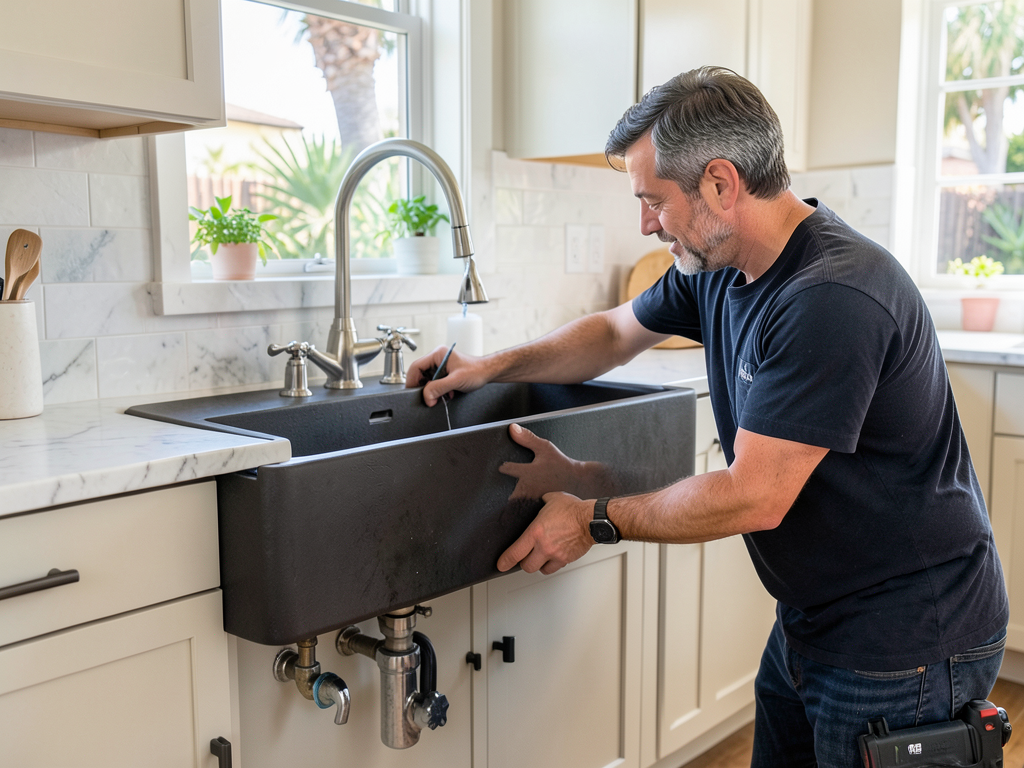
Stainless Steel vs Fireclay — Which Kitchen Sink Material Holds Up Best in San Diego
San Diego homeowners face unique challenges when selecting kitchen sinks. Hard water mineral buildup, coastal humidity, and daily wear patterns all affect which material performs best. After 15 years of installing sinks across La Jolla, Pacific Beach, and Point Loma, we’ve seen firsthand how these environmental factors impact durability and maintenance. How to Deal with a Slab Leak in Your Point Loma Home Without Destroying Your Floors.
Quick Comparison: Durability, Cost, and Maintenance
| Material | Cost Range | Scratch Resistance | Hard Water Impact | Lifespan in San Diego |
|---|---|---|---|---|
| Stainless Steel | $250-$800 | Moderate | Visible spotting | 15-20 years |
| Fireclay | $600-$1,500 | High | Minimal | 25-30 years |
| Granite Composite | $400-$1,200 | Very High | Minimal | 20-25 years |
| Cast Iron | $500-$1,200 | High | Minimal | 20-25 years |
Deep Dive into Sink Materials
Stainless Steel: The Industry Standard
304-grade stainless steel remains the most popular choice for San Diego kitchens. The material handles our coastal humidity well, but hard water creates visible mineral deposits on darker finishes. We recommend 16-18 gauge thickness for residential use – anything thinner than 18 gauge sounds tinny when washing dishes and dents easily under heavy pots. Dealing with Hard Water in Oceanside with a Professional Softener System.
Sound dampening pads underneath the basin reduce noise by 60-70% compared to uninsulated models. The pads also prevent condensation from forming on the underside during temperature changes. San Diego’s temperature swings between morning marine layer and afternoon sun can cause metal expansion and contraction without proper insulation.. Read more about Preventing a Massive Clog During Your Emerald Hills Holiday Dinner Party.
Fireclay: Timeless Aesthetic
Fireclay sinks withstand San Diego’s hard water better than any other material. The non-porous surface resists mineral buildup, and the glossy finish wipes clean with minimal effort. We’ve installed these in Spanish Colonial homes throughout La Jolla where homeowners want authentic period-appropriate fixtures. Why La Jolla Homeowners are Switching to Tankless Water Heaters This Year.
The material handles thermal shock well – you can pour boiling pasta water directly into a fireclay sink without risk of cracking. This matters in San Diego where outdoor cooking and entertaining are year-round activities. The weight requires reinforced cabinetry during installation, especially in older homes built before 1980 when building codes were less stringent.. Read more about The Safest Way to Run a New Water Line for Your Teralta Refrigerator Ice Maker.
Granite Composite: The Durability King
Granite composite sinks combine crushed granite with acrylic resins, creating a material that resists scratches, stains, and heat up to 535°F. The dense composition blocks sound better than stainless steel, making these ideal for open-concept kitchens common in new Point Loma developments.
The non-porous surface means no sealing required and zero absorption of food odors or stains. However, the material can chip if heavy objects are dropped from significant height. We’ve seen chips occur when cast iron pans fall from overhead pot racks – something to consider in kitchens with high ceilings.
Cast Iron with Enamel Coating
Enameled cast iron sinks offer classic appeal and excellent durability. The porcelain enamel finish resists San Diego’s hard water mineral deposits better than stainless steel. We recommend these for homeowners who want vintage aesthetics in Craftsman homes throughout North Park.. Read more about How the Hard Water in Skyline is Damaging Your Hair and Skin (And the Fix).
The weight – often 100+ pounds – requires proper cabinet reinforcement. The enamel can chip if struck hard enough, exposing the iron underneath which will rust if not repaired promptly. Coastal salt air accelerates any exposed metal corrosion, making prompt chip repair essential in beach communities. EPA WaterSense standards.
Copper and Natural Stone
Copper sinks develop a natural patina over time that many homeowners find appealing. The antimicrobial properties make these practical for food preparation areas. However, the material requires regular maintenance to prevent green oxidation in San Diego’s humid coastal areas.
Natural stone sinks like marble or soapstone offer unique beauty but require periodic sealing to prevent staining. The porous nature means they absorb colored liquids quickly – red wine spills on unsealed stone create permanent marks. These materials work best in low-traffic powder rooms rather than main kitchen sinks.
The San Diego Factor: Hard Water Impact
San Diego’s water contains 12-16 grains of hardness, creating mineral deposits that affect sink materials differently. Stainless steel develops white calcium spots that require vinegar treatments every 3-4 months. Granite composite shows minimal spotting but may develop a slight film over time.
Fireclay and enameled surfaces resist mineral buildup completely due to their non-porous nature. The smooth surface prevents minerals from adhering, making these materials ideal for areas with severe hard water like Mira Mesa and Scripps Ranch where municipal water has the highest mineral content.
Water softeners reduce mineral content but add sodium to the water supply. Some homeowners prefer the taste of hard water and accept the additional cleaning requirements. We recommend water testing before selecting a sink material to understand your specific water chemistry.. Read more about What to Do When the Shut-Off Valves Under Your Colina Del Sol Sink are Stuck.
Installation Styles: Undermount vs. Drop-in vs. Farmhouse
Undermount sinks attach beneath the countertop, creating a seamless transition that’s easy to clean. This style works best with solid surface countertops like quartz or granite. The installation requires precise measurements – gaps larger than 1/8 inch between sink and counter collect debris and harbor bacteria.
Drop-in sinks sit on top of the counter with a visible rim. The installation is simpler and works with any countertop material. The rim creates a small lip that can trap food particles but provides additional countertop support. This style suits rental properties where future replacement might be necessary.
Farmhouse sinks extend past the cabinet face, creating a distinctive look popular in La Jolla remodels. The installation requires custom cabinetry and precise plumbing rough-in. The exposed front panel shows water spots more readily than undermount styles, requiring more frequent wiping in high-use kitchens.
Sound Dampening Technologies
Modern sink manufacturers use multiple approaches to reduce noise. Heavy-duty rubber pads bonded to the underside absorb vibration. Some premium models include a stone guard coating – a thick, spray-on material that deadens sound and prevents condensation.
The gauge of stainless steel affects noise levels significantly. 16-gauge steel produces a solid, muted sound when washing dishes. 18-gauge and thinner materials sound hollow and amplify water noise. The difference is noticeable during normal use – 16-gauge sinks feel and sound more substantial.
Composite materials naturally dampen sound due to their density. A granite composite sink sounds like tapping on concrete rather than metal when utensils contact the surface. This matters in open floor plans where kitchen noise carries into living areas.
Scratch and Stain Resistance Ratings
Fireclay scores highest for scratch resistance – you cannot scratch the surface with normal kitchen utensils. The material can chip if struck hard enough, but daily use won’t mar the finish. This makes fireclay ideal for homes with children or heavy cooking activity.
Granite composite resists scratches well but can show fine marks from extremely hard materials like diamond sharpening steels. The color penetrates throughout the material, so minor scratches remain less visible than on stainless steel where the scratch exposes the base metal.
Stainless steel scratches more easily, especially in satin or brushed finishes. The scratches often blend into the finish pattern, becoming less noticeable over time. Avoid abrasive cleaners and use sink grids to prevent bottom scratches from pots and pans.
San Diego Plumbing Code Requirements
California Plumbing Code Section 402.4 requires proper drainage for all kitchen sinks with a minimum 1.5-inch trap. San Diego County adds requirements for air gaps on dishwasher connections to prevent backflow contamination. The code mandates accessible cleanouts for easy maintenance access. California Plumbing Code requirements.
Water conservation measures under California Title 22 limit faucet flow rates to 1.8 gallons per minute maximum. This affects sink performance – larger basins require adequate water pressure to fill efficiently. We test water pressure before recommending sink sizes to ensure practical functionality.
Seismic bracing requirements in California Building Code Section 1613 apply to sink installations. Heavy materials like fireclay and cast iron require additional support in earthquake-prone areas. The bracing prevents shifting during seismic events that could damage plumbing connections.
Maintenance Requirements by Material
Stainless steel requires regular cleaning with non-abrasive cleaners to prevent water spots. A monthly vinegar treatment removes mineral deposits. Avoid steel wool or abrasive pads that create fine scratches holding stains. Dry the sink after each use to prevent water spot formation.
Fireclay needs only mild soap and water for daily cleaning. The non-porous surface resists staining, but abrasive cleaners can dull the finish over time. A paste of baking soda and water removes stubborn stains without scratching. The material doesn’t require sealing or special treatments.
Granite composite cleans easily with most household cleaners. The non-porous surface prevents bacterial growth and odor absorption. Avoid harsh chemicals like paint thinner or oven cleaner that can damage the resin binder. A soft sponge prevents surface scratching during cleaning.
Cast iron with enamel coating requires gentle cleaning to prevent chipping. Avoid dropping heavy objects and use sink grids to protect the bottom surface. The enamel can chip if struck hard enough, exposing the iron underneath which will rust if not repaired.
Cost-Benefit Analysis for San Diego Homes
Stainless steel offers the best value for most San Diego homeowners. The initial cost is lower, and the 15-20 year lifespan provides good return on investment. The material handles our climate well and suits various architectural styles from modern condos to Spanish Revival homes.
Fireclay costs more upfront but lasts 25-30 years with minimal maintenance. The material adds value to high-end properties in La Jolla and Del Mar where authentic materials matter for resale. The non-porous surface means lower lifetime cleaning costs compared to materials requiring periodic sealing.
Granite composite falls between these options in both cost and longevity. The material suits homeowners wanting durability without the farmhouse aesthetic of fireclay. The sound dampening properties make these ideal for open-concept homes where kitchen noise affects the entire living space.
Cast iron offers classic appeal but requires more maintenance than composite materials. The weight increases installation costs, and the enamel can chip over time. These sinks suit historic home restorations where maintaining original character matters more than long-term durability.
Professional Installation Considerations
Heavy materials require proper support during installation. Fireclay and cast iron sinks often weigh 100+ pounds, requiring reinforced cabinetry and careful handling to prevent damage. We use specialized lifting equipment for these installations to protect both the sink and surrounding cabinetry.
Plumbing rough-in must account for sink depth and mounting style. Undermount installations require precise measurements – errors of even 1/4 inch create visible gaps or prevent proper mounting. The drain assembly must align perfectly with existing plumbing to prevent leaks.
Caulking and sealing around the sink perimeter prevents water damage to cabinetry. We use mildew-resistant silicone specifically formulated for kitchen and bath applications. The caulk must accommodate slight movement without cracking or separating from the surfaces.
Energy Efficiency and Environmental Impact
Stainless steel production requires significant energy but the material is 100% recyclable. Many manufacturers now use recycled content in new sinks, reducing environmental impact. The long lifespan means fewer replacements over time compared to cheaper materials that fail prematurely.
Fireclay production involves high-temperature firing but the material lasts decades longer than alternatives. The non-porous surface means less water and chemical usage for cleaning over the sink’s lifetime. The weight increases transportation emissions but the longevity offsets this impact.
Composite materials use petroleum-based resins but offer excellent durability. The manufacturing process creates less waste than natural stone cutting. These sinks resist staining, reducing the need for harsh cleaning chemicals that enter the water supply.
Frequently Asked Questions
Which sink material is best for hard water areas like San Diego?
Fireclay and enameled surfaces resist mineral buildup best due to their non-porous nature. Stainless steel shows water spots but cleans easily with vinegar treatments. Granite composite shows minimal spotting but may develop a slight film over time.
How long should a kitchen sink last in San Diego’s climate?
Stainless steel typically lasts 15-20 years, granite composite 20-25 years, and fireclay 25-30 years. Coastal humidity doesn’t significantly affect most materials, but hard water mineral deposits impact appearance and cleaning requirements.
Can I install a heavy fireclay sink in my existing cabinets?
Most existing cabinets require reinforcement for fireclay sinks weighing 100+ pounds. We assess cabinet structure before installation and add support as needed. The cost of reinforcement should factor into your budget planning.
What gauge stainless steel is best for residential use?
16-18 gauge stainless steel offers the best balance of durability and cost for residential kitchens. Thinner gauges sound tinny and dent easily under heavy pots. The gauge affects both sound quality and long-term durability.
Ready to Upgrade Your Kitchen Sink?
Choosing the right sink material affects your kitchen’s functionality and appearance for years to come. Our team evaluates your specific needs, water quality, and usage patterns to recommend the ideal solution for your San Diego home.
Call (619) 304-5400 today to schedule your consultation. We’ll assess your current setup, discuss material options, and provide a detailed quote for professional installation. Don’t wait until a small leak becomes a major problem – let our experienced plumbers handle your kitchen upgrade correctly the first time.
Pick up the phone and call (619) 304-5400 before the next storm hits. San Diego’s hard water won’t wait, and neither should you when it comes to protecting your home investment.
You may also find this helpful. Why Your Dishwasher Leaves a Puddle on the Floor of Your El Cerrito Kitchen.
{
“@context”: “https://schema.org”,
“@type”: “BlogPosting”,
“headline”: “Stainless Steel vs Fireclay — Which Kitchen Sink Material Holds Up Best in San Diego”,
“description”: “Compare stainless steel and fireclay kitchen sinks for San Diego homes. Learn which material withstands hard water, coastal humidity, and daily wear. Call (619) 304-5400.”,
“wordCount”: 2198,
“datePublished”: “2026-05-18T15:58:00.000Z”,
“dateModified”: “2026-05-18T15:58:00.000Z”,
“inLanguage”: “en-US”,
“mainEntityOfPage”: {
“@type”: “WebPage”,
“@id”: “https://aceplumbingsandiego.com”
},
“publisher”: {
“@type”: “LocalBusiness”,
“name”: “Ace Plumbing San Diego”,
“url”: “https://aceplumbingsandiego.com”
},
“author”: {
“@type”: “Organization”,
“name”: “Ace Plumbing San Diego”,
“url”: “https://aceplumbingsandiego.com”
},
“image”: {
“@type”: “ImageObject”,
“url”: “https://aceplumbingsandiego.com/wp-content/uploads/2026/03/stainless-steel-vs-fireclay-which-kitchen-sink-mat-1.png”
}
}
{
“@context”: “https://schema.org”,
“@type”: “Plumber”,
“name”: “Ace Plumbing San Diego”,
“url”: “https://aceplumbingsandiego.com”,
“address”: {
“@type”: “PostalAddress”,
“addressLocality”: “San Diego”
},
“areaServed”: {
“@type”: “City”,
“name”: “San Diego”
}
}
{
“@context”: “https://schema.org”,
“@type”: “FAQPage”,
“mainEntity”: [
{
“@type”: “Question”,
“name”: “Which sink material is best for hard water areas like San Diego?”,
“acceptedAnswer”: {
“@type”: “Answer”,
“text”: “Fireclay and enameled surfaces resist mineral buildup best due to their non-porous nature. Stainless steel shows water spots but cleans easily with vinegar treatments. Granite composite shows minimal spotting but may develop a slight film over time.”
}
},
{
“@type”: “Question”,
“name”: “How long should a kitchen sink last in San Diego’s climate?”,
“acceptedAnswer”: {
“@type”: “Answer”,
“text”: “Stainless steel typically lasts 15-20 years, granite composite 20-25 years, and fireclay 25-30 years. Coastal humidity doesn’t significantly affect most materials, but hard water mineral deposits impact appearance and cleaning requirements.”
}
},
{
“@type”: “Question”,
“name”: “Can I install a heavy fireclay sink in my existing cabinets?”,
“acceptedAnswer”: {
“@type”: “Answer”,
“text”: “Most existing cabinets require reinforcement for fireclay sinks weighing 100+ pounds. We assess cabinet structure before installation and add support as needed. The cost of reinforcement should factor into your budget planning.”
}
},
{
“@type”: “Question”,
“name”: “What gauge stainless steel is best for residential use?”,
“acceptedAnswer”: {
“@type”: “Answer”,
“text”: “16-18 gauge stainless steel offers the best balance of durability and cost for residential kitchens. Thinner gauges sound tinny and dent easily under heavy pots. The gauge affects both sound quality and long-term durability.”
}
},
{
“@type”: “Question”,
“name”: “Ready to Upgrade Your Kitchen Sink?”,
“acceptedAnswer”: {
“@type”: “Answer”,
“text”: “Choosing the right sink material affects your kitchen’s functionality and appearance for years to come. Our team evaluates your specific needs, water quality, and usage patterns to recommend the ideal solution for your San Diego home.”
}
}
]
}
{
“@context”: “https://schema.org”,
“@type”: “BreadcrumbList”,
“itemListElement”: [
{
“@type”: “ListItem”,
“position”: 1,
“name”: “Home”,
“item”: “https://aceplumbingsandiego.com”
},
{
“@type”: “ListItem”,
“position”: 2,
“name”: “Blog”,
“item”: “https://aceplumbingsandiego.com/blog”
},
{
“@type”: “ListItem”,
“position”: 3,
“name”: “Stainless Steel vs Fireclay — Which Kitchen Sink Material Holds Up Best in San Diego”
}
]
}
{
“@context”: “https://schema.org”,
“@type”: “Service”,
“serviceType”: “Plumbing”,
“provider”: {
“@type”: “LocalBusiness”,
“name”: “Ace Plumbing San Diego”,
“url”: “https://aceplumbingsandiego.com”
},
“areaServed”: {
“@type”: “City”,
“name”: “San Diego”
},
“description”: “Compare stainless steel and fireclay kitchen sinks for San Diego homes. Learn which material withstands hard water, coastal humidity, and daily wear. Call (619) 304-5400.”
}