
How to clear a clogged AC condensate line before it leaks into your Serra Mesa home
Your AC is leaking water onto the floor. The musty smell is getting stronger. You hear a strange gurgling sound from the ceiling. These are the first signs of a clogged condensate line—a common problem in Serra Mesa homes where coastal humidity meets aging HVAC systems. If left untreated, that small drip can turn into major water damage, mold growth, and a costly repair bill. EPA mold remediation guidelines.
The good news is you can often clear a minor clog yourself using simple tools and safe cleaning methods. This guide walks you through the exact steps to diagnose and fix the problem, explains when it’s time to call a professional plumber, and shows you how to prevent future clogs in San Diego’s unique climate.
Why Serra Mesa homes face unique AC drainage issues
Serra Mesa sits in a coastal-inland transition zone where summer humidity levels can spike to 70-80% during monsoon season. This moisture creates the perfect environment for algae and biofilm to grow inside your AC’s condensate drain line. Combined with San Diego’s hard water—which leaves mineral deposits on evaporator coils—your drain line can become a breeding ground for clogs in as little as one cooling season. Dealing with Hard Water in Oceanside with a Professional Softener System.
Many Serra Mesa homes built in the 1970s-1990s use attic-mounted air handlers with long PVC drain runs that trap debris. The older the system, the more likely you’ll find a buildup of calcium scale, algae, and even insect nests blocking the line.
DIY troubleshooting: how to clear a minor clog
Before you call for help, try these steps to clear a simple blockage. Always turn off the AC at the breaker before starting any work to avoid electrical hazards.
- Locate the drain line and primary pan
Find the white PVC pipe near your indoor air handler—usually in the attic or a closet. The primary drain pan sits directly under the evaporator coil and collects condensation. If you see standing water in the pan, you have a clog.
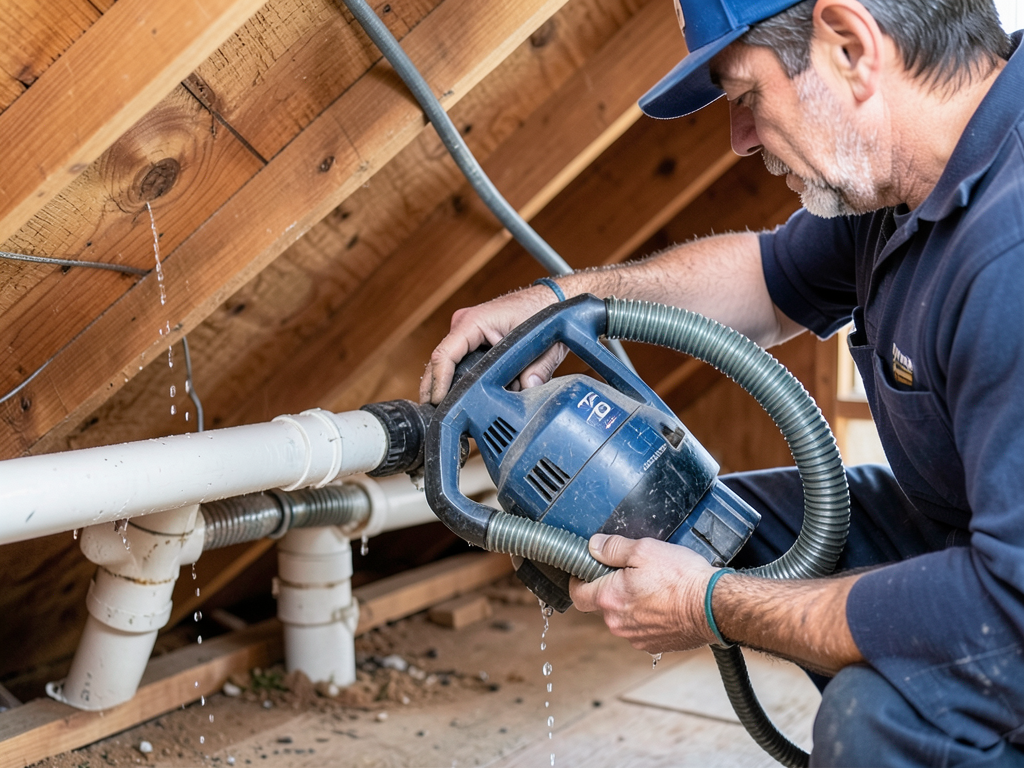
- Use a wet/dry vacuum to suction debris
Attach the vacuum hose to the outdoor end of the drain line. Seal the connection with duct tape to create suction. Run the vacuum for 2-3 minutes to pull out algae, dirt, and mineral buildup. You may hear debris rattling through the pipe.
- Flush with vinegar solution
Mix one cup of distilled white vinegar with one gallon of warm water. Pour slowly into the drain pan access point. Vinegar’s mild acidity breaks down algae without damaging PVC pipes. Avoid bleach—it can create harmful fumes and corrode metal components. How to Deal with a Slab Leak in Your Point Loma Home Without Destroying Your Floors.
If water flows freely after these steps, you’ve likely solved the problem. If not, the clog may be deeper in the line or in the evaporator coil itself.
When to call a San Diego professional plumber
Some clogs require specialized tools and expertise. Call a licensed plumber if:
- Water continues leaking after DIY attempts
- You notice mold growth on walls or ceilings
- The AC shuts off repeatedly (float switch activation)
- You smell mildew throughout your home
- Your system is over 10 years old and has never been serviced
Professional technicians use compressed air, nitrogen, or CO2 to clear stubborn blockages. They also inspect the secondary drain pan—a safety feature that catches overflow when the primary line clogs. In Serra Mesa’s older homes, these pans often rust or crack, creating hidden leak points.
California Plumbing Code Section 604.11 requires proper condensate disposal to prevent property damage. A licensed plumber ensures your system meets these standards while protecting your home from water damage. California Plumbing Code Section 604.11.
Preventative maintenance for SoCal homeowners
Annual maintenance prevents 90% of condensate line issues. Schedule a tune-up before summer heat arrives. A professional service includes:
- Flushing the entire drain system with commercial-grade algaecide
- Testing the float switch operation
- Cleaning the evaporator coil to prevent future buildup
- Inspecting drain pans for cracks or rust
Install a float switch if your system doesn’t have one. This safety device automatically shuts off the AC when water backs up, preventing overflow damage. Many Serra Mesa homes built before 2010 lack this critical protection.
During peak cooling season, pour a cup of vinegar down the drain line monthly. This simple habit keeps algae growth in check and extends the life of your system.
The cost of ignoring a clogged line
A small AC leak can cause thousands in damage. Water seeping into ceiling drywall creates the perfect environment for toxic black mold. Insurance often denies claims for neglected maintenance. The EPA estimates that mold remediation costs average $2,500-$7,000 for a single room.
Beyond property damage, a clogged line forces your AC to work harder, increasing energy bills by 15-25%. The system may short-cycle or freeze up, leading to compressor failure—a repair that costs $2,000-$4,000.
Don’t wait until you see water stains on your ceiling. Early intervention saves money and protects your family’s health.
Frequently Asked Questions
Can I use bleach to clean my AC drain line?
No. Bleach can create toxic chlorine gas when mixed with other chemicals and may damage PVC pipes over time. Use vinegar or commercial HVAC cleaners instead.
How often should I clean my condensate line?
Flush with vinegar monthly during cooling season. Schedule professional cleaning annually before summer.
What does a float switch look like?
It’s a small device attached to the drain pan with a float that rises when water accumulates. When activated, it cuts power to the AC to prevent overflow.
Why does my AC keep turning off?
A tripped float switch often indicates a clogged drain line. The system shuts down to prevent flooding.
Can a clogged line cause my AC to freeze?
Yes. Restricted drainage causes the evaporator coil to get too cold, leading to ice buildup and system shutdown.
Take action before water damage spreads
Water leaking from your AC isn’t just an inconvenience—it’s a warning sign of a developing problem that can destroy your home’s structure and air quality. The humid Serra Mesa climate makes your HVAC system particularly vulnerable to clogs and mold growth.
If you’ve tried the DIY steps and still have water leaking, or if you notice any signs of mold, don’t wait. A small investment in professional service now prevents a major repair bill later.
Call (619) 304-5400 today to schedule your AC condensate line inspection. Our licensed plumbers serve Serra Mesa and all of San Diego County with fast, reliable service that stops leaks before they cause serious damage.
Pick up the phone and call (619) 304-5400 before the next heat wave hits. Your home—and your wallet—will thank you.
{
“@context”: “https://schema.org”,
“@type”: “BlogPosting”,
“headline”: “How to clear a clogged AC condensate line before it leaks into your Serra Mesa home”,
“description”: “Stop AC water leaks in Serra Mesa homes. Learn DIY fixes for clogged condensate lines and when to call Ace Plumbing San Diego before mold damage spreads.”,
“wordCount”: 1132,
“datePublished”: “2026-03-29T14:19:00.000Z”,
“dateModified”: “2026-03-29T14:19:00.000Z”,
“inLanguage”: “en-US”,
“mainEntityOfPage”: {
“@type”: “WebPage”,
“@id”: “https://aceplumbingsandiego.com”
},
“publisher”: {
“@type”: “LocalBusiness”,
“name”: “Ace Plumbing San Diego”,
“url”: “https://aceplumbingsandiego.com”
},
“author”: {
“@type”: “Organization”,
“name”: “Ace Plumbing San Diego”,
“url”: “https://aceplumbingsandiego.com”
},
“image”: {
“@type”: “ImageObject”,
“url”: “https://aceplumbingsandiego.com/wp-content/uploads/2026/03/how-to-clear-a-clogged-ac-condensate-line-before-i-1.png”
}
}
{
“@context”: “https://schema.org”,
“@type”: “Plumber”,
“name”: “Ace Plumbing San Diego”,
“url”: “https://aceplumbingsandiego.com”,
“address”: {
“@type”: “PostalAddress”,
“addressLocality”: “San Diego”
},
“areaServed”: {
“@type”: “City”,
“name”: “San Diego”
}
}
{
“@context”: “https://schema.org”,
“@type”: “FAQPage”,
“mainEntity”: [
{
“@type”: “Question”,
“name”: “Can I use bleach to clean my AC drain line?”,
“acceptedAnswer”: {
“@type”: “Answer”,
“text”: “No. Bleach can create toxic chlorine gas when mixed with other chemicals and may damage PVC pipes over time. Use vinegar or commercial HVAC cleaners instead.”
}
},
{
“@type”: “Question”,
“name”: “How often should I clean my condensate line?”,
“acceptedAnswer”: {
“@type”: “Answer”,
“text”: “Flush with vinegar monthly during cooling season. Schedule professional cleaning annually before summer.”
}
},
{
“@type”: “Question”,
“name”: “What does a float switch look like?”,
“acceptedAnswer”: {
“@type”: “Answer”,
“text”: “It’s a small device attached to the drain pan with a float that rises when water accumulates. When activated, it cuts power to the AC to prevent overflow.”
}
},
{
“@type”: “Question”,
“name”: “Why does my AC keep turning off?”,
“acceptedAnswer”: {
“@type”: “Answer”,
“text”: “A tripped float switch often indicates a clogged drain line. The system shuts down to prevent flooding.”
}
},
{
“@type”: “Question”,
“name”: “Can a clogged line cause my AC to freeze?”,
“acceptedAnswer”: {
“@type”: “Answer”,
“text”: “Yes. Restricted drainage causes the evaporator coil to get too cold, leading to ice buildup and system shutdown.”
}
}
]
}
{
“@context”: “https://schema.org”,
“@type”: “HowTo”,
“name”: “Clear a Clogged AC Condensate Line”,
“step”: [
{
“@type”: “HowToStep”,
“position”: 1,
“name”: “Locate the drain line and primary pan”,
“text”: “Find the white PVC pipe near your indoor air handler—usually in the attic or a closet. The primary drain pan sits directly under the evaporator coil and collects condensation. If you see standing water in the pan, you have a clog.”
},
{
“@type”: “HowToStep”,
“position”: 2,
“name”: “Use a wet/dry vacuum to suction debris”,
“text”: “Attach the vacuum hose to the outdoor end of the drain line. Seal the connection with duct tape to create suction. Run the vacuum for 2-3 minutes to pull out algae, dirt, and mineral buildup. You may hear debris rattling through the pipe.”
},
{
“@type”: “HowToStep”,
“position”: 3,
“name”: “Flush with vinegar solution”,
“text”: “Mix one cup of distilled white vinegar with one gallon of warm water. Pour slowly into the drain pan access point. Vinegar’s mild acidity breaks down algae without damaging PVC pipes. Avoid bleach—it can create harmful fumes and corrode metal components. How to Deal with a Slab Leak in Your Point Loma Home Without Destroying Your Floors.”
}
],
“image”: “https://aceplumbingsandiego.com/wp-content/uploads/2026/03/how-to-clear-a-clogged-ac-condensate-line-before-i-1.png”
}
{
“@context”: “https://schema.org”,
“@type”: “BreadcrumbList”,
“itemListElement”: [
{
“@type”: “ListItem”,
“position”: 1,
“name”: “Home”,
“item”: “https://aceplumbingsandiego.com”
},
{
“@type”: “ListItem”,
“position”: 2,
“name”: “Blog”,
“item”: “https://aceplumbingsandiego.com/blog”
},
{
“@type”: “ListItem”,
“position”: 3,
“name”: “How to clear a clogged AC condensate line before it leaks into your Serra Mesa home”
}
]
}
{
“@context”: “https://schema.org”,
“@type”: “Service”,
“serviceType”: “Plumbing”,
“provider”: {
“@type”: “LocalBusiness”,
“name”: “Ace Plumbing San Diego”,
“url”: “https://aceplumbingsandiego.com”
},
“areaServed”: {
“@type”: “City”,
“name”: “San Diego”
},
“description”: “Stop AC water leaks in Serra Mesa homes. Learn DIY fixes for clogged condensate lines and when to call Ace Plumbing San Diego before mold damage spreads.”
}