
How to Choose a Heavy Duty Garage Utility Sink for Your Jamacha-Lomita Workshop
Adding a heavy duty utility sink to your Jamacha-Lomita garage transforms it from a simple storage space into a functional workshop. Whether you’re a car enthusiast, woodworker, or gardener, having a dedicated cleaning station keeps your home clean and your projects organized. The key is selecting the right sink for your specific needs while ensuring proper installation that meets San Diego plumbing codes. San Diego Development Services.
Jamacha-Lomita homeowners face unique challenges when installing garage sinks. Many homes in this area were built between the 1950s and 1980s with concrete slab foundations that make plumbing modifications more complex. The local soil composition and San Diego’s building regulations also affect your installation options. Why La Jolla Homeowners are Switching to Tankless Water Heaters This Year.
Before you purchase any sink, you need to understand your garage’s plumbing layout, drainage capabilities, and local permit requirements. This guide walks you through every decision point, from material selection to final installation, with specific focus on Jamacha-Lomita properties. How to Deal with a Slab Leak in Your Point Loma Home Without Destroying Your Floors.
Understanding Your Garage’s Plumbing Infrastructure
Most Jamacha-Lomita garages lack existing plumbing infrastructure, which means you’ll need to tap into your home’s main water supply and sewer lines. This typically involves cutting into concrete slabs or running new lines through walls. Dealing with Hard Water in Oceanside with a Professional Softener System.
The first diagnostic step is locating your home’s main water shut-off valve and sewer cleanout. These are usually found near the front of the property or in a side yard. From there, you need to determine the most efficient route to your garage.
Concrete slab cutting is common in Jamacha-Lomita due to the area’s post-war construction boom. This process involves using a concrete saw to create trenches for new plumbing lines. The dust and noise can be significant, so proper containment and scheduling are essential.
Water pressure in Jamacha-Lomita typically ranges from 45 to 65 psi, which is adequate for most utility sink applications. However, older galvanized pipes may have reduced flow due to mineral buildup common in San Diego’s hard water.
Before any work begins, you must check for underground utilities using San Diego’s Dig Alert service. This free service marks gas lines, electrical conduits, and other buried infrastructure to prevent accidents.
San Diego Building Code Requirements for Garage Sinks
Installing a utility sink in your Jamacha-Lomita garage requires compliance with the California Plumbing Code (CPC) and San Diego Municipal Code. These regulations ensure safe, sanitary installations that protect public health. California Public Utilities Commission.
According to San Diego Development Services, any new plumbing fixture requires a permit. The permit process includes submitting detailed plans showing fixture locations, drainage routes, and venting configurations. Permit fees typically range from $150 to $400 depending on project complexity.
Venting is mandatory for all plumbing fixtures. You cannot simply drain a sink into a floor drain. The vent must extend through the roof or connect to an existing vent stack. Improper venting causes slow drainage and can allow sewer gases into your garage.
Backflow prevention is another critical requirement. A properly installed P-trap prevents contaminated water from flowing back into your clean water supply. The trap must be accessible for cleaning and maintain a water seal at all times.
Gray water regulations in San Diego prohibit draining utility sinks directly onto landscaping or into storm drains. All wastewater must connect to the municipal sewer system. This means your garage sink installation will tie into your home’s existing sewer line.
Earthquake safety is also a consideration. San Diego’s building codes require flexible water supply lines and proper strapping of fixtures to prevent damage during seismic events.
Material Selection for Coastal Climate Durability
Jamacha-Lomita’s proximity to the coast means salt air and humidity can accelerate corrosion. Your sink material selection should prioritize durability and resistance to these environmental factors.
Stainless steel is the most popular choice for garage utility sinks. 16-gauge or 18-gauge stainless steel offers excellent durability while resisting rust and chemical damage. The brushed finish hides scratches and water spots better than polished surfaces.. Read more about Stainless Steel vs Fireclay — Which Kitchen Sink Material Holds Up Best in San Diego.
Heavy-duty polypropylene sinks provide a more affordable option. These plastic composite sinks resist chemicals and won’t dent like metal. However, they can warp under extreme heat and may stain from certain chemicals over time.
Cast iron with porcelain enamel coating offers superior durability but comes with a higher price tag. These sinks resist chemicals and maintain their appearance for decades. The weight can be problematic for wall-mounted installations.
Composite granite sinks combine natural stone with acrylic resins. They offer excellent heat resistance and a premium appearance. The material is non-porous, making it resistant to stains and bacteria growth.
Consider the sink’s depth carefully. Garage utility sinks typically range from 10 to 14 inches deep. Deeper sinks contain more splashing but require more bending to use. The standard 12-inch depth balances capacity with ergonomics.
Wall thickness matters for durability. Look for sinks with reinforced rims and thicker walls, especially for floor-mounted models that will bear more weight from tools and equipment.
Drainage Solutions for Concrete Slab Garages
Drainage presents the biggest challenge when installing utility sinks in Jamacha-Lomita garages. Most garage slabs are poured directly on soil with no existing drainage infrastructure.
The traditional approach involves cutting trenches in the concrete slab to install new drain lines. This requires breaking through several inches of concrete, installing PVC piping, and creating a proper P-trap assembly. The trench is then refilled with concrete.
For properties where slab cutting is impractical or too expensive, macerating pumps offer an alternative solution. These units grind waste and pump it through small-diameter pipes that can be run through walls or ceilings to reach existing plumbing.
Saniflo and similar macerating systems are popular in Jamacha-Lomita for garage installations. They handle both sink drainage and can accommodate additional fixtures like toilets or washing machines if needed later.
Gravity drainage remains the most reliable option when feasible. The drain line must maintain a minimum 1/4 inch per foot slope toward the sewer connection. This often means the sink must be positioned near an exterior wall where the drain can exit the garage.
Cleanouts are mandatory in San Diego for any new drain line longer than 15 feet. These access points allow future maintenance and clearing of potential blockages.
Consider the final drain exit point carefully. It must connect to your home’s main sewer line, not a floor drain or outdoor drainage system. This often means running pipes through walls to reach interior plumbing.
Water Supply Line Installation Options
Connecting your utility sink to water requires tapping into existing supply lines. The most common approach is connecting to nearby bathroom or kitchen plumbing.
PEX piping has become the standard for new installations due to its flexibility and resistance to freezing. It can be run through walls, under floors, or along ceiling joists with minimal cutting.
Copper piping remains popular for its durability and resistance to UV damage. However, it requires more precise cutting and soldering skills. The higher material cost is offset by its longevity.
Water hammer arrestors are recommended for garage installations. These devices prevent the loud banging noises that occur when water flow suddenly stops. They’re especially important in garages where tools and equipment may cause vibrations.
Hot water supply requires special consideration. Garage sinks typically need both hot and cold water. If your water heater is far from the garage, you may experience long wait times for hot water. Consider installing a small point-of-use water heater for the sink.
Insulation on supply lines prevents condensation in humid conditions. This is particularly important in Jamacha-Lomita where temperature fluctuations can cause sweating on cold water pipes.
Shut-off valves should be installed near the sink for easy maintenance. Ball valves offer more reliable shut-off than gate valves and are worth the slight additional cost.
Mounting Options and Space Planning
Utility sinks come in three main mounting styles: wall-mounted, floor-mounted, and cabinet-mounted. Each has advantages depending on your garage layout and usage patterns.
Wall-mounted sinks save floor space and make cleaning underneath easier. They require proper wall reinforcement to support the sink’s weight plus any items placed in it. This is often the best choice for smaller garages.
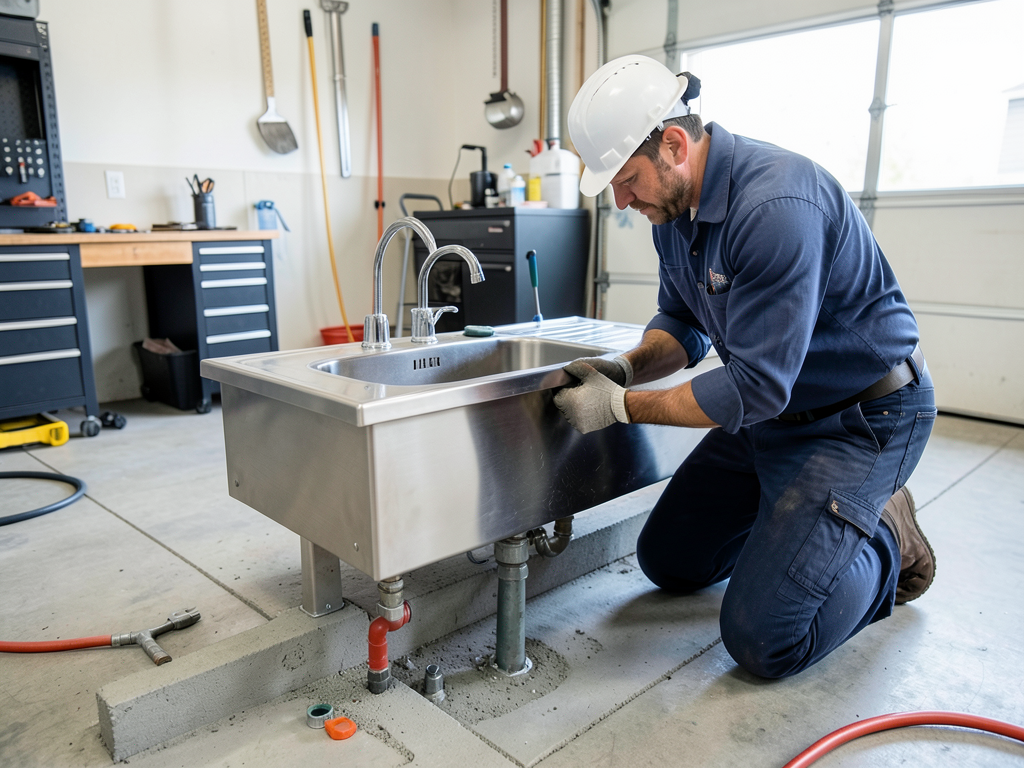
Floor-mounted sinks with legs offer more flexibility in placement. They don’t require wall reinforcement and can be positioned anywhere with proper drainage access. The open space underneath allows for storage of cleaning supplies or tools.
Cabinet-mounted sinks provide storage space for cleaning supplies and tools. They protect plumbing from damage and create a more finished appearance. However, they take up more floor space and can be harder to clean around.
Consider your workflow when planning sink placement. The ideal location allows you to work at the sink without blocking garage access or interfering with vehicle parking.
Counter space around the sink is valuable for placing tools, parts, or cleaning supplies. Even a small amount of counter space can significantly improve functionality.
Lighting is crucial for a functional workspace. Consider adding task lighting above the sink area if your garage lighting is inadequate.
Electrical outlets near the sink should be GFCI-protected to prevent shock hazards. Plan for outlets if you’ll be using power tools or equipment near the sink.
Cost Factors and Budget Planning
Installing a garage utility sink in Jamacha-Lomita typically costs between $1,200 and $3,500, depending on complexity and materials chosen.
Basic installations with existing plumbing access start around $1,200. This includes the sink, basic plumbing connections, and simple wall mounting.
Complex installations requiring concrete cutting and new drain lines range from $2,000 to $3,000. These projects involve more labor and materials for trenching and repouring concrete.
Premium installations with high-end sinks, custom cabinetry, and additional features can exceed $3,500. This includes commercial-grade fixtures and specialized mounting hardware.
Permit costs add $150 to $400 to your total. Some contractors include permit fees in their quotes, while others charge separately.
Material costs vary significantly. A basic stainless steel sink might cost $150, while a commercial-grade composite granite sink can exceed $500.
Labor typically accounts for 60% to 70% of installation costs. Complex projects requiring multiple technicians or specialized equipment will have higher labor rates.
Unexpected issues like hidden plumbing problems or structural complications can add $500 to $1,000 to your project. It’s wise to budget an additional 15% for contingencies.
DIY installation can save labor costs but requires plumbing knowledge and tools. Mistakes can lead to costly water damage, making professional installation often the safer choice.
Maintenance and Longevity Considerations
Proper maintenance extends the life of your garage utility sink and prevents costly repairs. Regular cleaning prevents buildup of chemicals, oils, and debris that can damage fixtures.
Stainless steel sinks benefit from occasional polishing with specialized cleaners to maintain their appearance. Avoid abrasive cleaners that can scratch the surface.
Check drain connections annually for leaks. The P-trap should be accessible for cleaning, and you should periodically verify that the water seal remains intact.
Inspect supply lines for signs of wear or corrosion every six months. Replace flexible lines every five to seven years as preventive maintenance.
Garage environments often expose sinks to harsh chemicals. Rinse the sink thoroughly after contact with corrosive substances to prevent damage to the finish.
Hard water in San Diego can cause mineral buildup. Consider installing a water softener if you notice significant scale formation on fixtures.
Keep the area around the sink clear of clutter to prevent accidental damage to plumbing connections. This also makes it easier to spot leaks early.
Winter temperatures in Jamacha-Lomita rarely drop below freezing, but extreme cold snaps can occur. Insulate exposed pipes during unusually cold weather to prevent freezing.
Professional Installation vs. DIY Considerations
Deciding between professional installation and DIY depends on your plumbing experience, project complexity, and local permit requirements.
Professional installation ensures compliance with San Diego building codes and includes proper permitting. Licensed plumbers carry insurance that protects you from liability for water damage or code violations.
DIY installation can save $500 to $1,500 in labor costs but requires knowledge of local codes, proper tools, and the ability to handle unexpected complications.
Time investment for DIY installation typically ranges from 8 to 20 hours, depending on your experience level and project complexity. Professionals often complete the same work in 4 to 8 hours.
Professional plumbers can identify potential issues before they become problems. They understand how to work with Jamacha-Lomita’s specific construction methods and common plumbing configurations.
DIYers must handle permit applications themselves, which can be time-consuming and confusing. Professional contractors typically manage this process as part of their service.
Warranty coverage differs significantly. Professional installations often include workmanship warranties, while DIY projects leave you responsible for any failures.
Consider your comfort level with plumbing tasks. If you’re unsure about any aspect of the installation, professional help prevents costly mistakes.
Frequently Asked Questions
Do I need a permit to install a utility sink in my Jamacha-Lomita garage?
Yes, San Diego Municipal Code requires permits for all new plumbing fixtures. The permit process ensures your installation meets California Plumbing Code requirements and includes proper inspections.
Can I install a garage sink without cutting concrete?
Yes, macerating pump systems allow installation without concrete cutting. These units pump waste through small pipes that can run through walls or ceilings to reach existing plumbing.
How long does a typical garage sink installation take?
Professional installation typically requires 4 to 8 hours for straightforward projects. Complex installations involving concrete cutting may take 1 to 2 days including drying time for new concrete.
What’s the best material for a garage utility sink in coastal areas?
16-gauge stainless steel offers the best combination of durability, corrosion resistance, and value for coastal environments. It withstands salt air and chemical exposure better than most alternatives.
Can I vent my garage sink through the wall instead of the roof?
Wall venting is allowed in specific circumstances but must connect to the home’s main vent system. Simple wall vents without proper connections violate plumbing codes and can cause drainage problems.
Ready to Upgrade Your Jamacha-Lomita Workshop?
Installing a heavy duty utility sink in your garage is a significant improvement that adds functionality and value to your home. The right sink, properly installed, serves you for decades while meeting all San Diego safety requirements.
Don’t let plumbing complexity deter you from creating the workshop you’ve always wanted. Professional installation ensures your sink works perfectly from day one and remains trouble-free for years to come.
Call (619) 304-5400 today to schedule your free consultation. Our experienced plumbers will evaluate your garage layout, explain your options, and provide a detailed quote with no hidden fees.
Pick up the phone and call (619) 304-5400 before the next weekend project leaves you cleaning up in your kitchen sink. Your perfect garage workshop is just one call away.
You may also find this helpful. Why your Barrio Logan loft conversion might need a sewer ejector pump.
{
“@context”: “https://schema.org”,
“@type”: “BlogPosting”,
“headline”: “How to choose a heavy duty garage utility sink for your Jamacha-Lomita workshop”,
“description”: “Expert guide to selecting and installing heavy duty garage utility sinks in Jamacha-Lomita. Learn San Diego codes, drainage solutions, and professional installation tips.”,
“wordCount”: 2479,
“datePublished”: “2026-04-28T12:47:00.000Z”,
“dateModified”: “2026-04-28T12:47:00.000Z”,
“inLanguage”: “en-US”,
“mainEntityOfPage”: {
“@type”: “WebPage”,
“@id”: “https://aceplumbingsandiego.com”
},
“publisher”: {
“@type”: “LocalBusiness”,
“name”: “Ace Plumbing San Diego”,
“url”: “https://aceplumbingsandiego.com”
},
“author”: {
“@type”: “Organization”,
“name”: “Ace Plumbing San Diego”,
“url”: “https://aceplumbingsandiego.com”
},
“image”: {
“@type”: “ImageObject”,
“url”: “https://aceplumbingsandiego.com/wp-content/uploads/2026/03/how-to-choose-a-heavy-duty-garage-utility-sink-for-1.png”
}
}
{
“@context”: “https://schema.org”,
“@type”: “Plumber”,
“name”: “Ace Plumbing San Diego”,
“url”: “https://aceplumbingsandiego.com”,
“address”: {
“@type”: “PostalAddress”,
“addressLocality”: “San Diego”
},
“areaServed”: {
“@type”: “City”,
“name”: “San Diego”
}
}
{
“@context”: “https://schema.org”,
“@type”: “FAQPage”,
“mainEntity”: [
{
“@type”: “Question”,
“name”: “Do I need a permit to install a utility sink in my Jamacha-Lomita garage?”,
“acceptedAnswer”: {
“@type”: “Answer”,
“text”: “Yes, San Diego Municipal Code requires permits for all new plumbing fixtures. The permit process ensures your installation meets California Plumbing Code requirements and includes proper inspections.”
}
},
{
“@type”: “Question”,
“name”: “Can I install a garage sink without cutting concrete?”,
“acceptedAnswer”: {
“@type”: “Answer”,
“text”: “Yes, macerating pump systems allow installation without concrete cutting. These units pump waste through small pipes that can run through walls or ceilings to reach existing plumbing.”
}
},
{
“@type”: “Question”,
“name”: “How long does a typical garage sink installation take?”,
“acceptedAnswer”: {
“@type”: “Answer”,
“text”: “Professional installation typically requires 4 to 8 hours for straightforward projects. Complex installations involving concrete cutting may take 1 to 2 days including drying time for new concrete.”
}
},
{
“@type”: “Question”,
“name”: “What’s the best material for a garage utility sink in coastal areas?”,
“acceptedAnswer”: {
“@type”: “Answer”,
“text”: “16-gauge stainless steel offers the best combination of durability, corrosion resistance, and value for coastal environments. It withstands salt air and chemical exposure better than most alternatives.”
}
},
{
“@type”: “Question”,
“name”: “Can I vent my garage sink through the wall instead of the roof?”,
“acceptedAnswer”: {
“@type”: “Answer”,
“text”: “Wall venting is allowed in specific circumstances but must connect to the home’s main vent system. Simple wall vents without proper connections violate plumbing codes and can cause drainage problems.”
}
},
{
“@type”: “Question”,
“name”: “Ready to Upgrade Your Jamacha-Lomita Workshop?”,
“acceptedAnswer”: {
“@type”: “Answer”,
“text”: “Installing a heavy duty utility sink in your garage is a significant improvement that adds functionality and value to your home. The right sink, properly installed, serves you for decades while meeting all San Diego safety requirements.”
}
}
]
}
{
“@context”: “https://schema.org”,
“@type”: “BreadcrumbList”,
“itemListElement”: [
{
“@type”: “ListItem”,
“position”: 1,
“name”: “Home”,
“item”: “https://aceplumbingsandiego.com”
},
{
“@type”: “ListItem”,
“position”: 2,
“name”: “Blog”,
“item”: “https://aceplumbingsandiego.com/blog”
},
{
“@type”: “ListItem”,
“position”: 3,
“name”: “How to choose a heavy duty garage utility sink for your Jamacha-Lomita workshop”
}
]
}
{
“@context”: “https://schema.org”,
“@type”: “Service”,
“serviceType”: “Plumbing”,
“provider”: {
“@type”: “LocalBusiness”,
“name”: “Ace Plumbing San Diego”,
“url”: “https://aceplumbingsandiego.com”
},
“areaServed”: {
“@type”: “City”,
“name”: “San Diego”
},
“description”: “Expert guide to selecting and installing heavy duty garage utility sinks in Jamacha-Lomita. Learn San Diego codes, drainage solutions, and professional installation tips.”
}