
Comparing Reverse Osmosis Systems for Cleaner Drinking Water in Tierrasanta
Tierrasanta residents often notice a distinct taste in their tap water caused by high mineral content and chlorine treatment. The San Diego County Water Authority supplies water with elevated Total Dissolved Solids levels averaging 500-700 ppm throughout the area. This makes standard filtration inadequate for truly clean drinking water. A reverse osmosis system removes up to 99% of contaminants including lead, arsenic, chromium-6, and dissolved minerals that cause that characteristic San Diego taste. Dealing with Hard Water in Oceanside with a Professional Softener System.
How Reverse Osmosis Differs From Standard Water Filters
Standard carbon filters use activated charcoal to trap larger particles and absorb chlorine. They work well for improving taste and removing sediment down to about 5 microns. Reverse osmosis systems push water through a semi-permeable membrane that blocks particles as small as 0.0001 microns. This molecular-level filtration removes dissolved salts, heavy metals, and microorganisms that carbon filters cannot touch.
Tierrasanta’s water contains chloramines instead of free chlorine for disinfection. These compounds resist standard carbon filtration and require specialized catalytic carbon stages found in quality RO systems. The local water also carries high calcium and magnesium levels that standard filters cannot reduce.
Side-by-Side Comparison of Filtration Systems
| Feature | Standard Carbon Filter | Reverse Osmosis System |
|---|---|---|
| Contaminants Removed | Chlorine, sediment, some VOCs | 99% of TDS, lead, arsenic, chromium-6, bacteria, viruses |
| Micron Rating | 5 microns | 0.0001 microns |
| Wastewater Ratio | 1:1 (no waste) | 3-4 gallons waste per gallon purified |
| Maintenance Frequency | Every 6 months | Filters: 6 months, Membrane: 2-3 years |
| Installation Cost (Tierrasanta) | $150-$300 | $400-$800 |
Why Tierrasanta’s Water Hardness Matters for Your System
Tierrasanta’s water hardness measures 16-20 grains per gallon, well above the 10 gpg threshold where scale buildup accelerates. This mineral concentration affects RO system performance in several ways. Hard water causes calcium carbonate to precipitate on membrane surfaces, reducing flow rates by up to 30% within months. The high TDS also means the membrane works harder to separate pure water from dissolved solids. EPA Secondary Drinking Water Standards.
Many Tierrasanta homes already use water softeners to protect plumbing and appliances. When an RO system follows a softener, the membrane lasts longer because it receives pre-softened water with reduced mineral load. However, the softener’s sodium content adds to the TDS the RO must process, slightly reducing overall efficiency.
Installation Considerations for Tierrasanta Homes
Most Tierrasanta residences feature slab-on-grade construction common throughout San Diego’s inland neighborhoods. This affects RO installation since there are no basements for equipment placement. Under-sink installation in the kitchen becomes the standard approach. The cold water line typically runs through the slab, requiring careful drilling to avoid existing plumbing or electrical conduits.
Water pressure in Tierrasanta averages 45-55 psi, slightly below the 60 psi ideal for RO systems. This means most installations require a booster pump to maintain adequate flow rates. Without proper pressure, RO production drops significantly and wastewater ratios increase. How to Deal with a Slab Leak in Your Point Loma Home Without Destroying Your Floors.
Maintenance Requirements in San Diego’s Climate
The high mineral content in Tierrasanta water means pre-filters clog faster than national averages. Sediment filters typically need replacement every 3-4 months instead of 6. Carbon filters also degrade more quickly due to the chloramine load, requiring changes every 4-5 months.
The RO membrane itself lasts 2-3 years in Tierrasanta compared to 3-5 years in areas with softer water. A simple pressure gauge test reveals membrane degradation when feed pressure rises 15-20% above baseline while production drops. Annual sanitization prevents bacterial growth in the storage tank and lines.
Environmental Impact and Water Conservation
RO systems in Tierrasanta waste approximately 3-4 gallons for every gallon of purified water produced. With San Diego’s water rates averaging $5.34 per hundred cubic feet, this translates to about $0.25-$0.30 monthly in additional wastewater costs. The brine discharge contains concentrated minerals and any rejected contaminants.
Modern systems include automatic shut-off valves that stop wastewater once the storage tank fills. Some high-efficiency models achieve 1:1 ratios using permeate pumps, though these cost 30-40% more upfront. The environmental trade-off involves weighing water waste against eliminating plastic bottle usage, which reduces petroleum consumption and landfill waste.
NSF Certification and Local Compliance
Quality RO systems carry NSF/ANSI Standard 58 certification for reverse osmosis units. This ensures the system meets rigorous testing for contaminant reduction claims. In San Diego County, installations must comply with California Plumbing Code Section 609.2 regarding cross-connection control. This requires an air gap faucet to prevent backflow contamination. NSF Consumer Information on Water Treatment.
The California Energy Commission mandates that RO systems manufactured after 2010 meet specific efficiency standards for wastewater reduction. Tierrasanta installations must also follow San Diego County’s building permit requirements for any plumbing modification, though point-of-use RO systems typically qualify for permit exemptions.
Cost Analysis Over Five Years
A complete RO system including installation costs $600-$900 in Tierrasanta. Annual maintenance including filter replacements runs $150-$200. The membrane replacement at year three adds another $100-$150. Total five-year ownership costs approximately $1,300-$1,500.
Comparing this to bottled water costs reveals significant savings. A family of four drinking the recommended 64 ounces daily would spend $600-$800 annually on bottled water at $0.35 per bottle. The RO system pays for itself in 18-24 months while providing unlimited clean water.
Choosing the Right System for Your Home
Consider your household size and water usage patterns. A family of four needs at least 50 gallons per day production capacity. If you already have a water softener, choose an RO system designed to work with softened water to maximize membrane life.
For Tierrasanta’s water profile, systems with catalytic carbon pre-filters handle chloramines better than standard carbon. Look for models with automatic shut-off valves and pressure gauges for easier maintenance monitoring. The storage tank size should match your peak usage – 3-4 gallon tanks serve most families adequately.
Installation quality affects system longevity more than brand name. Proper mounting prevents vibration damage, and correct tubing routing avoids kinking that restricts flow. Professional installation ensures compliance with local codes and optimal system performance.
Frequently Asked Questions
Does RO water taste different from bottled water?
Yes, RO water has a cleaner, crisper taste because it removes dissolved minerals that affect flavor. Many people find it superior to bottled spring water, which retains its mineral content. The absence of chlorine and chloramine also eliminates the chemical aftertaste common in tap water.
Will an RO system affect my water pressure at other faucets?
A properly installed RO system taps into the cold water line under the sink and does not affect pressure at other fixtures. The system includes its own dedicated faucet, usually mounted next to the main faucet. Some users notice slightly reduced flow at the RO faucet when the storage tank is nearly empty.
How much space does an RO system require under the sink?
Most systems need 12-16 inches of vertical space for the filter assembly and 15-18 inches of horizontal space for the storage tank. The tank is typically 10-12 inches in diameter and 15-16 inches tall. Measure your under-sink area before purchasing, as garbage disposals and plumbing can limit available space.
Can I install an RO system myself?
While DIY installation is possible, professional installation ensures proper connections, code compliance, and optimal performance. Mistakes like cross-threading fittings or improper drain connections can cause leaks or contamination. Professional installers also test water quality before and after installation to verify system performance.
What happens to the contaminants the RO system removes?
The rejected contaminants exit through the drain line as concentrated brine. This wastewater contains the same minerals and chemicals that were in your tap water, just at higher concentrations. The system does not store or concentrate contaminants – it continuously flushes them away during the purification process.
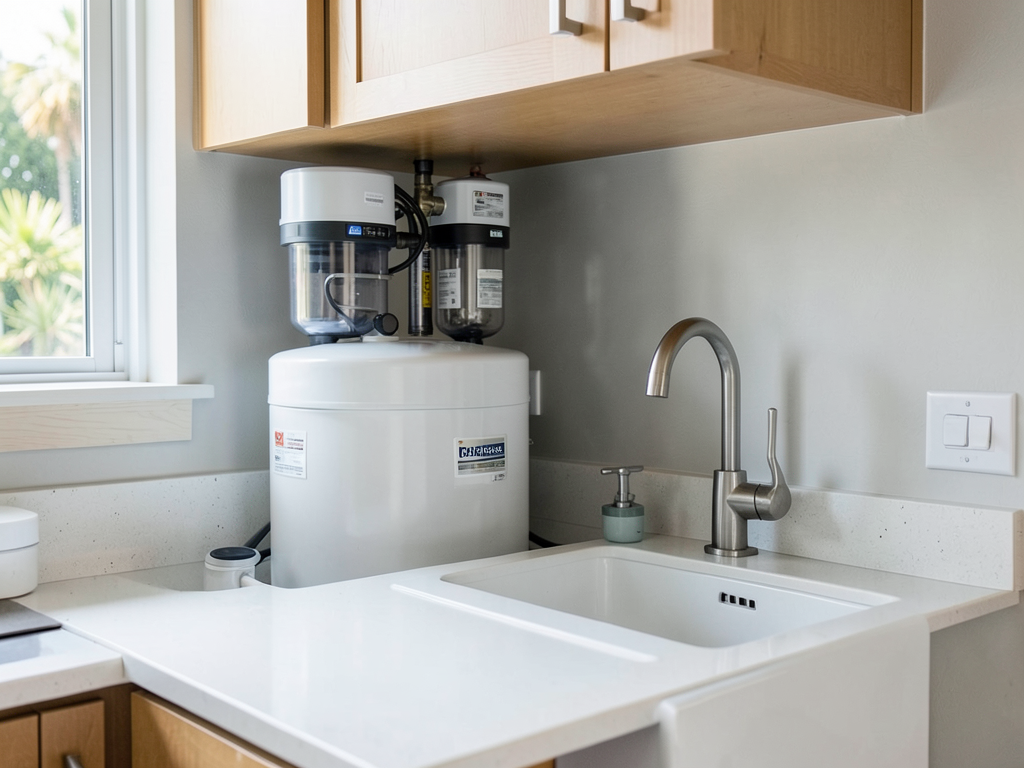
Diagram showing the four-stage filtration process in a reverse osmosis system, including sediment filter, carbon pre-filter, membrane, and carbon post-filter stages.
Photo of a complete under-sink reverse osmosis installation showing the filter assembly, storage tank, dedicated faucet, and tubing connections in a typical Tierrasanta kitchen cabinet.
Close-up of an RO membrane housing with pressure gauge and quick-connect fittings, demonstrating the diagnostic tools used to monitor system performance and identify maintenance needs.
Take Control of Your Water Quality Today
Clean drinking water should not be a luxury in your own home. The high mineral content and chloramine treatment in Tierrasanta’s water supply make reverse osmosis the most effective solution for truly pure drinking water. While standard filters improve taste, only RO systems remove the dissolved contaminants that affect both health and flavor.
Professional installation ensures your system works efficiently from day one. Our technicians understand Tierrasanta’s specific water conditions and building characteristics, from slab construction to typical water pressure ranges. We provide complete installation, maintenance training, and ongoing support to keep your system performing optimally.
Call (619) 304-5400 today to schedule your free water quality assessment and learn which reverse osmosis system best fits your home’s needs. Clean, great-tasting water is just one call away.
{
“@context”: “https://schema.org”,
“@type”: “BlogPosting”,
“headline”: “Comparing Reverse Osmosis Systems for Cleaner Drinking Water in Tierrasanta”,
“description”: “Discover which reverse osmosis system best tackles Tierrasanta’s hard water. Compare filtration stages, maintenance needs, and local water quality data from the San Diego County Water Authority.”,
“wordCount”: 1498,
“datePublished”: “2026-03-11T13:48:00.000Z”,
“dateModified”: “2026-03-11T13:48:00.000Z”,
“inLanguage”: “en-US”,
“mainEntityOfPage”: {
“@type”: “WebPage”,
“@id”: “https://aceplumbingsandiego.com”
},
“publisher”: {
“@type”: “LocalBusiness”,
“name”: “Ace Plumbing San Diego”,
“url”: “https://aceplumbingsandiego.com”
},
“author”: {
“@type”: “Organization”,
“name”: “Ace Plumbing San Diego”,
“url”: “https://aceplumbingsandiego.com”
},
“image”: {
“@type”: “ImageObject”,
“url”: “https://aceplumbingsandiego.com/wp-content/uploads/2026/03/comparing-reverse-osmosis-systems-for-cleaner-drin-1.png”
}
}
{
“@context”: “https://schema.org”,
“@type”: “Plumber”,
“name”: “Ace Plumbing San Diego”,
“url”: “https://aceplumbingsandiego.com”,
“address”: {
“@type”: “PostalAddress”,
“addressLocality”: “San Diego”
},
“areaServed”: {
“@type”: “City”,
“name”: “San Diego”
}
}
{
“@context”: “https://schema.org”,
“@type”: “FAQPage”,
“mainEntity”: [
{
“@type”: “Question”,
“name”: “Does RO water taste different from bottled water?”,
“acceptedAnswer”: {
“@type”: “Answer”,
“text”: “Yes, RO water has a cleaner, crisper taste because it removes dissolved minerals that affect flavor. Many people find it superior to bottled spring water, which retains its mineral content. The absence of chlorine and chloramine also eliminates the chemical aftertaste common in tap water.”
}
},
{
“@type”: “Question”,
“name”: “Will an RO system affect my water pressure at other faucets?”,
“acceptedAnswer”: {
“@type”: “Answer”,
“text”: “A properly installed RO system taps into the cold water line under the sink and does not affect pressure at other fixtures. The system includes its own dedicated faucet, usually mounted next to the main faucet. Some users notice slightly reduced flow at the RO faucet when the storage tank is nearly empty.”
}
},
{
“@type”: “Question”,
“name”: “How much space does an RO system require under the sink?”,
“acceptedAnswer”: {
“@type”: “Answer”,
“text”: “Most systems need 12-16 inches of vertical space for the filter assembly and 15-18 inches of horizontal space for the storage tank. The tank is typically 10-12 inches in diameter and 15-16 inches tall. Measure your under-sink area before purchasing, as garbage disposals and plumbing can limit available space.”
}
},
{
“@type”: “Question”,
“name”: “Can I install an RO system myself?”,
“acceptedAnswer”: {
“@type”: “Answer”,
“text”: “While DIY installation is possible, professional installation ensures proper connections, code compliance, and optimal performance. Mistakes like cross-threading fittings or improper drain connections can cause leaks or contamination. Professional installers also test water quality before and after installation to verify system performance.”
}
},
{
“@type”: “Question”,
“name”: “What happens to the contaminants the RO system removes?”,
“acceptedAnswer”: {
“@type”: “Answer”,
“text”: “The rejected contaminants exit through the drain line as concentrated brine. This wastewater contains the same minerals and chemicals that were in your tap water, just at higher concentrations. The system does not store or concentrate contaminants – it continuously flushes them away during the purification process.”
}
}
]
}
{
“@context”: “https://schema.org”,
“@type”: “BreadcrumbList”,
“itemListElement”: [
{
“@type”: “ListItem”,
“position”: 1,
“name”: “Home”,
“item”: “https://aceplumbingsandiego.com”
},
{
“@type”: “ListItem”,
“position”: 2,
“name”: “Blog”,
“item”: “https://aceplumbingsandiego.com/blog”
},
{
“@type”: “ListItem”,
“position”: 3,
“name”: “Comparing Reverse Osmosis Systems for Cleaner Drinking Water in Tierrasanta”
}
]
}
{
“@context”: “https://schema.org”,
“@type”: “Service”,
“serviceType”: “Plumbing”,
“provider”: {
“@type”: “LocalBusiness”,
“name”: “Ace Plumbing San Diego”,
“url”: “https://aceplumbingsandiego.com”
},
“areaServed”: {
“@type”: “City”,
“name”: “San Diego”
},
“description”: “Discover which reverse osmosis system best tackles Tierrasanta’s hard water. Compare filtration stages, maintenance needs, and local water quality data from the San Diego County Water Authority.”
}