
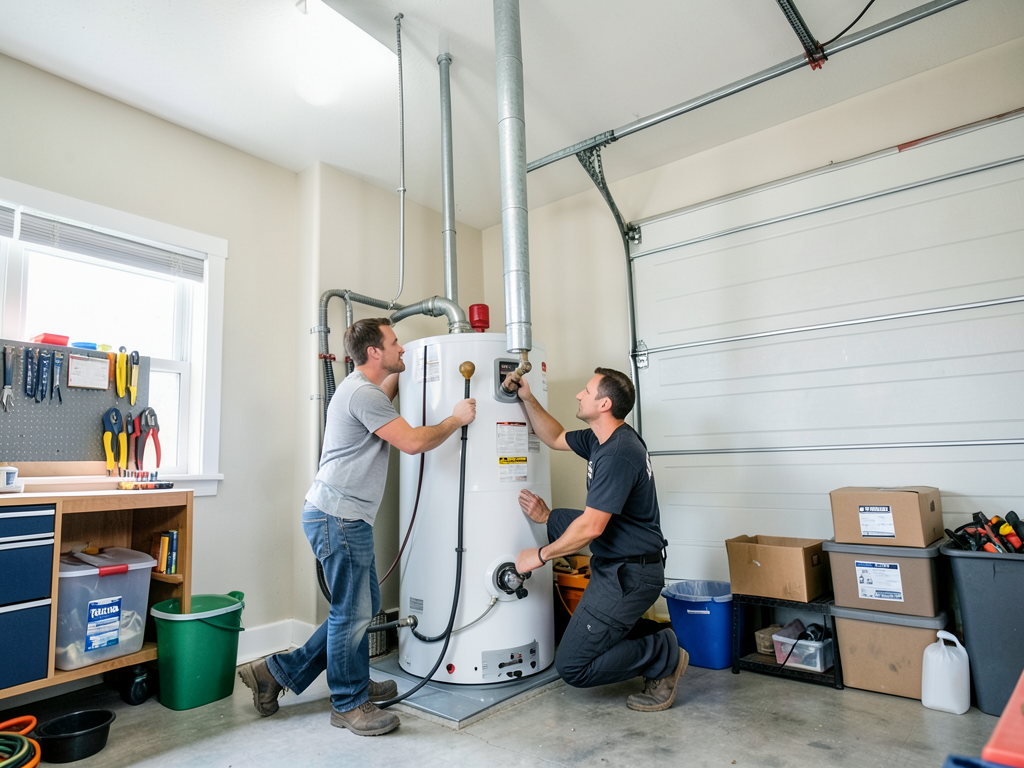
Comparing heat pump water heaters and traditional gas units for your Otay Ranch home
Homeowners in Otay Ranch face a choice between heat pump and gas water heaters that impacts monthly utility bills and long-term comfort. Heat pump units extract warmth from surrounding air using electricity while gas units burn natural gas to heat water directly. Each system offers distinct advantages based on your home’s layout energy goals and budget. Why La Jolla Homeowners are Switching to Tankless Water Heaters This Year.
How heat pump water heaters perform in Otay Ranch’s coastal climate
Heat pump water heaters use a refrigeration cycle to move heat from the air into your water tank. In Otay Ranch where average temperatures stay between 55-75°F year-round these units achieve impressive efficiency. The Coefficient of Performance typically ranges from 2.5 to 3.5 meaning they produce 2.5-3.5 units of heat for every unit of electricity consumed. Dealing with Hard Water in Oceanside with a Professional Softener System.
During San Diego’s occasional heat waves heat pump units actually become more efficient since they have more thermal energy to extract from the air. This contrasts with colder regions where efficiency drops significantly in winter months. The mild Otay Ranch climate means consistent year-round performance without the seasonal efficiency swings seen in other parts of the country. How to Deal with a Slab Leak in Your Point Loma Home Without Destroying Your Floors.
Traditional gas water heater technology in Otay Ranch homes
Traditional gas water heaters use either atmospheric venting or power venting to exhaust combustion gases. Atmospheric units rely on natural convection to draw air through the burner and up the flue while power-vent models use a fan to force exhaust through a sealed vent pipe. Most Otay Ranch homes built after 2010 use power-vent systems due to improved safety and efficiency standards.
Gas units heat water directly through a burner at the bottom of the tank achieving thermal efficiency ratings between 60-70% for atmospheric models and 75-80% for power-vent units. Recovery rates typically range from 30-45 gallons per hour for a standard 40-gallon tank meaning you can completely reheat the tank in about an hour after heavy use.
Energy efficiency comparison and Uniform Energy Factor ratings
The Uniform Energy Factor measures how efficiently a water heater converts energy into hot water over a typical day. Heat pump water heaters achieve UEF ratings of 2.0-3.5 while high-efficiency gas units reach 0.65-0.80. This means heat pumps use significantly less energy to produce the same amount of hot water.
For a family of four using 60-80 gallons of hot water daily a heat pump might consume 1500-2000 kWh annually while a gas unit would use 200-300 therms. In Otay Ranch where electricity rates from SDG&E average $0.28-0.32 per kWh and natural gas costs about $1.80 per therm the annual energy cost difference becomes substantial.
Installation requirements and space considerations for Otay Ranch properties
Heat pump water heaters require dedicated space with adequate airflow and temperature control. Most manufacturers recommend a minimum 750 cubic feet of air space and temperatures between 40-90°F. In Otay Ranch garages this often means installing the unit in a corner away from the garage door to avoid cold drafts. The units also need a condensate drain since they produce water as a byproduct of the heat extraction process.
Gas units need proper venting to the outside and access to a gas line. Atmospheric models require a vertical chimney or roof vent while power-vent units can use horizontal PVC piping through an exterior wall. Gas units also produce combustion byproducts that must be safely vented requiring careful planning during installation to meet California building codes. California Title 24 energy efficiency standards.
Cost analysis for Otay Ranch homeowners
Heat pump water heaters typically cost $1800-2500 for the unit alone with installation ranging from $500-1200 depending on electrical requirements and condensate drainage needs. Gas units run $600-1200 for the equipment with installation costs of $400-900 for standard replacements.
However the total cost picture extends beyond initial purchase. Heat pumps qualify for federal tax credits up to $2000 through the Inflation Reduction Act and California’s TECH Clean California program offers additional rebates of $300-500. SDG&E also provides time-of-use rate plans that can reduce operating costs by 15-25% if you run the unit during off-peak hours.
Recovery time and first-hour rating comparison
First-hour rating indicates how much hot water a heater can deliver in one hour when starting with a full tank. Heat pump units typically achieve 50-70 gallons per hour while gas units reach 60-80 gallons. However heat pumps take 2-3 hours to fully recover after depleting the tank compared to 1-1.5 hours for gas units.
This recovery difference matters most for large families or homes with multiple bathrooms. A household using 80-100 gallons during peak morning hours might experience brief cold showers with a heat pump if everyone showers within 30 minutes. Gas units handle these scenarios better but at higher operating costs.
Maintenance requirements and lifespan expectations
Heat pump water heaters need annual maintenance including cleaning air filters checking refrigerant levels and flushing the tank to prevent mineral buildup. The evaporator coils should be inspected every two years. With proper maintenance these units typically last 10-15 years though the compressor may need replacement around year 8-10.. Read more about Should You Run a New Gas Line for Your Laundry Room in Kearny Mesa?.
Gas units require less frequent maintenance but still need annual inspections of the burner venting system and anode rod. The combustion chamber should be cleaned every 2-3 years. Gas water heaters generally last 8-12 years with the tank itself being the most common failure point due to corrosion.
Noise levels and operating characteristics
Heat pump water heaters produce noise levels between 45-55 decibels during operation similar to a window air conditioner. This noise comes from the compressor and fan working to extract heat from the air. In garage installations common in Otay Ranch this noise is usually not noticeable from living spaces but can be heard in adjacent rooms.
Gas units operate more quietly at 35-45 decibels but produce combustion noise that some homeowners find more noticeable. Neither type should be installed in bedrooms or living areas due to continuous operation noise though modern units have sound-dampening features that reduce operational noise significantly.
Environmental impact and emissions comparison
Heat pump water heaters produce zero direct emissions at the point of use. Their environmental impact depends on the electricity source but even with SDG&E’s current energy mix they produce about 60% less carbon than gas units over their lifetime. As California’s grid becomes cleaner this advantage will increase. current natural gas prices in San Diego.
Gas units emit carbon dioxide directly through combustion producing approximately 10-12 tons of CO2 annually for a typical household. They also release small amounts of nitrogen oxides and other combustion byproducts. While modern units meet all emissions standards they still contribute to local air quality issues and greenhouse gas emissions.
California Title 24 requirements for water heater replacements
California’s Title 24 energy efficiency standards require that water heater replacements meet specific efficiency thresholds. For gas units this means a minimum thermal efficiency of 0.80 for units over 55000 BTU/hour. Heat pump water heaters automatically exceed these requirements with their superior efficiency ratings.
The California Energy Commission also mandates that all new residential water heaters have an Energy Factor of at least 0.90 by 2025 effectively pushing the market toward heat pump technology for electric units. These regulations make gas-to-electric conversions increasingly attractive from a compliance standpoint.
Rebates and incentives available in 2026
Federal tax credits through the Inflation Reduction Act provide up to $2000 for qualified heat pump water heaters meeting Energy Star criteria. California’s TECH Clean California program offers point-of-sale rebates of $300-500 depending on the unit’s efficiency rating and installation location.
SDG&E provides additional rebates of $250-350 for heat pump water heater installations with bonus amounts available for income-qualified households. Some Otay Ranch homeowners may also qualify for local utility rebates through the California Public Utilities Commission’s energy efficiency programs.
Space requirements and installation flexibility
Heat pump water heaters need more vertical clearance than gas units due to the heat pump assembly on top. Most models require 7-8 feet of ceiling height which can be challenging in older Otay Ranch homes with standard 7-foot garage ceilings. Some manufacturers offer low-profile models for tight spaces though these sacrifice some efficiency.
Gas units are more flexible with space constraints and can fit in smaller utility closets or outdoor installations. However they still need proper clearances for venting and combustion air intake. The flexibility of gas units makes them easier to install in existing homes without major modifications.
Performance in extreme weather conditions
Heat pump water heaters lose efficiency when ambient temperatures drop below 40°F though this rarely happens in Otay Ranch’s coastal climate. During San Diego’s occasional cold snaps units may switch to electric resistance backup mode which uses more energy but still maintains hot water supply.
Gas units perform consistently regardless of outdoor temperature since they generate their own heat through combustion. This reliability advantage matters most in inland Otay Ranch areas that experience wider temperature swings though the coastal influence keeps most neighborhoods within the optimal operating range for heat pumps.
Making the right choice for your Otay Ranch home
The decision between heat pump and gas water heaters depends on your specific circumstances. Heat pumps make the most sense if you have adequate space plan to stay in your home 5+ years to recoup the higher upfront costs through energy savings and value environmental benefits. They’re particularly cost-effective for homes with existing electrical infrastructure that can handle the additional load.
Gas units remain the better choice if you need fast recovery times have limited space or want the lowest initial installation cost. They also make sense if your home already has a gas line and you’re not planning major electrical upgrades. The reliability and familiarity of gas technology still appeals to many homeowners despite the higher operating costs.
Professional installation considerations
Both types require professional installation to ensure safety and code compliance. Heat pump installations need proper condensate drainage adequate electrical circuits and consideration for noise levels. Gas installations require proper venting gas line connections and combustion safety checks. Neither is a DIY project due to the technical requirements and safety considerations.
Professional installers can also help navigate permit requirements which are mandatory for both types in San Diego County. They’ll ensure your chosen unit meets all local building codes and efficiency standards while providing warranty protection for the installation work.
Key considerations for Otay Ranch homeowners
Otay Ranch’s coastal location provides ideal conditions for heat pump water heaters with mild year-round temperatures that maximize efficiency. The area’s newer homes built after 2010 typically have the electrical capacity needed for heat pump installations though some may need panel upgrades. Homes near the Otay Lakes area experience slightly cooler temperatures that can affect heat pump performance during winter months.
Local building codes require permits for all water heater replacements and mandate specific venting requirements based on unit type. The Otay Ranch community has seen increased adoption of heat pump technology as energy costs rise and rebate programs expand. Many homeowners in the area choose heat pumps for their long-term savings despite higher upfront costs.
Understanding your home’s specific needs
Evaluating your household’s hot water usage patterns helps determine the right system size. A family of four typically needs a 40-50 gallon unit while larger households or those with high hot water demand may need 65-80 gallon models. First-hour rating matters more than tank size for determining if a unit meets your needs.
Consider your home’s existing infrastructure when choosing between systems. Heat pumps require 240-volt electrical circuits and adequate air space while gas units need proper venting and gas line access. Professional assessment can identify any needed upgrades before installation begins.
Ready to upgrade your water heater?
Call (619) 304-5400 today to schedule a free consultation and learn which water heater system makes the most sense for your Otay Ranch home. Our licensed plumbers will evaluate your space energy needs and budget to recommend the perfect solution.
Take the next step toward energy savings
Don’t wait until your current water heater fails. Call (619) 304-5400 now to explore heat pump and gas options before you’re stuck with an emergency replacement. We’ll help you maximize available rebates and choose the system that delivers the best long-term value for your family. Finding an Emergency Plumber in North Park Who Actually Picks Up the Phone.
{
“@context”: “https://schema.org”,
“@type”: “BlogPosting”,
“headline”: “Comparing heat pump water heaters and traditional gas units for your Otay Ranch home”,
“description”: “Compare heat pump vs gas water heaters for Otay Ranch homes. Learn efficiency, costs, rebates, and installation requirements specific to San Diego’s climate.”,
“wordCount”: 2081,
“datePublished”: “2026-04-24T13:47:00.000Z”,
“dateModified”: “2026-04-24T13:47:00.000Z”,
“inLanguage”: “en-US”,
“mainEntityOfPage”: {
“@type”: “WebPage”,
“@id”: “https://aceplumbingsandiego.com”
},
“publisher”: {
“@type”: “LocalBusiness”,
“name”: “Ace Plumbing San Diego”,
“url”: “https://aceplumbingsandiego.com”
},
“author”: {
“@type”: “Organization”,
“name”: “Ace Plumbing San Diego”,
“url”: “https://aceplumbingsandiego.com”
},
“image”: {
“@type”: “ImageObject”,
“url”: “https://aceplumbingsandiego.com/wp-content/uploads/2026/03/comparing-heat-pump-water-heaters-and-traditional-1.png”
}
}
{
“@context”: “https://schema.org”,
“@type”: “Plumber”,
“name”: “Ace Plumbing San Diego”,
“url”: “https://aceplumbingsandiego.com”,
“address”: {
“@type”: “PostalAddress”,
“addressLocality”: “San Diego”
},
“areaServed”: {
“@type”: “City”,
“name”: “San Diego”
}
}
{
“@context”: “https://schema.org”,
“@type”: “FAQPage”,
“mainEntity”: [
{
“@type”: “Question”,
“name”: “Ready to upgrade your water heater?”,
“acceptedAnswer”: {
“@type”: “Answer”,
“text”: “Call (619) 304-5400 today to schedule a free consultation and learn which water heater system makes the most sense for your Otay Ranch home. Our licensed plumbers will evaluate your space energy needs and budget to recommend the perfect solution.”
}
}
]
}
{
“@context”: “https://schema.org”,
“@type”: “BreadcrumbList”,
“itemListElement”: [
{
“@type”: “ListItem”,
“position”: 1,
“name”: “Home”,
“item”: “https://aceplumbingsandiego.com”
},
{
“@type”: “ListItem”,
“position”: 2,
“name”: “Blog”,
“item”: “https://aceplumbingsandiego.com/blog”
},
{
“@type”: “ListItem”,
“position”: 3,
“name”: “Comparing heat pump water heaters and traditional gas units for your Otay Ranch home”
}
]
}
{
“@context”: “https://schema.org”,
“@type”: “Service”,
“serviceType”: “Plumbing”,
“provider”: {
“@type”: “LocalBusiness”,
“name”: “Ace Plumbing San Diego”,
“url”: “https://aceplumbingsandiego.com”
},
“areaServed”: {
“@type”: “City”,
“name”: “San Diego”
},
“description”: “Compare heat pump vs gas water heaters for Otay Ranch homes. Learn efficiency, costs, rebates, and installation requirements specific to San Diego’s climate.”
}