
Making Sure Your South Hills Water Heater is Earthquake Strapped Correctly
Living in South Hills means your water heater needs special attention to seismic safety. California law requires all water heaters to be properly strapped to prevent tipping during earthquakes, and San Diego’s location near active fault lines makes this protection critical. The California Plumbing Code (CPC 507.3) mandates two heavy-duty straps positioned at the top one-third and bottom one-third of the tank, with each strap secured to wall studs using lag bolts. This isn’t just a suggestion—it’s the law, and it could save your home from costly water damage and gas leaks during the next big quake. California Plumbing Code Section 507.3.
South Hills residents face unique challenges because many homes in this area were built before current seismic codes took effect. The older construction methods and the specific soil composition in South Hills can affect how well your water heater is currently secured. If your home was built before the 1990s, there’s a good chance your water heater isn’t up to today’s safety standards. Dealing with Hard Water in Oceanside with a Professional Softener System.
The Two-Strap Rule: What San Diego Inspectors Look For
California’s strict two-strap requirement isn’t arbitrary. The top strap prevents the water heater from tipping backward while the bottom strap stops forward movement. Each strap must be positioned within the top one-third and bottom one-third of the tank’s height, with a minimum 4-inch clearance from any control valves or pipes. The straps need to be at least 3/4-inch wide and made from 24-gauge galvanized steel or an approved equivalent material.
San Diego building inspectors check for several specific details during water heater inspections. The lag bolts must penetrate wall studs by at least 2 inches, and the straps must be tight enough that you can’t slide more than a quarter-inch of space between the strap and the tank. Using plumber’s tape instead of proper heavy-duty straps is a common violation that will cause your installation to fail inspection.
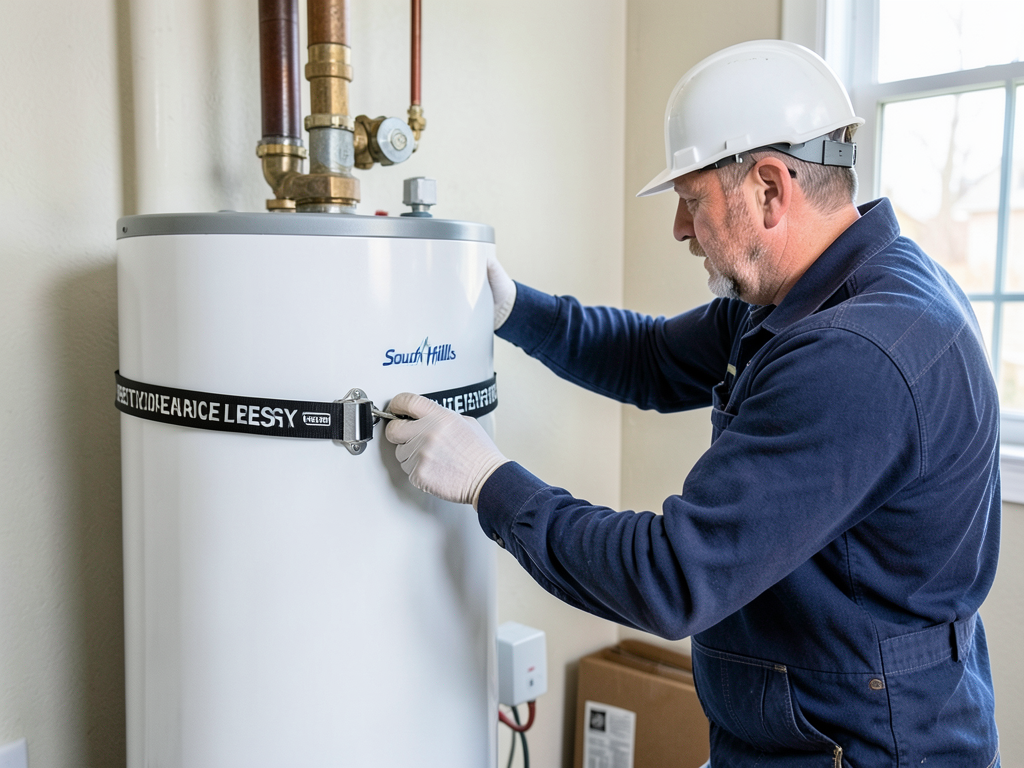
Visual: Photo showing a properly strapped water heater with two heavy-duty straps positioned at top and bottom thirds, lag bolts visible in wall studs, and proper 4-inch clearance from control valves.
South Hills vs. Other San Diego Neighborhoods: Local Code Differences
While the California Plumbing Code provides the baseline requirements, South Hills falls under the City of San Diego’s jurisdiction, which sometimes has additional local amendments. The City of San Diego Development Services Department requires permits for water heater replacements and modifications, and they verify that all seismic strapping meets both state and local standards. City of San Diego Development Services Department.
South Hills homes often have specific characteristics that affect water heater installation. Many properties in this area feature older wood-frame construction with balloon framing, which requires different lag bolt placement than modern platform framing. The soil in South Hills tends to be more expansive than in coastal areas, which can cause slight shifting that affects how securely your water heater remains strapped over time.
Properties near the Rose Canyon Fault Zone, which runs through parts of San Diego, face higher seismic risks. South Hills sits in a moderate to high seismic zone, meaning the forces during an earthquake could be stronger than in other parts of the county. This makes proper strapping even more critical for homes in this area.
Approved Hardware and Installation Specifications
The California Plumbing Code specifies exact hardware requirements for earthquake strapping. You need heavy-duty metal straps at least 3/4-inch wide and 24-gauge thick. The lag bolts must be at least 1/4-inch diameter and 3 inches long, with 2 inches of penetration into solid wood or metal studs. Using the wrong size or type of hardware is one of the most common reasons installations fail inspection.
For homes with concrete or masonry walls, special expansion anchors are required instead of lag bolts. The straps must be installed so they don’t interfere with the temperature and pressure relief valve, which needs to remain fully functional. Some South Hills homes have water heaters installed in closets or utility rooms where space is tight, making proper strap positioning more challenging.
The hardware must be corrosion-resistant since San Diego’s coastal environment can accelerate rust and deterioration. Galvanized steel or stainless steel components are recommended, especially for outdoor installations or homes near the coast where salt air exposure is higher.

Visual: Close-up photo showing proper lag bolt installation into wall studs, with clear view of strap material, bolt size, and penetration depth.
Safety and Insurance Implications for South Hills Homeowners
Improperly strapped water heaters create multiple hazards beyond just earthquake risks. A falling water heater can rupture gas lines, causing explosions or fires. The 40 to 80 gallons of water in a typical tank can cause extensive flooding damage, destroying floors, walls, and personal belongings. In South Hills, where many homes have finished basements or valuable lower-level living spaces, this damage can be particularly costly.
Insurance companies are increasingly aware of earthquake strapping requirements. Many policies now specifically ask about proper seismic bracing during the application process. If your water heater isn’t properly strapped and earthquake damage occurs, your insurance claim could be denied or reduced based on negligence. This is especially important in South Hills, where the combination of older homes and seismic activity creates higher risk profiles.
During home sales in South Hills, water heater strapping often comes up during the inspection process. Buyers and their inspectors routinely check for proper seismic bracing, and missing or incorrect strapping can delay or derail real estate transactions. The TDS (Transfer Disclosure Statement) specifically asks about compliance with building codes, including seismic safety measures.
Professional Installation vs. DIY: What South Hills Residents Need to Know
While DIY earthquake strapping kits are available at home improvement stores, professional installation offers several advantages for South Hills homeowners. Licensed plumbers understand the specific requirements for different wall types common in this area, including balloon framing, platform framing, and masonry construction. They also know how to work around obstacles like electrical panels, gas lines, and plumbing fixtures that might complicate DIY installation. Why La Jolla Homeowners are Switching to Tankless Water Heaters This Year.
Professional installation typically includes a permit from the City of San Diego, ensuring your work meets all current codes. The permit process includes inspections that verify proper installation, giving you peace of mind that your water heater will perform as intended during an earthquake. DIY installations often miss these critical verification steps.
The cost difference between DIY and professional installation in South Hills is relatively small compared to the potential consequences of improper installation. A professional can usually complete the job in under two hours, including permit acquisition and final inspection coordination. They also provide documentation of compliance, which is valuable for insurance purposes and future home sales.
Frequently Asked Questions
Do tankless water heaters need earthquake straps in South Hills?
Yes, even though tankless units are much lighter than traditional tank heaters, California law still requires seismic bracing for all water heating equipment. The specific requirements vary based on the unit’s weight and mounting method, but proper anchoring is mandatory.
How much does professional earthquake strapping cost in San Diego?
Professional installation in South Hills typically ranges from $150 to $300, depending on the complexity of the installation and whether a permit is required. This includes proper hardware, installation, and compliance verification. DIY kits cost $20 to $50 but may not meet all code requirements.
Can I install earthquake straps myself or do I need a permit?
DIY installation is allowed, but if you’re modifying or replacing a water heater, you’ll need a permit from the City of San Diego. The permit ensures your installation meets current codes and includes required inspections. Without a permit, you risk fines and insurance issues. How to Deal with a Slab Leak in Your Point Loma Home Without Destroying Your Floors.
What happens during a water heater inspection in South Hills?
Inspectors check strap positioning, hardware specifications, clearance from controls, and overall installation quality. They verify that straps are properly secured to structural members and that all clearances meet code requirements. Missing or incorrect hardware is the most common reason for inspection failure.
How often should earthquake straps be checked or replaced?
Inspect your water heater strapping annually for signs of corrosion, loosening, or damage. The straps and hardware should be replaced if you notice rust, stretching, or if the straps can be moved more than a quarter-inch from the tank surface. Professional inspection every few years is recommended.
Visual: Before and after comparison showing a non-compliant water heater installation with improper strapping next to a properly installed unit meeting all California Plumbing Code requirements.
Take Action Today to Protect Your South Hills Home
Don’t wait for the next earthquake to discover your water heater isn’t properly secured. South Hills residents face higher seismic risks than many other San Diego areas, making proper earthquake strapping essential for your family’s safety and your home’s protection. The cost of professional installation is minimal compared to the potential damage from a falling water heater.
Call (619) 304-5400 today to schedule your water heater safety inspection. Our licensed San Diego plumbers will check your current installation, provide a detailed compliance report, and handle all necessary permits and inspections. We understand the specific requirements for South Hills homes and can ensure your water heater meets all current California and San Diego codes.
Pick up the phone and call (619) 304-5400 before the next storm hits or the ground shakes. Your family’s safety and your home’s protection are worth the small investment in proper seismic bracing. Don’t let an easily preventable disaster become your worst nightmare.
Remember, proper earthquake strapping isn’t just about following the law—it’s about protecting everything you’ve worked hard to build. South Hills homes deserve the highest level of seismic protection, and that starts with ensuring your water heater is properly secured today.
{
“@context”: “https://schema.org”,
“@type”: “BlogPosting”,
“headline”: “Making Sure Your South Hills Water Heater is Earthquake Strapped Correctly”,
“description”: “Learn California’s strict earthquake strapping requirements for South Hills water heaters. Protect your home with proper seismic bracing that meets San Diego codes.”,
“wordCount”: 1656,
“datePublished”: “2026-06-07T12:33:00.000Z”,
“dateModified”: “2026-06-07T12:33:00.000Z”,
“inLanguage”: “en-US”,
“mainEntityOfPage”: {
“@type”: “WebPage”,
“@id”: “https://aceplumbingsandiego.com”
},
“publisher”: {
“@type”: “LocalBusiness”,
“name”: “Ace Plumbing San Diego”,
“url”: “https://aceplumbingsandiego.com”
},
“author”: {
“@type”: “Organization”,
“name”: “Ace Plumbing San Diego”,
“url”: “https://aceplumbingsandiego.com”
},
“image”: {
“@type”: “ImageObject”,
“url”: “https://aceplumbingsandiego.com/wp-content/uploads/2026/03/making-sure-your-south-hills-water-heater-is-earth-1.png”
}
}
{
“@context”: “https://schema.org”,
“@type”: “Plumber”,
“name”: “Ace Plumbing San Diego”,
“url”: “https://aceplumbingsandiego.com”,
“address”: {
“@type”: “PostalAddress”,
“addressLocality”: “San Diego”
},
“areaServed”: {
“@type”: “City”,
“name”: “San Diego”
}
}
{
“@context”: “https://schema.org”,
“@type”: “FAQPage”,
“mainEntity”: [
{
“@type”: “Question”,
“name”: “Do tankless water heaters need earthquake straps in South Hills?”,
“acceptedAnswer”: {
“@type”: “Answer”,
“text”: “Yes, even though tankless units are much lighter than traditional tank heaters, California law still requires seismic bracing for all water heating equipment. The specific requirements vary based on the unit’s weight and mounting method, but proper anchoring is mandatory.”
}
},
{
“@type”: “Question”,
“name”: “How much does professional earthquake strapping cost in San Diego?”,
“acceptedAnswer”: {
“@type”: “Answer”,
“text”: “Professional installation in South Hills typically ranges from $150 to $300, depending on the complexity of the installation and whether a permit is required. This includes proper hardware, installation, and compliance verification. DIY kits cost $20 to $50 but may not meet all code requirements.”
}
},
{
“@type”: “Question”,
“name”: “Can I install earthquake straps myself or do I need a permit?”,
“acceptedAnswer”: {
“@type”: “Answer”,
“text”: “DIY installation is allowed, but if you’re modifying or replacing a water heater, you’ll need a permit from the City of San Diego. The permit ensures your installation meets current codes and includes required inspections. Without a permit, you risk fines and insurance issues. How to Deal with a Slab Leak in Your Point Loma Home Without Destroying Your Floors.”
}
},
{
“@type”: “Question”,
“name”: “What happens during a water heater inspection in South Hills?”,
“acceptedAnswer”: {
“@type”: “Answer”,
“text”: “Inspectors check strap positioning, hardware specifications, clearance from controls, and overall installation quality. They verify that straps are properly secured to structural members and that all clearances meet code requirements. Missing or incorrect hardware is the most common reason for inspection failure.”
}
},
{
“@type”: “Question”,
“name”: “How often should earthquake straps be checked or replaced?”,
“acceptedAnswer”: {
“@type”: “Answer”,
“text”: “Inspect your water heater strapping annually for signs of corrosion, loosening, or damage. The straps and hardware should be replaced if you notice rust, stretching, or if the straps can be moved more than a quarter-inch from the tank surface. Professional inspection every few years is recommended.”
}
}
]
}
{
“@context”: “https://schema.org”,
“@type”: “BreadcrumbList”,
“itemListElement”: [
{
“@type”: “ListItem”,
“position”: 1,
“name”: “Home”,
“item”: “https://aceplumbingsandiego.com”
},
{
“@type”: “ListItem”,
“position”: 2,
“name”: “Blog”,
“item”: “https://aceplumbingsandiego.com/blog”
},
{
“@type”: “ListItem”,
“position”: 3,
“name”: “Making Sure Your South Hills Water Heater is Earthquake Strapped Correctly”
}
]
}
{
“@context”: “https://schema.org”,
“@type”: “Service”,
“serviceType”: “Plumbing”,
“provider”: {
“@type”: “LocalBusiness”,
“name”: “Ace Plumbing San Diego”,
“url”: “https://aceplumbingsandiego.com”
},
“areaServed”: {
“@type”: “City”,
“name”: “San Diego”
},
“description”: “Learn California’s strict earthquake strapping requirements for South Hills water heaters. Protect your home with proper seismic bracing that meets San Diego codes.”
}