
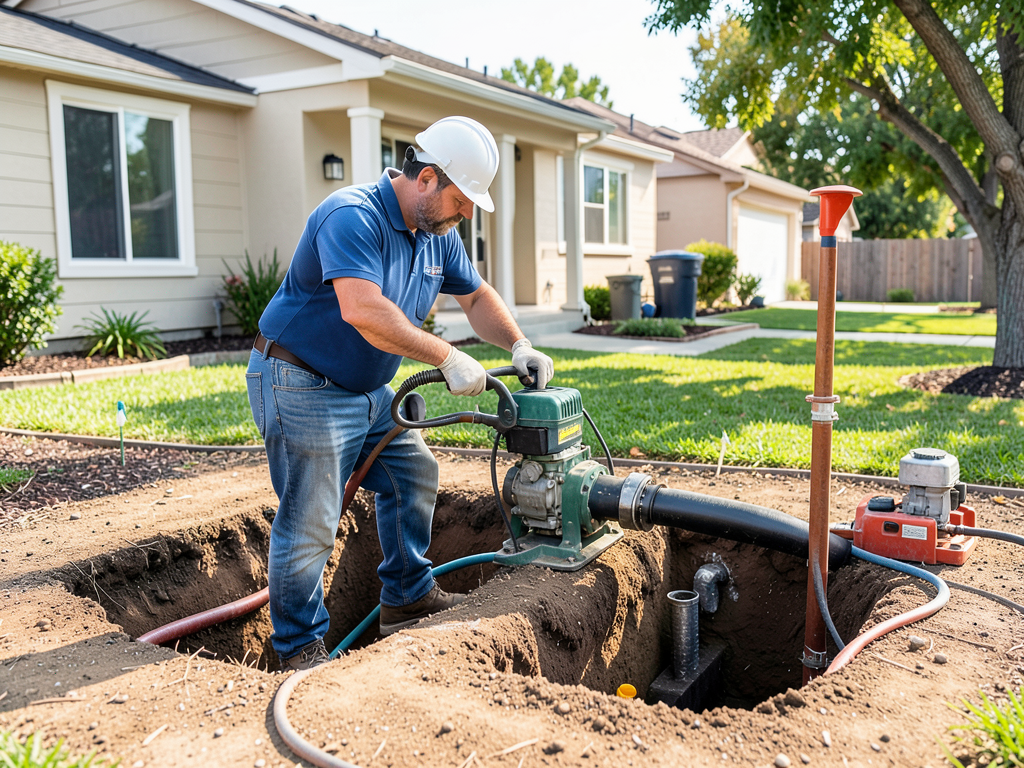
How to upgrade the main water line for your growing household in San Ysidro
Your San Ysidro home built in the 1970s or 1980s likely has a 1/2-inch galvanized steel main line that struggles to keep up with today’s demand from multiple bathrooms, washing machines, and outdoor irrigation. Low water pressure that drops when you turn on the shower while someone flushes the toilet signals your main line needs an upgrade. This guide walks you through San Diego’s specific requirements, material choices, and the trenchless methods that minimize disruption to your xeriscaped yard. San Diego County Water Authority.
Common signs your San Ysidro home needs a water line upgrade
Galvanized steel pipes in San Ysidro’s alkaline soil typically corrode from the outside in within 40-50 years. You will notice rust-colored water when you first turn on a tap or a complete loss of pressure that affects every fixture in the house. If you have experienced two or more pinhole leaks in a year or see damp spots in your front yard without an obvious cause, your main line has likely reached the end of its service life. How to Deal with a Slab Leak in Your Point Loma Home Without Destroying Your Floors.
The San Diego County Water Authority maintains water pressure between 50 and 80 PSI for residential zones, but older 1/2-inch lines cannot deliver adequate volume even at these pressures. A family of four using multiple fixtures simultaneously will see pressure drop below 20 PSI, making showers nearly unusable. The City of San Diego requires a minimum 3/4-inch line for new construction and major renovations, with many plumbers now recommending 1-inch for homes with three or more bathrooms. City of San Diego Development Services Department.
San Diego permitting requirements for main water line replacement
Replacing your main water line in San Ysidro requires a permit from the City of San Diego Development Services Department. The process starts with submitting detailed plans showing the existing line location, proposed new line route, and cross-sections at property lines. You must also provide a hydrostatic pressure test showing the new line holds 150 PSI for 15 minutes without leaking. Why Hydro Jetting is the Only Real Solution for Carlsbad Sewer Line Issues.
San Diego Municipal Code Section 57.0702 mandates that all new water service lines be installed at least 12 inches below grade and 18 inches away from any sewer line. The code also requires a dielectric union when connecting copper to galvanized steel to prevent galvanic corrosion. If your home is within 100 feet of a fire hydrant, you must install a 1-inch line regardless of your household size to meet fire flow requirements. Dealing with Hard Water in Oceanside with a Professional Softener System.
Permit approval typically takes 5-7 business days for standard residential replacements. Emergency permits for active leaks can be issued within 24 hours but require inspection within 72 hours of installation. The city charges a plan check fee of $195 plus a water service permit fee of $275, with additional fees if you need to relocate your water meter. Finding an Emergency Plumber in North Park Who Actually Picks Up the Phone.
Trenchless vs. traditional pipe replacement methods
Traditional excavation means digging a trench from your home to the street water main, which in San Ysidro often means cutting through compacted DG (decomposed granite) soil that becomes concrete-hard when dry. This method takes 3-5 days and costs $15-25 per linear foot, plus $3,000-5,000 for concrete replacement if you have a driveway or walkway over the line.
Trenchless pipe bursting offers a faster alternative that works well in San Ysidro’s residential lots. A bursting head breaks apart the old pipe while simultaneously pulling in a new HDPE or PEX pipe. The process requires only two small access pits and completes in 1-2 days. Costs run $20-30 per linear foot but save you from repairing landscaping and hardscaping.
Directional drilling works best when you need to go under concrete driveways or cross under sidewalks without breaking them up. A steerable drill head creates a path 18-24 inches below grade, then pulls the new pipe through. This method costs $25-35 per linear foot but preserves all existing surfaces. For San Ysidro homes with mature agave or bougainvillea plantings, trenchless methods protect your landscaping investment.
Choosing between copper and PEX for San Diego’s climate
Copper Type L (thick wall) remains the gold standard for main water lines in San Diego, lasting 50-70 years when properly installed. The material resists UV degradation and handles San Diego’s temperature swings without becoming brittle. However, copper costs $8-12 per foot and requires skilled soldering, making labor costs higher than plastic alternatives.
PEX-a tubing costs $2-4 per foot and installs quickly using cold expansion fittings. The flexible material handles San Diego’s minor ground movement without developing stress cracks. PEX also resists the mineral buildup common in San Diego’s hard water, maintaining flow rates better than copper over time. The main drawback is UV sensitivity – PEX must be buried or protected within 30 days of exposure to sunlight.
HDPE (high-density polyethylene) offers the best value for long runs at $3-5 per foot. The material handles San Diego’s expansive clay soil without developing pinhole leaks and maintains flexibility in temperature ranges from 20 to 180 degrees Fahrenheit. HDPE requires fusion welding for joints, which means bringing specialized equipment to the job site but creates leak-proof connections.
The impact of San Diego’s hard water on new pipe materials
San Diego’s water contains 276 parts per million of total dissolved solids, with calcium and magnesium being the primary minerals. These minerals precipitate out of solution and form scale inside pipes, reducing internal diameter by 30-40% over 10-15 years in galvanized steel. Copper develops a protective oxide layer that slows scaling but still loses 10-15% of its effective diameter over the same period.
PEX tubing’s smooth interior resists scale adhesion better than metal pipes. Water flow actually increases slightly over the first few years as the pipe’s internal surface becomes polished. The material’s flexibility also means it can handle the thermal expansion and contraction from San Diego’s day-night temperature swings without developing stress points where scale tends to accumulate.
Installing a whole-house water softener before your new main line can extend its life by 50% or more. Softened water prevents scale formation entirely and eliminates the blue-green staining that occurs when copper corrodes in San Diego’s slightly acidic water (pH 7.2-7.5). The initial investment of $1,500-2,500 for a softener system pays for itself through reduced plumbing repairs and longer appliance life.. Read more about Designing a Reliable Plumbing System for Your New Valley Center Tiny Home.
Step-by-step process for a main water line upgrade
- Initial inspection and diagnosis
A licensed plumber performs a video camera inspection of your existing line, locates all connections, and tests water pressure at multiple fixtures. This step identifies the exact cause of pressure issues and determines if the problem is isolated to the main line or involves the entire plumbing system.
- Permit acquisition and utility locates
The contractor submits plans to the City of San Diego and contacts DigAlert to mark all underground utilities. This prevents damage to gas lines, electrical conduits, or irrigation systems during excavation. The process takes 2-3 days for standard permits.
- Main line isolation and shut-off
The water meter is turned off, and the existing line is disconnected at both ends. A bypass system may be installed to maintain water service to essential fixtures during the upgrade, though most homeowners prefer to be without water for the shortest possible time. Why La Jolla Homeowners are Switching to Tankless Water Heaters This Year.
- Pipe installation
The new line is installed using the chosen method – trenchless pipe bursting for minimal disruption or traditional excavation for straightforward replacements. Connections are made using appropriate fittings for the chosen material, with dielectric unions where required by code.
- Pressure testing and inspection
The new line undergoes a hydrostatic test at 150 PSI for 15 minutes. The City of San Diego inspector then verifies proper installation, depth, and material compliance. This step must pass before water service is restored.
- Restoration and final connections
The line is connected to the house plumbing and water meter, with all fixtures flushed to remove debris. Landscaping or hardscaping damaged during installation is repaired, and the site is cleaned and inspected with the homeowner.
Costs and financing options for San Ysidro homeowners
The total cost for a main water line upgrade in San Ysidro ranges from $3,500 to $8,000 depending on length, method, and material. A 50-foot replacement using PEX and trenchless methods costs around $4,000-5,000, while a 100-foot copper replacement with traditional excavation runs $7,000-9,000. These prices include permits, materials, labor, and basic restoration.
Several financing options exist for San Diego homeowners. The County of San Diego offers low-interest home improvement loans through the Housing and Community Development Department, with rates starting at 3% for qualifying homeowners. Many plumbing contractors partner with GreenSky or Service Finance to offer 12-month same-as-cash plans or extended payment terms.
Your homeowner’s insurance may cover part of the replacement if the failure resulted from a covered peril like a tree root invasion or sudden pipe rupture. However, gradual corrosion from age or hard water is typically excluded. Some policies offer water line repair coverage as an add-on for $50-100 per year, which can significantly reduce your out-of-pocket costs.
Frequently Asked Questions
How long does a main water line upgrade take in San Ysidro?
A trenchless upgrade typically completes in 1-2 days, while traditional excavation takes 3-5 days plus additional time for concrete replacement. Permit approval adds 5-7 business days to the total timeline.
Can I upgrade just part of my main water line?
You can replace sections of your main line, but this often costs more per foot than a full replacement and may not solve pressure issues if the remaining old pipe restricts flow. A complete upgrade ensures consistent performance throughout your home.
What happens if I don’t upgrade my failing main line?
A failing main line will eventually burst, causing significant water damage to your home’s foundation and landscaping. Emergency repairs after a break cost 2-3 times more than planned upgrades and may require water service interruption for several days.
Does my homeowner’s association need to approve the upgrade?
If you live in a community with an HOA, you may need approval for visible changes to your landscaping or driveway. Most HOAs in San Ysidro understand the necessity of water line upgrades and approve them quickly when proper permits are obtained.
Protecting your investment with proper maintenance
After upgrading your main water line, annual inspections help prevent future problems. A plumber should check water pressure annually, as San Diego’s water pressure can fluctuate seasonally. Installing a pressure reducing valve maintains consistent pressure between 50-60 PSI, extending the life of your new pipes and fixtures.
Flushing your water heater annually removes sediment that can enter your pipes and reduce flow. Installing mesh strainers on hose bibs prevents debris from entering the system during outdoor water use. These simple steps cost less than $100 per year but can add 10-15 years to your plumbing system’s life.
Consider installing a water quality monitor that tracks pressure, flow rate, and temperature. These devices connect to your smartphone and alert you to changes that might indicate developing problems. Early detection of pressure drops or flow restrictions allows for minor repairs before major failures occur.
Ready to solve your water pressure problems for good? Call (619) 304-5400 today to schedule your inspection. Our San Ysidro plumbing experts will diagnose your main line issues and provide a detailed quote with no hidden fees. Don’t wait for a burst pipe to disrupt your home – take action now and enjoy reliable water service for decades to come.
You may also find this helpful. Moving from Septic to City Sewer in Winter Gardens (What the Process Actually Looks Like).
{
“@context”: “https://schema.org”,
“@type”: “BlogPosting”,
“headline”: “How to upgrade the main water line for your growing household in San Ysidro”,
“description”: “Is your San Ysidro home struggling with low water pressure? Learn about trenchless main water line upgrades, San Diego permitting, and PEX vs copper options for 2026.”,
“wordCount”: 1957,
“datePublished”: “2026-05-09T14:33:00.000Z”,
“dateModified”: “2026-05-09T14:33:00.000Z”,
“inLanguage”: “en-US”,
“mainEntityOfPage”: {
“@type”: “WebPage”,
“@id”: “https://aceplumbingsandiego.com”
},
“publisher”: {
“@type”: “LocalBusiness”,
“name”: “Ace Plumbing San Diego”,
“url”: “https://aceplumbingsandiego.com”
},
“author”: {
“@type”: “Organization”,
“name”: “Ace Plumbing San Diego”,
“url”: “https://aceplumbingsandiego.com”
},
“image”: {
“@type”: “ImageObject”,
“url”: “https://aceplumbingsandiego.com/wp-content/uploads/2026/03/how-to-upgrade-the-main-water-line-for-your-growin-1.png”
}
}
{
“@context”: “https://schema.org”,
“@type”: “Plumber”,
“name”: “Ace Plumbing San Diego”,
“url”: “https://aceplumbingsandiego.com”,
“address”: {
“@type”: “PostalAddress”,
“addressLocality”: “San Diego”
},
“areaServed”: {
“@type”: “City”,
“name”: “San Diego”
}
}
{
“@context”: “https://schema.org”,
“@type”: “FAQPage”,
“mainEntity”: [
{
“@type”: “Question”,
“name”: “How long does a main water line upgrade take in San Ysidro?”,
“acceptedAnswer”: {
“@type”: “Answer”,
“text”: “A trenchless upgrade typically completes in 1-2 days, while traditional excavation takes 3-5 days plus additional time for concrete replacement. Permit approval adds 5-7 business days to the total timeline.”
}
},
{
“@type”: “Question”,
“name”: “Can I upgrade just part of my main water line?”,
“acceptedAnswer”: {
“@type”: “Answer”,
“text”: “You can replace sections of your main line, but this often costs more per foot than a full replacement and may not solve pressure issues if the remaining old pipe restricts flow. A complete upgrade ensures consistent performance throughout your home.”
}
},
{
“@type”: “Question”,
“name”: “Does my homeowner’s association need to approve the upgrade?”,
“acceptedAnswer”: {
“@type”: “Answer”,
“text”: “If you live in a community with an HOA, you may need approval for visible changes to your landscaping or driveway. Most HOAs in San Ysidro understand the necessity of water line upgrades and approve them quickly when proper permits are obtained.”
}
}
]
}
{
“@context”: “https://schema.org”,
“@type”: “HowTo”,
“name”: “How to upgrade a main water line”,
“step”: [
{
“@type”: “HowToStep”,
“position”: 1,
“name”: “Initial inspection and diagnosis”,
“text”: “A licensed plumber performs a video camera inspection of your existing line, locates all connections, and tests water pressure at multiple fixtures. This step identifies the exact cause of pressure issues and determines if the problem is isolated to the main line or involves the entire plumbing system.”
},
{
“@type”: “HowToStep”,
“position”: 2,
“name”: “Permit acquisition and utility locates”,
“text”: “The contractor submits plans to the City of San Diego and contacts DigAlert to mark all underground utilities. This prevents damage to gas lines, electrical conduits, or irrigation systems during excavation. The process takes 2-3 days for standard permits.”
},
{
“@type”: “HowToStep”,
“position”: 3,
“name”: “Main line isolation and shut-off”,
“text”: “The water meter is turned off, and the existing line is disconnected at both ends. A bypass system may be installed to maintain water service to essential fixtures during the upgrade, though most homeowners prefer to be without water for the shortest possible time. Why La Jolla Homeowners are Switching to Tankless Water Heaters This Year.”
},
{
“@type”: “HowToStep”,
“position”: 4,
“name”: “Pipe installation”,
“text”: “The new line is installed using the chosen method – trenchless pipe bursting for minimal disruption or traditional excavation for straightforward replacements. Connections are made using appropriate fittings for the chosen material, with dielectric unions where required by code.”
},
{
“@type”: “HowToStep”,
“position”: 5,
“name”: “Pressure testing and inspection”,
“text”: “The new line undergoes a hydrostatic test at 150 PSI for 15 minutes. The City of San Diego inspector then verifies proper installation, depth, and material compliance. This step must pass before water service is restored.”
},
{
“@type”: “HowToStep”,
“position”: 6,
“name”: “Restoration and final connections”,
“text”: “The line is connected to the house plumbing and water meter, with all fixtures flushed to remove debris. Landscaping or hardscaping damaged during installation is repaired, and the site is cleaned and inspected with the homeowner.”
}
],
“image”: “https://aceplumbingsandiego.com/wp-content/uploads/2026/03/how-to-upgrade-the-main-water-line-for-your-growin-1.png”
}
{
“@context”: “https://schema.org”,
“@type”: “BreadcrumbList”,
“itemListElement”: [
{
“@type”: “ListItem”,
“position”: 1,
“name”: “Home”,
“item”: “https://aceplumbingsandiego.com”
},
{
“@type”: “ListItem”,
“position”: 2,
“name”: “Blog”,
“item”: “https://aceplumbingsandiego.com/blog”
},
{
“@type”: “ListItem”,
“position”: 3,
“name”: “How to upgrade the main water line for your growing household in San Ysidro”
}
]
}
{
“@context”: “https://schema.org”,
“@type”: “Service”,
“serviceType”: “Plumbing”,
“provider”: {
“@type”: “LocalBusiness”,
“name”: “Ace Plumbing San Diego”,
“url”: “https://aceplumbingsandiego.com”
},
“areaServed”: {
“@type”: “City”,
“name”: “San Diego”
},
“description”: “Is your San Ysidro home struggling with low water pressure? Learn about trenchless main water line upgrades, San Diego permitting, and PEX vs copper options for 2026.”
}