
How to flush a standard water heater to remove sediment in Rancho Penasquitos
Your water heater in Rancho Penasquitos is probably making strange popping sounds right now. That noise is sediment buildup from San Diego’s hard water slamming against the tank bottom. This guide shows you exactly how to flush it out safely before it causes expensive damage. San Diego County Water Authority.
San Diego water averages 16-23 grains per gallon of hardness. That’s nearly twice the national average. The calcium carbonate in our water settles at the bottom of your tank where it acts like an insulating blanket. Your heater works harder burns more energy and the extra heat can crack the glass lining inside the tank. Energy Star water heater efficiency.
You will need a garden hose a bucket safety gloves and about 2 hours. If your drain valve looks rusty or stuck shut this is the time to call (619) 304-5400 instead of forcing it.
Why San Diego water causes rapid sediment buildup
The Colorado River water that serves Rancho Penasquitos contains high levels of dissolved calcium and magnesium. These minerals precipitate out when water is heated forming a rock-hard layer at the tank bottom. A 40-gallon heater can accumulate 10-15 pounds of sediment in just one year. Dealing with Hard Water in Oceanside with a Professional Softener System.
Local water quality reports from the San Diego County Water Authority show calcium carbonate levels between 200-400 parts per million in our service area. That mineral density is why Rancho Penasquitos homes need more frequent maintenance than homes in softer water regions.. Read more about Why your City Heights water heater needs an expansion tank to prevent a burst.
Signs your water heater has sediment
You hear popping or rumbling sounds when the burner fires. The water takes longer to get hot. Your energy bills creep up even though usage stays the same. You see cloudy or rusty water from hot taps. These are all classic sediment symptoms.
The popping noise happens when steam bubbles form under the sediment layer. As they break through they make that knocking sound. Left alone the sediment can cause the lower heating element in electric heaters to burn out or create hot spots that damage the tank in gas models.
Tools needed for a professional-grade flush
Gather these items before starting: a 5-foot garden hose that reaches from the heater to a floor drain or outside, a flathead screwdriver, an adjustable wrench, a bucket for initial water capture, heat-resistant gloves, and safety goggles. You will also need access to your home’s main water shut-off valve.
Turn off the power at the breaker for electric heaters or set the gas control to pilot for gas units. Let the tank cool for at least 2 hours. Hot water can cause severe burns even after the unit is off.
Step-by-step guide: flushing your gas or electric heater
- Shut off power or gas
Flip the breaker or turn the gas valve to pilot. This prevents the burner from firing while the tank is empty.
- Connect the hose
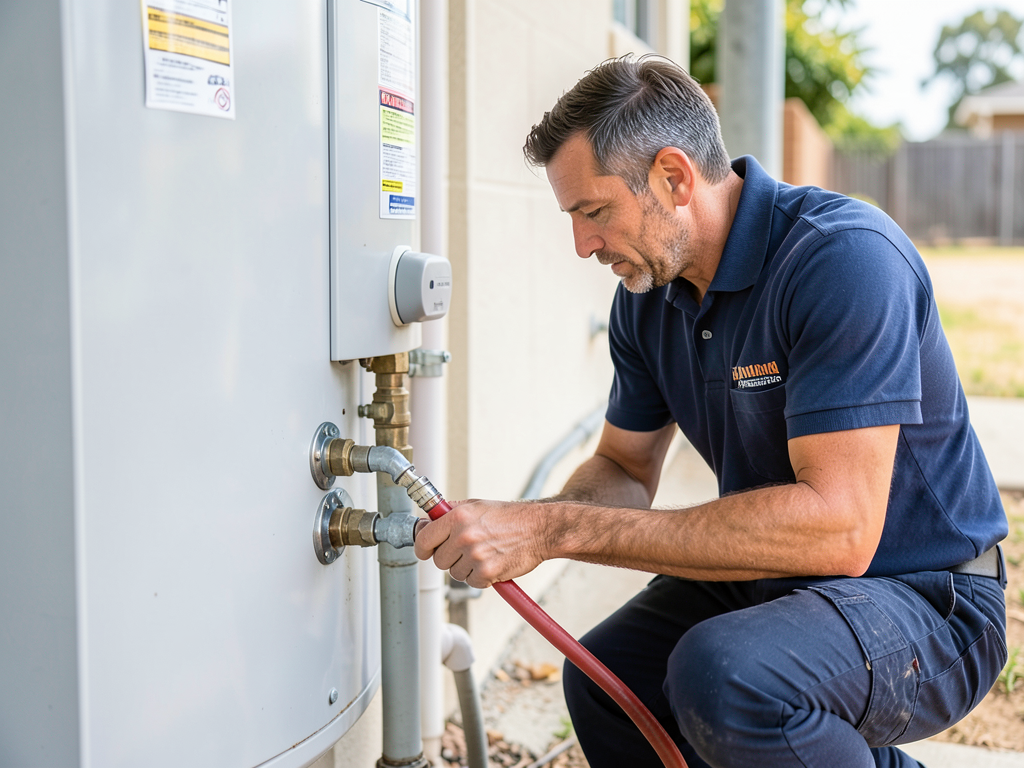
Attach one end to the drain valve at the bottom of the tank. Place the other end in a floor drain or outside where hot water won’t damage plants or surfaces.
- Open a hot water tap
Open a nearby hot water faucet to prevent vacuum lock. This helps the tank drain faster.
- Drain the tank
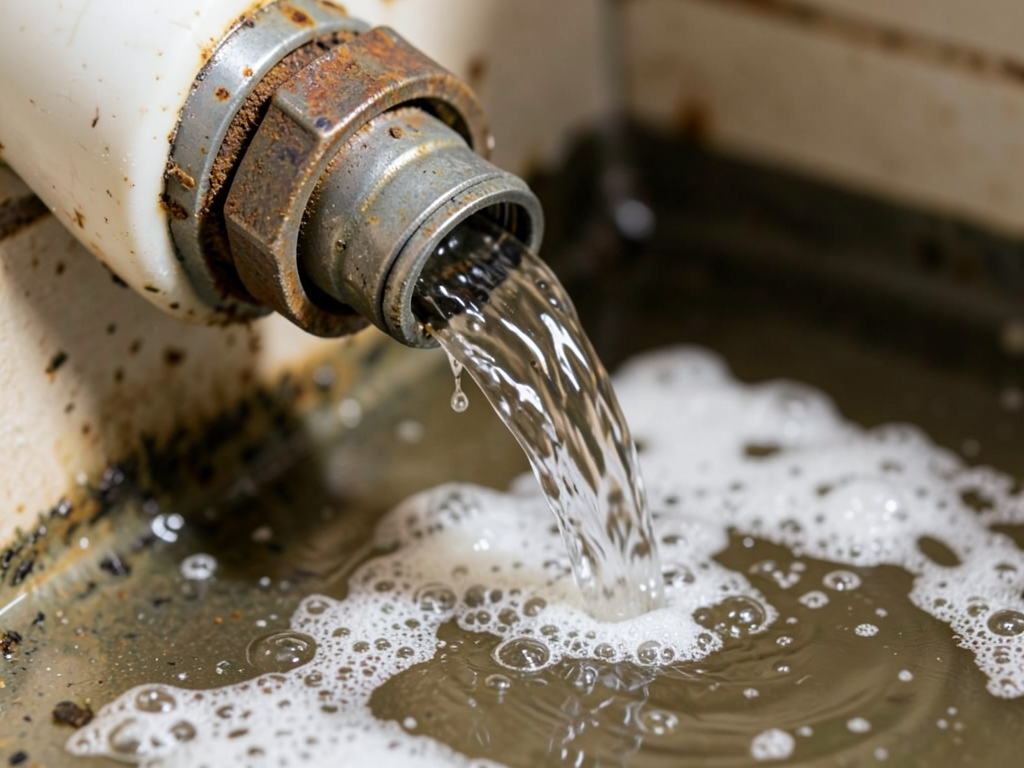
Open the drain valve slowly. Rusty or cloudy water will flow out. Let it run until the water runs clear which may take 20-30 minutes.
- Flush with cold water
briefly turn on the cold water supply to stir up remaining sediment. Let it run until clear then close the drain valve.
- Refill and restore power
Close the drain valve remove the hose and refill the tank. Open a hot faucet to purge air then restore power or gas.
If the drain valve won’t open or water trickles out instead of flowing your valve may be clogged with sediment. Forcing it can break the plastic valve and cause a flood. That’s when you call (619) 304-5400.
The ‘stuck valve’ risk: when to call a San Diego plumber
Older water heaters in Rancho Penasquitos often have original drain valves that haven’t been touched in a decade. These plastic valves become brittle and can snap off if forced. A broken valve means a flooded garage and emergency service call. Finding an Emergency Plumber in North Park Who Actually Picks Up the Phone.
Professional plumbers use specialized tools to extract stuck valves without damaging the tank. They also check the temperature and pressure relief valve a critical safety component that many DIYers overlook. The T&P valve should be tested annually but many homeowners never touch it until it fails. How to Deal with a Slab Leak in Your Point Loma Home Without Destroying Your Floors.
According to the Uniform Plumbing Code Section 510.7 a properly installed T&P valve is mandatory for all water heaters. A failed valve can lead to dangerous pressure buildup or even tank explosion in extreme cases.
Maintenance frequency for Southern California homes
Flush your water heater every 6 months if you have hard water. Rancho Penasquitos homes should stick to this schedule because our mineral content is so high. Homes with water softeners can extend to once per year but should still check the anode rod annually.
The sacrificial anode rod protects the tank from corrosion by attracting minerals that would otherwise attack the steel. In San Diego’s water the rod typically lasts 3-5 years before needing replacement. A depleted rod means the tank itself starts corroding shortening its life by years.
Regular flushing can extend your heater’s life from the typical 8-10 years to 12-15 years. It also maintains efficiency so you’re not paying 20-30% more on your gas or electric bill to heat through a layer of sediment.
Local water quality and your heater
The San Diego County Water Authority’s 2023 water quality report shows Rancho Penasquitos receives water from both the Colorado River and the State Water Project. The Colorado River supply tends to have higher mineral content especially during drought years when flow rates drop.
Local plumbers report that homes near the western edge of Rancho Penasquitos often see slightly softer water than those near the 56 freeway corridor. This is because of the mixing stations and pipeline configurations in the area. If you’re unsure about your specific water hardness you can request a free test kit from the county water authority.
Hard water doesn’t just affect your heater. It scales up your dishwasher coffee maker and faucets too. A whole-house water softener can reduce mineral buildup but even with a softener flushing the heater annually is still recommended.. Read more about Choosing the right whole house water filtration system for Redwood Village families.
Safety protocols and pressure relief valve testing
Never skip the cooling period. A full tank at 120 degrees contains enough energy to cause second-degree burns in seconds. Always wear gloves and eye protection when draining.
After flushing lift the T&P valve lever briefly to ensure it moves freely and releases a burst of hot water. If it’s stuck or leaking replace it immediately. This valve is your last defense against dangerous pressure buildup.
The Uniform Plumbing Code requires the T&P valve to be rated for the heater’s BTU input and to have a temperature setting no higher than 210 degrees Fahrenheit. Most residential valves are factory set to 150 PSI and 210 degrees.
Energy savings and efficiency impact
Energy Star estimates that sediment buildup can reduce a water heater’s efficiency by 20-30%. In San Diego where gas rates average $1.50 per therm that’s $50-75 in extra heating costs per year for a typical household.
Electric heaters lose efficiency too but the impact is harder to measure because they don’t make the popping noise. The lower element in an electric tank is especially vulnerable to burnout from sediment coverage. Replacing that element costs $200-300 plus labor.
Flushing restores the tank to near-original efficiency. The burner or element heats the water directly instead of heating through a layer of rock. You get faster hot water and lower utility bills.
When DIY isn’t enough
If your heater is over 10 years old makes loud banging noises or has rusty water it may be time for replacement rather than flushing. A professional inspection can determine if the tank walls are corroding or if the burner needs adjustment.
Modern high-efficiency heaters have better insulation and heat traps that reduce standby losses. They also often include self-cleaning features that reduce but don’t eliminate sediment buildup. A new unit can pay for itself in 3-5 years through energy savings and avoided repairs.
Call (619) 304-5400 for a free inspection if you notice any of these warning signs. We’ll check your entire hot water system and recommend the most cost-effective solution.
Frequently Asked Questions
How long does a water heater flush take?
The actual flushing process takes 30-45 minutes but you need to allow 2-3 hours total for cooling and refilling. Plan this for a time when you won’t need hot water for several hours.
Can I flush a tankless water heater?
Tankless units need descaling not flushing. They use a pump to circulate vinegar through the heat exchanger to remove mineral scale. This is a different process that usually requires a professional service call.
What happens if I don’t flush my water heater?
Sediment builds up until it causes the lower element to burn out or creates hot spots that crack the tank. You’ll get less hot water higher energy bills and eventually a flooded garage when the tank fails.
Is it safe to flush an old water heater?
It’s safe if the drain valve moves freely. If the valve is stuck or the tank shows signs of corrosion call a professional. Forcing a stuck valve can break it and cause flooding.
How much does professional flushing cost in Rancho Penasquitos?
Professional flushing typically costs $150-250 depending on the heater’s location and condition. This includes inspection of the T&P valve anode rod and gas/electric connections.
[IMAGE_PLACEHOLDER_3>
Regular water heater maintenance prevents the most common cause of premature failure in Rancho Penasquitos homes. The popping noise you hear is your heater screaming for help. Don’t wait until it floods your garage or leaves you with cold showers.
Need help with a stubborn drain valve or want a professional inspection? Call (619) 304-5400 today. We’ll get your hot water running efficiently and safely.
Don’t let sediment steal your money and comfort. Pick up the phone and call (619) 304-5400 before the next popping noise becomes an emergency.
You may also find this helpful. Why that guest bathroom in your Sabre Springs home smells like rotten eggs.
{
“@context”: “https://schema.org”,
“@type”: “BlogPosting”,
“headline”: “How to flush a standard water heater to remove sediment in Rancho Penasquitos”,
“description”: “Learn how to flush your water heater to remove sediment buildup in Rancho Penasquitos. Discover local water hardness facts, DIY steps, and when to call Ace Plumbing.”,
“wordCount”: 1745,
“datePublished”: “2026-04-01T10:50:00.000Z”,
“dateModified”: “2026-04-01T10:50:00.000Z”,
“inLanguage”: “en-US”,
“mainEntityOfPage”: {
“@type”: “WebPage”,
“@id”: “https://aceplumbingsandiego.com”
},
“publisher”: {
“@type”: “LocalBusiness”,
“name”: “Ace Plumbing San Diego”,
“url”: “https://aceplumbingsandiego.com”
},
“author”: {
“@type”: “Organization”,
“name”: “Ace Plumbing San Diego”,
“url”: “https://aceplumbingsandiego.com”
},
“image”: {
“@type”: “ImageObject”,
“url”: “https://aceplumbingsandiego.com/wp-content/uploads/2026/03/how-to-flush-a-standard-water-heater-to-remove-sed-1.png”
}
}
{
“@context”: “https://schema.org”,
“@type”: “Plumber”,
“name”: “Ace Plumbing San Diego”,
“url”: “https://aceplumbingsandiego.com”,
“address”: {
“@type”: “PostalAddress”,
“addressLocality”: “San Diego”
},
“areaServed”: {
“@type”: “City”,
“name”: “San Diego”
}
}
{
“@context”: “https://schema.org”,
“@type”: “FAQPage”,
“mainEntity”: [
{
“@type”: “Question”,
“name”: “How long does a water heater flush take?”,
“acceptedAnswer”: {
“@type”: “Answer”,
“text”: “The actual flushing process takes 30-45 minutes but you need to allow 2-3 hours total for cooling and refilling. Plan this for a time when you won’t need hot water for several hours.”
}
},
{
“@type”: “Question”,
“name”: “Can I flush a tankless water heater?”,
“acceptedAnswer”: {
“@type”: “Answer”,
“text”: “Tankless units need descaling not flushing. They use a pump to circulate vinegar through the heat exchanger to remove mineral scale. This is a different process that usually requires a professional service call.”
}
},
{
“@type”: “Question”,
“name”: “What happens if I don’t flush my water heater?”,
“acceptedAnswer”: {
“@type”: “Answer”,
“text”: “Sediment builds up until it causes the lower element to burn out or creates hot spots that crack the tank. You’ll get less hot water higher energy bills and eventually a flooded garage when the tank fails.”
}
},
{
“@type”: “Question”,
“name”: “Is it safe to flush an old water heater?”,
“acceptedAnswer”: {
“@type”: “Answer”,
“text”: “It’s safe if the drain valve moves freely. If the valve is stuck or the tank shows signs of corrosion call a professional. Forcing a stuck valve can break it and cause flooding.”
}
},
{
“@type”: “Question”,
“name”: “How much does professional flushing cost in Rancho Penasquitos?”,
“acceptedAnswer”: {
“@type”: “Answer”,
“text”: “Professional flushing typically costs $150-250 depending on the heater’s location and condition. This includes inspection of the T&P valve anode rod and gas/electric connections.”
}
}
]
}
{
“@context”: “https://schema.org”,
“@type”: “HowTo”,
“name”: “How to flush a water heater”,
“step”: [
{
“@type”: “HowToStep”,
“position”: 1,
“name”: “Shut off power or gas”,
“text”: “Flip the breaker or turn the gas valve to pilot. This prevents the burner from firing while the tank is empty.”
},
{
“@type”: “HowToStep”,
“position”: 2,
“name”: “Connect the hose”,
“text”: “Attach one end to the drain valve at the bottom of the tank. Place the other end in a floor drain or outside where hot water won’t damage plants or surfaces.”
},
{
“@type”: “HowToStep”,
“position”: 3,
“name”: “Open a hot water tap”,
“text”: “Open a nearby hot water faucet to prevent vacuum lock. This helps the tank drain faster.”
},
{
“@type”: “HowToStep”,
“position”: 4,
“name”: “Drain the tank”,
“text”: “Open the drain valve slowly. Rusty or cloudy water will flow out. Let it run until the water runs clear which may take 20-30 minutes.”
},
{
“@type”: “HowToStep”,
“position”: 5,
“name”: “Flush with cold water”,
“text”: “briefly turn on the cold water supply to stir up remaining sediment. Let it run until clear then close the drain valve.”
},
{
“@type”: “HowToStep”,
“position”: 6,
“name”: “Refill and restore power”,
“text”: “Close the drain valve remove the hose and refill the tank. Open a hot faucet to purge air then restore power or gas.”
}
],
“image”: “https://aceplumbingsandiego.com/wp-content/uploads/2026/03/how-to-flush-a-standard-water-heater-to-remove-sed-1.png”
}
{
“@context”: “https://schema.org”,
“@type”: “BreadcrumbList”,
“itemListElement”: [
{
“@type”: “ListItem”,
“position”: 1,
“name”: “Home”,
“item”: “https://aceplumbingsandiego.com”
},
{
“@type”: “ListItem”,
“position”: 2,
“name”: “Blog”,
“item”: “https://aceplumbingsandiego.com/blog”
},
{
“@type”: “ListItem”,
“position”: 3,
“name”: “How to flush a standard water heater to remove sediment in Rancho Penasquitos”
}
]
}
{
“@context”: “https://schema.org”,
“@type”: “Service”,
“serviceType”: “Plumbing”,
“provider”: {
“@type”: “LocalBusiness”,
“name”: “Ace Plumbing San Diego”,
“url”: “https://aceplumbingsandiego.com”
},
“areaServed”: {
“@type”: “City”,
“name”: “San Diego”
},
“description”: “Learn how to flush your water heater to remove sediment buildup in Rancho Penasquitos. Discover local water hardness facts, DIY steps, and when to call Ace Plumbing.”
}